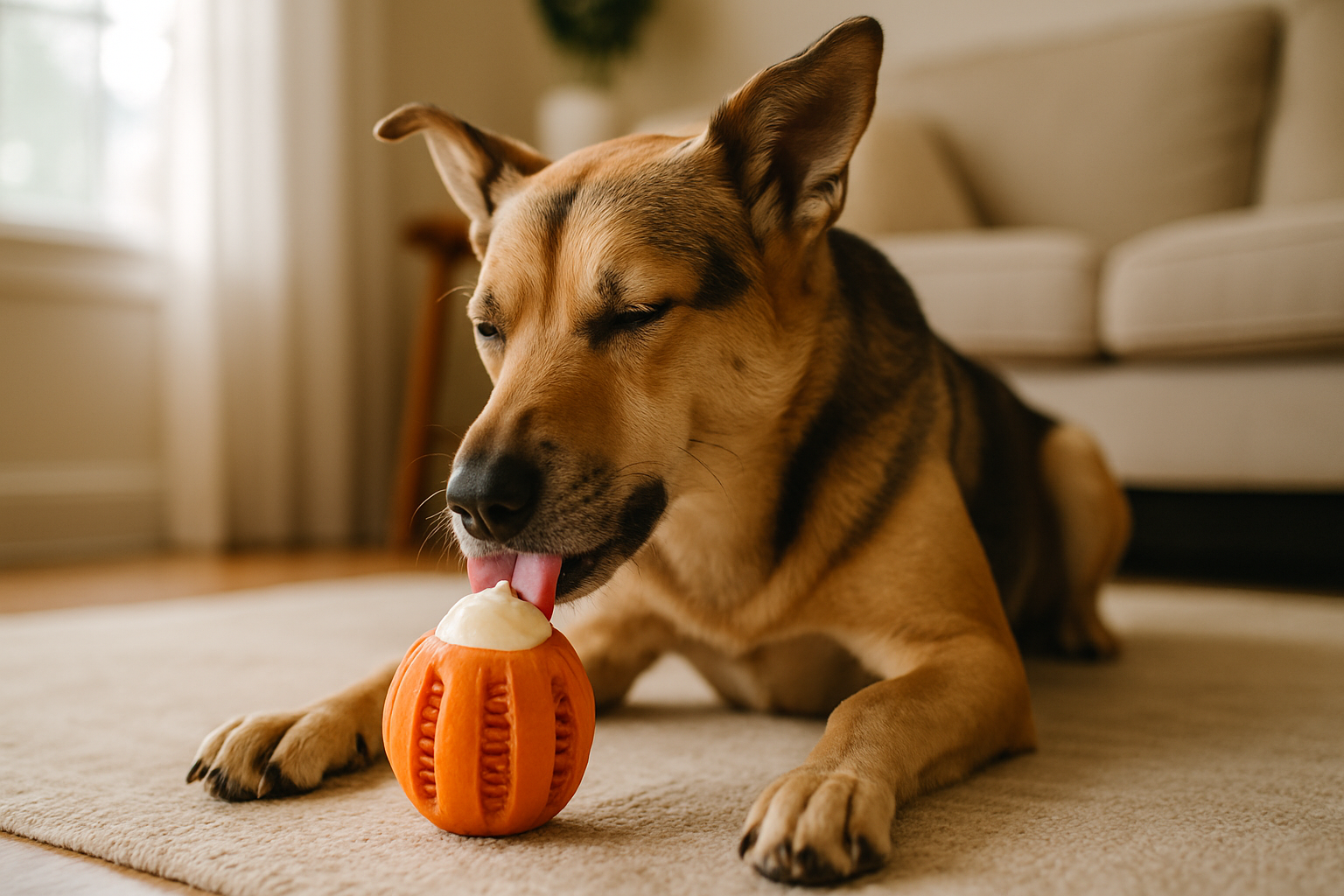
Enrichment is anything that gives your dog a safe job to do, sniffing, chewing, licking, problem-solving, or learning. A little enrichment each day can reduce boredom behaviors (like chewing furniture, barking, or getting “wild” at night) and help your dog feel more settled.
Quick safety note
- Supervise chewing until you know how your dog uses a toy.
- Pick activities that match your dog’s age, size, and chewing style.
- If your dog has dental issues, stomach sensitivity, or is on a special diet, ask your vet what foods are best for frozen treats.
Key takeaways
- Licking + chewing are calming for many dogs and can help them settle.
- Enrichment doesn’t have to be complicated, 5-10 minutes can make a difference.
- Rotate a few simple activities so your dog doesn’t get bored.
- Frozen, fillable toys can turn a small snack into a longer, more satisfying activity.
Why enrichment matters
- Mental exercise: sniffing and problem-solving tire dogs out in a good way.
- Better behavior: boredom is a common trigger for chewing, barking, and restlessness.
- Confidence: learning small skills and “winning” easy puzzles builds resilience.
- Bonding: short training and play sessions improve communication and trust.
Easy enrichment activities (pick 1-2 per day)
1) Sniffing games (the easiest win)
- Scatter feeding: toss a handful of kibble in the grass or on a snuffle mat.
- Find it: toss one treat nearby and say “find it,” then gradually make it harder.
- Scent trail: drag a treat on the floor for a few feet, then hide it at the end.
2) Licking activities (calming + low effort)
- Spread a thin layer of dog-safe food on a lick mat or plate and freeze it.
- Make “pupsicles” with dog-safe ingredients (ideas below).
3) Chewing (natural stress relief)
- Use durable chew toys or vet-approved chews that match your dog’s chewing strength.
- For power chewers, monitor closely and replace toys that are cracking or shedding pieces.
4) Micro-training (5 minutes)
- Practice sit, down, touch, wait, or go to mat.
- Keep it easy and end on a win. Training should feel like a game.
5) “Jobs” around the house
- Towel roll-up: roll kibble into a towel (supervise so they don’t eat fabric).
- Box search: put treats in a cardboard box with crumpled paper.
- Pick-up game: teach “bring it” with a soft toy and reward.
Frozen treats: simple, safe ideas
Freezing turns a quick snack into a longer activity. Start with easier fillings, then increase difficulty.
Beginner fillings (freeze well)
- Soaked kibble: kibble + warm water, let it soften, then freeze.
- Plain canned pumpkin: 100% pumpkin (not pie filling).
- Plain yogurt or kefir: choose unsweetened; avoid xylitol and added sugars.
- Wet food “cap”: a spoonful of your dog’s regular wet food.
Flavor boosters (small amounts)
- Mashed banana
- Unsalted broth (check ingredients; avoid onion/garlic)
- Finely shredded cooked chicken (plain)
What to avoid
- Xylitol (often in peanut butter and “sugar-free” foods)
- Onion, garlic, grapes/raisins, chocolate, macadamia nuts
- Too many rich/fatty foods (can upset stomachs)
If you’re unsure, stick to your dog’s regular food and freeze it, simple works.
Featured enrichment toy: fill + freeze
If you want one tool that makes enrichment easy, use a fillable chew toy you can stuff and freeze. Freezing makes the snack last longer and gives your dog a calming “project.”
FreezBall Fillable Pet Chew Toy
Shop the FreezBall (fillable chew toy)
- Stuff with softened kibble, pumpkin, or yogurt
- Freeze 2-4 hours (or overnight)
- Start easy (looser fill), then pack tighter as your dog learns
Tip note: adjust meal portions if you use food-based enrichment so calories stay balanced.
A simple weekly enrichment plan (no overwhelm)
- Mon/Wed/Fri: frozen fillable toy (10-20 minutes)
- Tue/Thu: sniff game + 5 minutes training
- Sat: new “job” (box search or towel roll-up)
- Sun: easy day (chew + short sniff walk)
When to call the vet
Contact your veterinarian if you notice:
- Vomiting/diarrhea after new treats or repeated stomach upset
- Broken tooth, bleeding gums, or pain while chewing
- Choking, repeated gagging, or trouble breathing
- Sudden behavior changes or worsening anxiety
Sources
Last reviewed: January 2026