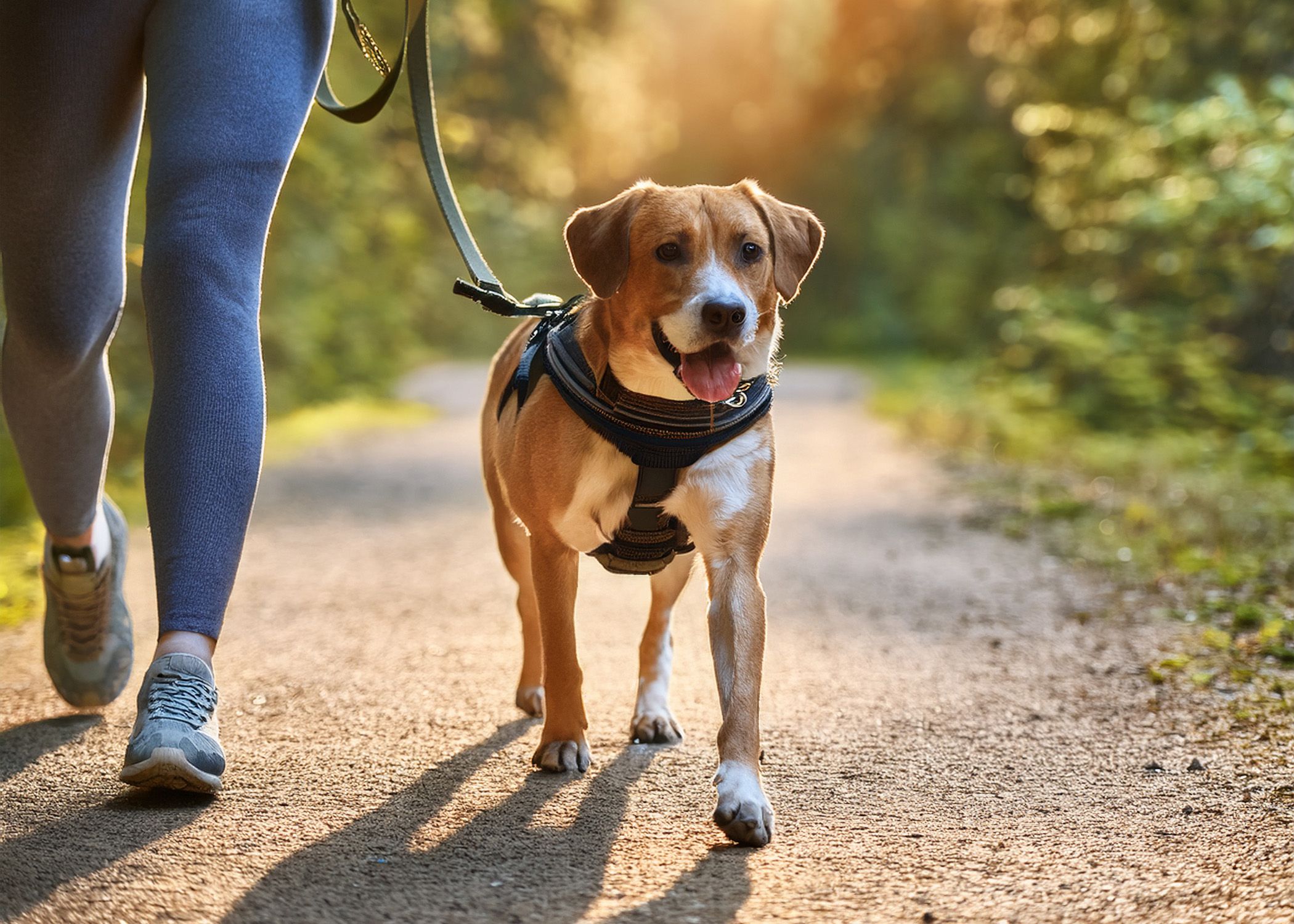
A properly fitted harness can make walks safer and more comfortable, especially for dogs who pull or try to back out of gear. The key is fit and supervision.
Safety note: If your dog seems painful, is limping, has skin sores, or you see swelling or bleeding, stop using the gear and contact your veterinarian.
Key takeaways
- A harness should be snug (secure) but not tight (painful).
- Straps should not pinch, rub, or sit in the “armpit” area.
- Your dog’s shoulders should move freely, no strap blocking shoulder motion.
- Do a quick “escape test” before every walk.
- Remove the harness when your dog isn’t supervised.
What a safe harness fit looks like
- Snug contact: you can fit about two fingers under each strap.
- Good placement: straps sit behind the front legs, not rubbing the inner leg/armpit.
- Free movement: your dog can walk and trot without straps restricting the shoulders.
Quick harness fit checklist (do this every time)
- Measure first: measure the base of the neck (where it meets the shoulders) and the widest part of the chest (usually behind the front legs).
- Snug, not tight: use the two-finger test under each strap.
- Check chest + shoulders: your dog’s front legs should move freely without straps blocking the shoulder joints.
- Check strap placement: straps should sit comfortably behind the front legs without digging into the “armpit” area.
- 10-second escape test: gently pull the harness in different directions and try sliding it forward over the head. If it shifts too easily, tighten and re-check.
- Rubbing check: after a short walk, look for redness, hair loss, or sensitive spots where straps contact the body.
How to put on a harness (simple steps)
- Put the harness on calmly, then reward with a treat.
- Fasten buckles securely, then adjust straps a little at a time.
- Do the escape test before you open the front door.
Common mistakes (and easy fixes)
- Too loose: your dog can back out. Tighten gradually, then re-test fit and movement.
- Straps sitting in the armpits: can cause rubbing. Adjust so straps sit behind the front legs without digging.
- Restricted shoulders: adjust so shoulders move freely and the harness doesn’t block the front of the shoulder.
- Leaving the harness on at home: increases snag/entanglement risk. Remove it when your dog isn’t supervised.
If your dog pulls hard
A harness can help, but it’s not a complete training plan. Pair your harness with reward-based loose-leash practice.
- Start in low-distraction areas and reward for slack in the leash.
- Avoid equipment that relies on pain or fear.
- If pulling is severe or your dog is reactive, ask your veterinarian for a referral to a qualified trainer or behavior professional.
Recommended harness
If you’re looking for a harness for everyday walking, here’s the one featured in this guide:
Our impact
A portion of every purchase supports our partner rescue and helps dogs get the care and second chances they deserve.
When to call the vet
Contact your veterinarian if you notice:
- Skin redness, sores, swelling, or bleeding where gear touches
- Sudden limping or clear pain during or after walks
- Repeated coughing, gagging, or breathing trouble during walks
- Persistent chafing or hair loss under straps
Sources
- VCA: Collar and harness options for dogs (fit, risks, supervision)
- VCA: Controlling pulling on walks (harness features and safe handling)
- AKC: The importance of a well-fitting harness
- AKC: Choosing the right dog harness (measuring and fitting tips)
- AKC: How to put on a dog harness
Last reviewed: January 2026