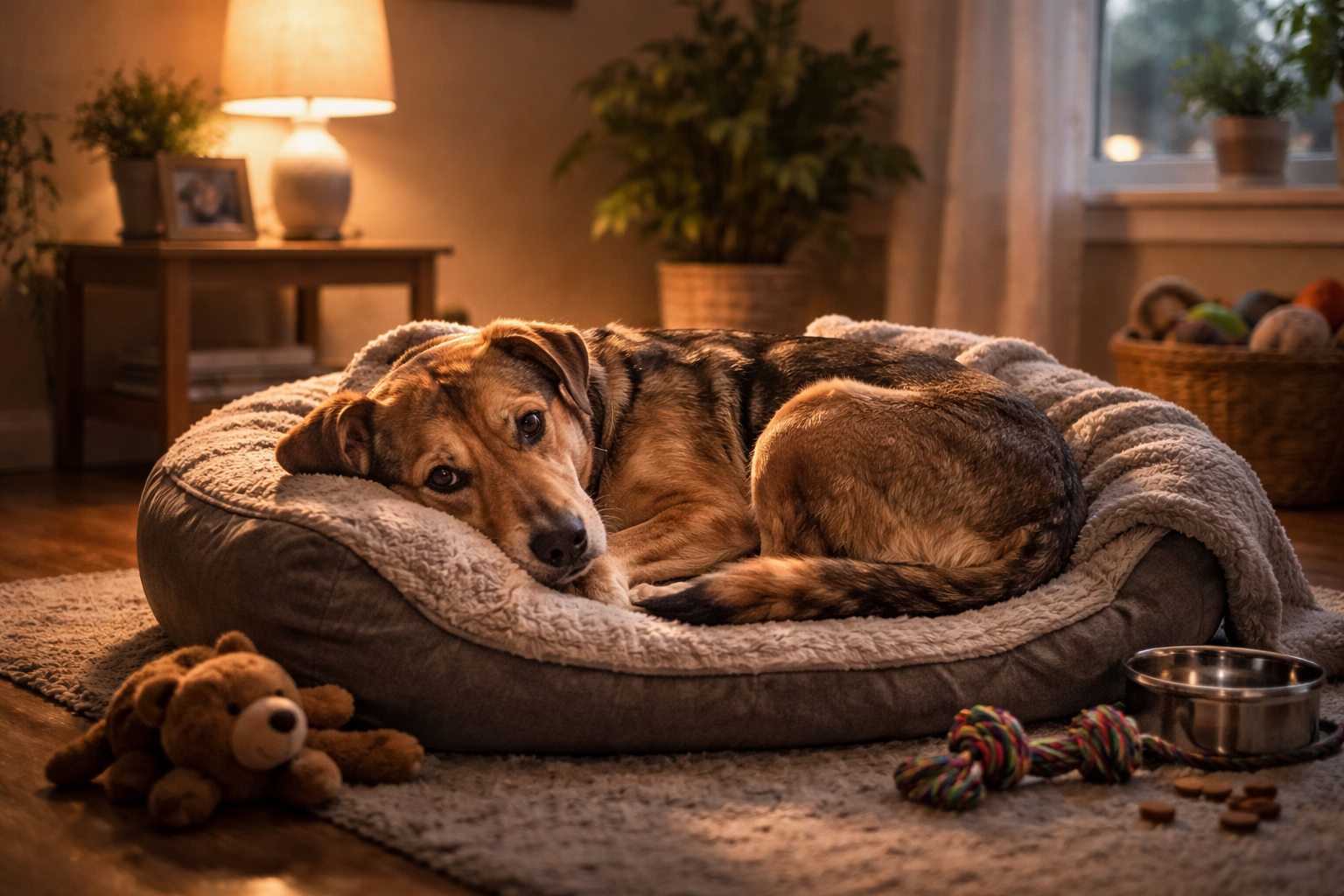
The car ride is over. The door is open. And your new dog steps into a home they have never smelled, never seen, and never had reason to trust.
The first night is one of the most important nights of your dog’s life with you, not because of what you do, but because of what you don’t do. This is Episode 02 of Street to Safe, SnoutHub’s series following a rescue dog’s journey to their forever home.
What Your Dog Is Carrying Into That First Night
By the time your new dog walks through your door, they have already been through a lot. Abandonment or surrender. A shelter stay. A car ride. New people. New smells at every turn.
Their cortisol levels are elevated. Their nervous system is in a state of high alert. Even if they seem calm on the surface, they are processing an enormous amount of new information.
The first night is not the time to introduce them to the whole family, host a welcome home gathering, or let them explore every room. It is a time for quiet, predictability, and low pressure.
Set Up One Safe Space Before They Arrive
Before your dog comes home, designate one quiet area as their base. What matters is that it is:
- Away from high-traffic areas of the house
- Quiet, minimal TV, voices, or foot traffic nearby
- Stocked with a bed, a water bowl, and a comfort item
- Accessible, they should be able to get in and out easily
This space tells your dog: this is yours. You are safe here. That message takes repetition to land, but it starts tonight.
The First Night Checklist
- Keep it quiet. Low voices, low energy, no loud TV or music.
- Limit introductions. One or two calm people maximum, no crowds.
- Let them sniff. Sniffing is how dogs process the world. Do not interrupt it.
- Offer food and water but do not worry if they do not eat. Stress suppresses appetite.
- Give them a lick mat or chew, rhythmic licking activates the parasympathetic nervous system and is genuinely calming.
- Do not force cuddles. Let them come to you when they are ready.
- Keep a light on or nearby, complete darkness in an unfamiliar place can be disorienting.
What to Expect That Night
Many dogs will not sleep well their first night. That is normal. You may see:
- Pacing or restlessness
- Whining or crying, especially if crated
- Waking frequently during the night
- Sleeping very heavily once they finally crash
- Refusing food until morning or even day two
None of this means you did something wrong. It means your dog is a living creature adjusting to an enormous change. Give it time.
The goal of the first night is not happiness. It is safety. Happiness comes later, and it will come.
First Night Essentials for Your New Bestie
- 🛏️ A dog bed or comfortable rest spot, their own territory
- 🧸 A stuffed animal, comfort and something to hold
- 🫧 A lick mat with peanut butter or wet food, calming and enriching
- 🦴 A long-lasting chew, occupies anxious energy
- 🧴 A calming spray or DAP diffuser, dog-appeasing pheromones can help
👉 Shop the First Night Essentials Bundle at the SnoutHub Store
Continue the Street to Safe Series
- 📍 Episode 00: Being Dumped, What It Feels Like for a Dog
- 📍 Episode 01: The Car Ride Home
- 📍 Episode 02: The First Night Home (you are here)
- 📍 Episode 03: The First Morning After Adoption
Sources: ASPCA, VCA Hospitals, American Kennel Club | Last reviewed: March 2026