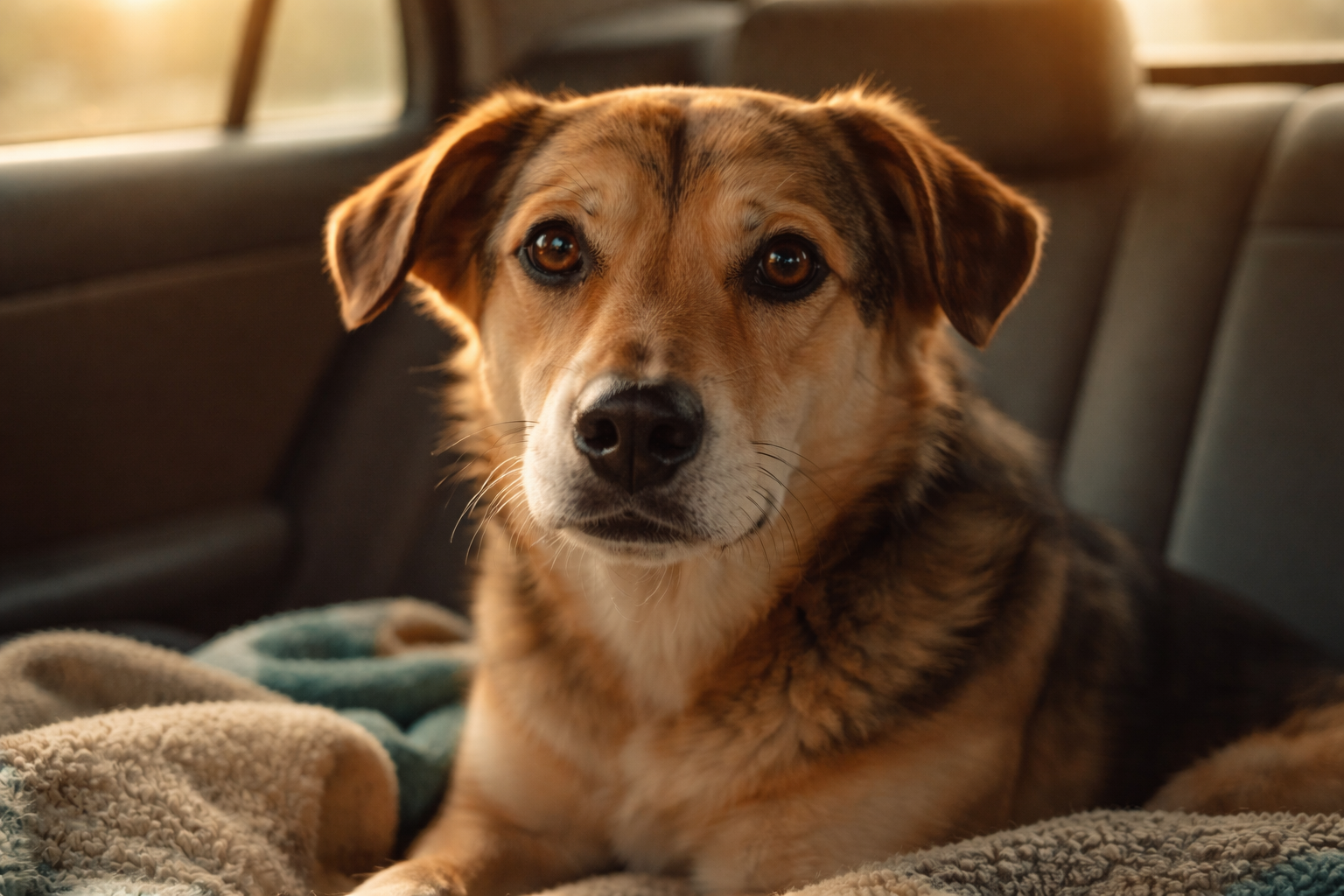
You’re smiling. Your heart is full. You just adopted a dog.
But here’s what your new bestie is thinking: What is happening? Where am I going? Is this safe?
The car ride home is one of the most overlooked moments in the adoption journey, and one of the most important. This is Episode 01 of Street to Safe, SnoutHub’s series following a rescue dog’s journey from the streets to their forever home.
Your Dog Doesn’t Know They’re Going Home
Humans experience this ride as a happy beginning. But your dog only knows: new smells, new person, new car, new rules.
Safety isn’t something they feel right away, it’s something they learn through repetition, consistency, and time. The car ride is just the first chapter.
That’s why calm matters more than excitement on this ride.
What’s Happening in Their Body
Many rescue dogs come from loud, unpredictable, stressful environments. Transition days, like adoption day, can be the most overwhelming of all.
During stress, a dog’s nervous system goes into survival mode. You might see:
- Panting or drooling heavily
- Shaking or trembling
- Wide eyes, “whale eye,” or constant scanning
- Whining, barking, or pacing
- Freezing completely still
- Trying to climb into your lap
None of this means your dog is “bad” or “ungrateful.” It means they’re processing an enormous amount of new input all at once. This is completely normal, and it will pass.
⚠️ Heads up: Refusing treats on the ride home doesn’t mean your dog isn’t food-motivated. It means they’re stressed. Don’t write off their food drive based on this moment.
Do This on the Ride Home
- Secure your dog, harness + seatbelt tether, travel crate, or carrier
- Keep it quiet, calm voices, minimal talking, no excited squealing
- Drive straight home, skip the “celebration” pet store stop
- Give them space, some dogs want closeness, others need distance; follow their lead
- Bring a towel or blanket, stress drooling, carsickness, and stress peeing are all real
Avoid These Common Mistakes
- Don’t let a new dog ride loose in the car, even the calmest dogs can panic
- Don’t have multiple people crowding, touching, or filming up close
- Don’t stop at a busy place “to celebrate”, that’s overwhelming, not fun, right now
- Don’t assume treat refusal = not food motivated
First Night Essentials (Keep It Simple)
Want to set your new bestie up for a calm first night? These are the basics that help most dogs settle:
- 🛏️ A quiet rest spot or dog bed
- 🧸 A soft stuffed animal for comfort
- 🫧 A lick mat for calming enrichment
- 🦴 A long-lasting chew (appropriate for your dog’s size)
👉 Shop First Night Essentials at the SnoutHub Store
When to Call the Vet
Contact your veterinarian if you notice:
- Repeated vomiting, collapse, or severe distress that won’t calm
- Blue or pale gums, heavy panting that won’t stop
- Signs of pain, yelping, guarding, inability to settle
Continue the Street to Safe Series
- 📍 Episode 00: Being Dumped, What It Feels Like for a Dog
- 📍 Episode 01: The Car Ride Home (you are here)
- 📍 Episode 02: The First Night Home
- 📍 Episode 03: The First Morning After Adoption
Sources: ASPCA, RSPCA, VCA Hospitals, Humane Society | Last reviewed: March 2026