← Back to Start Here: New Dog Journey
Your home setup can prevent most early problems, accidents, chewing, barking, and overwhelm. The goal is not “dog-proof everything forever.” The goal is to create a calm, controlled environment while your dog decompresses and learns the routine.
Key takeaways
- Start with less space, not more. Expand access gradually.
- Create a calm zone (gate/pen/crate) for rest and decompression.
- Remove hazards before Day 1: cords, chemicals, trash, small objects.
- Management beats “hoping the dog behaves” in the first month.
Your Week 1 home setup goals
- One calm decompression zone (where your dog can rest undisturbed)
- One potty routine path (door access, leash spot, wipes/towels)
- One safe confinement plan (for cooking, visitors, showers, and alone-time practice)
Step 1: Create a decompression zone
This is your dog’s default safe place. Keep it quiet, boring, and predictable.
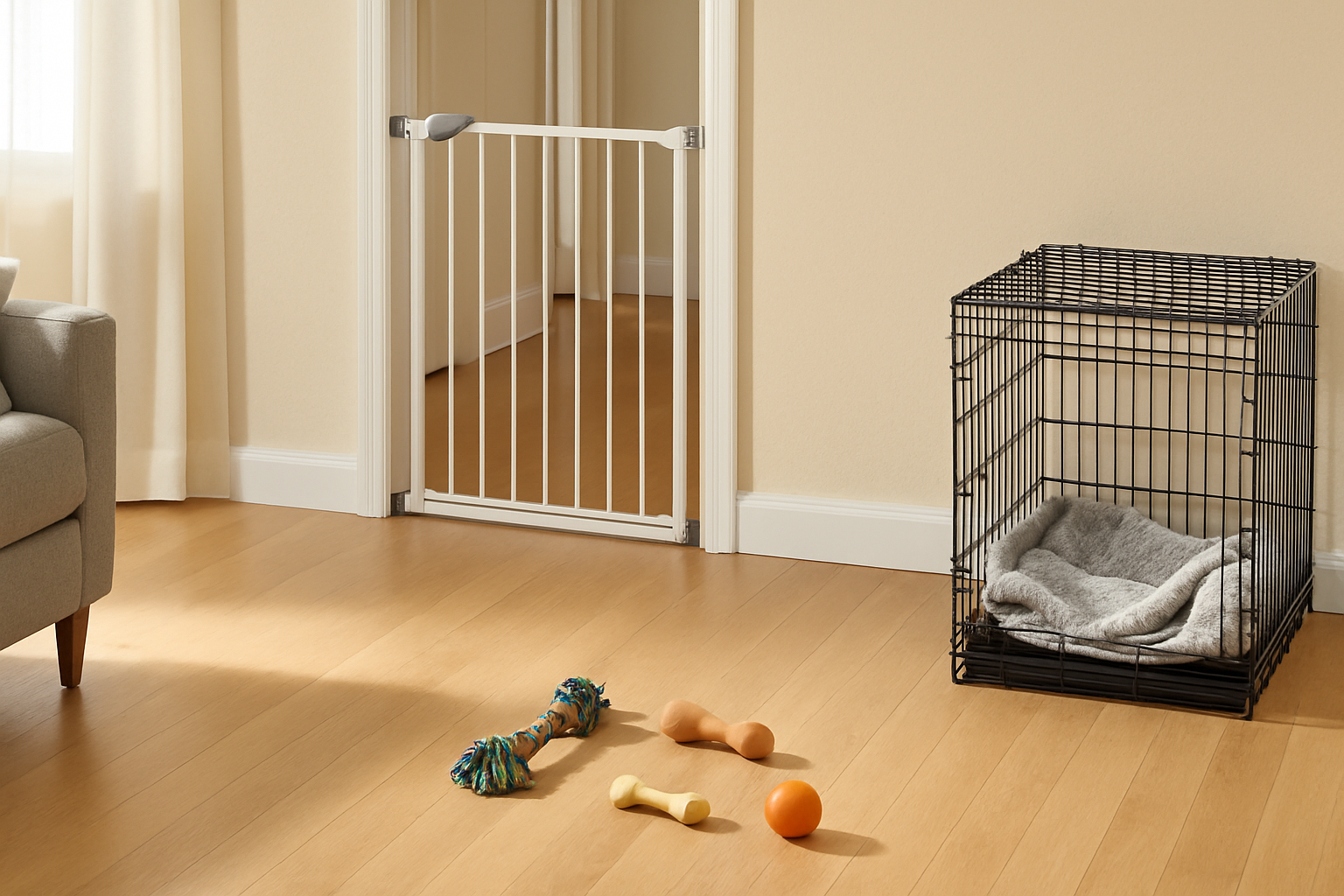
- Options: baby-gated room, playpen, crate, or a calm corner with a bed.
- Add: bed/blanket, water bowl, 1-2 safe toys, and calm enrichment (lick/chew).
- Place it: away from the front door and heavy traffic if possible.
Golden rule
Rest is training. Protect quiet time like it’s part of your behavior plan.
Step 2: Set up management (how you prevent chaos)
- Baby gates: block off bedrooms, stairs, kitchens, or cat areas.
- Playpen: creates a “safe bubble” when you can’t supervise closely.
- Crate (optional): helpful if introduced slowly and positively (never used for punishment).
- Leash indoors (optional): for the first few days, a light drag leash can help with gentle guidance (supervise closely; remove when resting).
Room-by-room dog-proofing checklist
Entryway / Front door
- Put a hook or spot for leash/harness near the door.
- Keep a towel and poop bags by the door.
- Plan “door safety” (gate, closed interior door, or leash-on before opening).
Living room
- Pick up shoes, kids’ toys, remotes, and anything chewable.
- Hide or protect cords (behind furniture or cord covers).
- Choose 2-3 safe toys and put the rest away (rotation prevents overstimulation).
- Place the dog bed or calm mat in a low-traffic spot.
Kitchen
- Use a gate if needed, kitchens have food, trash, and sharp hazards.
- Move trash to a cabinet or use a secured lid.
- Keep counters clear (some dogs counter-surf immediately).
- Store human food safely (especially chocolate, grapes/raisins, xylitol products).
Bathroom / Laundry
- Close toilet lids (some dogs drink from them).
- Store detergents, pods, medications, and cleaners out of reach.
- Keep small items (hair ties, razors, cotton swabs) secured.
Bedrooms
- Block access at first if you want calm boundaries.
- Pick up socks, underwear, and anything small enough to swallow.
- Secure chargers and cords.
Yard / Balcony
- Check fencing and gates for gaps and weak spots.
- Remove toxic plants and sharp objects.
- Secure pool access and standing water.
- Balcony: never leave a dog unsupervised; check railing gaps.
Cat households (extra setup)
- Create a cat-only zone with food, water, and litter.
- Use baby gates and vertical escape routes (cat trees, shelves).
- Keep early intros slow and controlled (no forced contact).
Kid households (extra setup)
- Choose a dog-free rest zone where kids don’t enter.
- Set kid rules before the dog arrives: no hugging, no face-to-face, no chasing.
- Keep toys picked up, both dog toys and kid toys.
Common safety hazards to remove
- Loose cords and phone chargers
- Medications and vitamins
- Cleaning chemicals and detergent pods
- Trash access and food wrappers
- Small swallowable objects (socks, underwear, hair ties)
- Human foods that are toxic to dogs (xylitol, chocolate, grapes/raisins, onions/garlic)
Your first-week “space expansion” plan
Start small, then earn more freedom through calm behavior.
- Days 1-2: one main room + decompression zone.
- Days 3-4: add one additional area (supervised).
- Days 5-7: expand gradually if potty routine is stable and chewing is controlled.
Gear to consider
Don’t buy everything today, this is just what helps most new-dog households.
Baby gate / playpen: the easiest way to prevent chaos.
Crate (optional): helpful for rest and routine if introduced positively.
Enzyme cleaner: for accidents (prevents repeat marking).
Cord covers: useful for chew-prone dogs.
Calm enrichment: lick mat or fillable toy for settling.
Next step
Step 4: Supplies Checklist (What You Actually Need Before Day 1).
Last reviewed: January 2026