← Back to Start Here: New Dog Journey
The first 24 hours set the tone. Your goal today is not “a perfect dog.” Your goal is safe, calm, and predictable, so your dog can decompress and start learning your routine.
Key takeaways
- Keep life small: quiet home, limited space, limited visitors.
- Use management (gates/pen/crate) to prevent chaos and accidents.
- Short sniff walks beat long adventures today.
- Expect stress behaviors (shutdown or overstimulation). Go slow.
Before you walk in the door (5-minute setup)
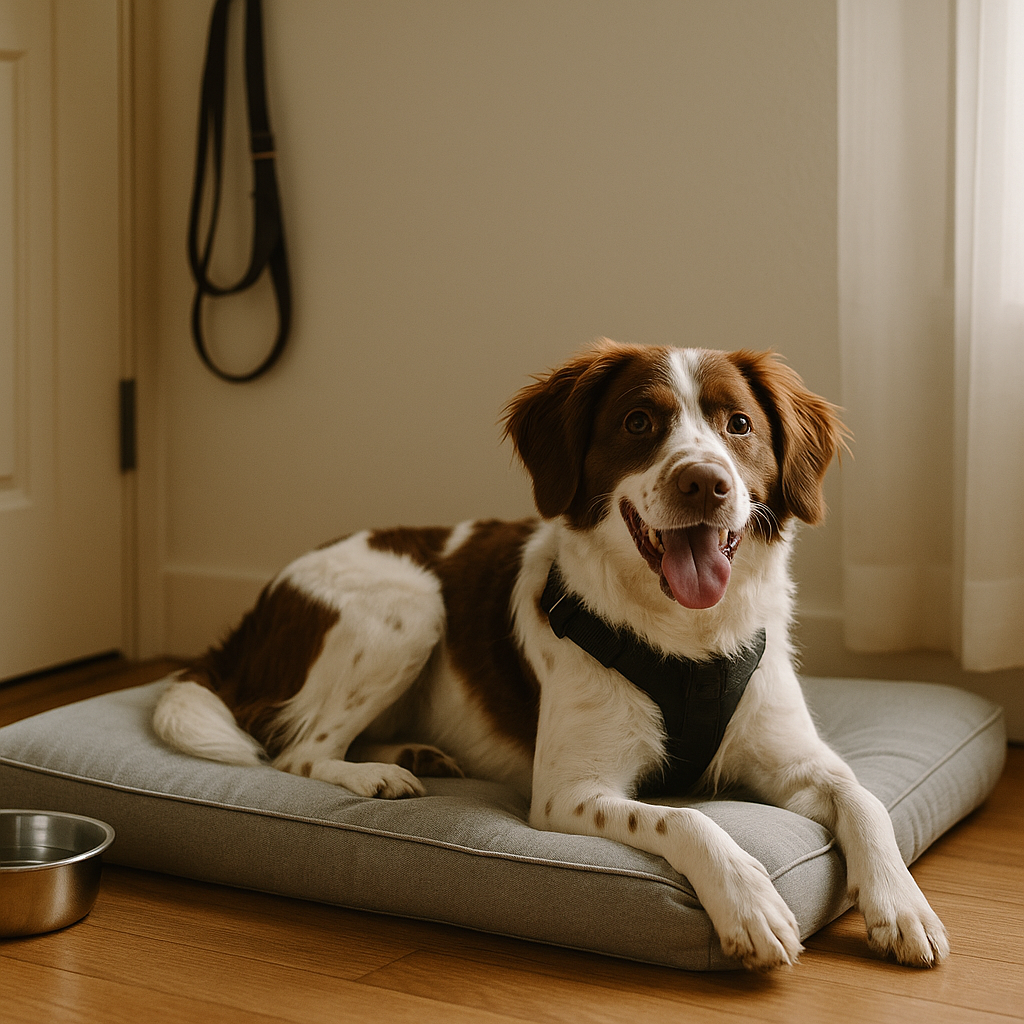
- Choose a calm zone: a gated room, pen, or quiet corner with a bed and water.
- Remove hazards: cords, shoes, kids’ toys, trash, food on counters.
- Prep the basics: water bowl filled, a few safe toys, poop bags by the door.
- Plan your first hour: potty → water → calm settle → rest.
Homecoming rule
Fewer choices = less stress. Give your dog a smaller safe space first. You can expand access later.
The first hour: potty, water, settle
- Potty first: go straight outside to a quiet potty spot. Reward immediately.
- Quiet entry: bring your dog inside calmly, no crowd, no excitement.
- Water + decompression zone: show them the bed/zone and let them rest.
- Keep interaction low-pressure: let your dog approach you. Avoid hugging/face-to-face pressure.
Food on Day 1 (keep it gentle)
- Use the same food the shelter/rescue used if possible (sudden changes can upset stomachs).
- If appetite is low, don’t panic, many dogs eat lightly the first day.
- Use food as a calm bonding tool (hand-feed a portion or do gentle treat tosses).
Sleep and rest (your secret weapon)
New environments are exhausting. Many dogs need lots of sleep to settle.
- Encourage quiet rest after short potty breaks.
- Keep the house calm (TV down, fewer noises, predictable movement).
- If your dog gets zoomy/mouthy, it’s often overtired stress, add rest, not more stimulation.
First-day schedule (simple template)
- Every 2-4 hours: potty break + calm praise/treat
- 1-2 short walks: 10-20 minutes max, quiet route, sniffing allowed
- Meals: normal portion split into 2 feedings if needed
- Rest blocks: most of the day should be calm downtime
Introductions (go slower than you think)
If possible, keep introductions minimal today. Stress stacks fast in the first 24 hours.
People in the home
- Ask everyone to ignore the dog at first (no reaching, no leaning over, no hugging).
- Let the dog approach. Reward calm curiosity.
- Keep voices soft and movements slow.
Other dogs
- If you must introduce today, do it outside on leash, parallel walking, then short sniff with quick breaks.
- End early on a good note.
Cats
- Do not force contact. Use a baby gate or separate rooms.
- Let the cat have full escape options.
What to avoid today
- Dog parks, busy patios, crowded stores
- A parade of visitors (“meet the dog!” day)
- Long adventures to “tire them out”
- Immediate baths or heavy grooming unless necessary
Safety + admin tasks (do these within 24 hours)
- ID: collar and tag on (with your contact info).
- Microchip: confirm the dog is chipped and start the registration transfer (if applicable).
- Vet plan: schedule an initial checkup if you don’t have recent medical records.
- Escape prevention: double-check gates, doors, and leash/harness fit before every outing.
What’s normal today
- Shutdown: quiet, sleeping a lot, avoiding contact
- Overstimulation: pacing, whining, barking, mouthiness, zoomies
- Low appetite: mild hesitation to eat
- Accidents: common while the dog learns the routine
When to call the vet (today)
- Repeated vomiting/diarrhea, blood in stool, severe lethargy
- Labored breathing, collapse, uncontrolled shaking
- Not eating for 24 hours plus acting unwell
- Any injury or sudden limping that doesn’t improve with rest
Gear to consider
- Baby gate / playpen: creates a calm decompression zone and prevents chaos.
- Crate: useful if introduced slowly and positively.
- Enzyme cleaner: accidents happen; this prevents repeat potty spots.
- Harness + leash: secure fit for safe potty trips and first walks.
- Lick mat / fillable toy: calming enrichment during rest time or short alone-time reps.
You’ll go deeper on decompression expectations (including the 3-3-3 guideline) in Step 9.
Next step
Step 8: The First Week Schedule (sleep, potty, alone time, routines).
Last reviewed: January 2026