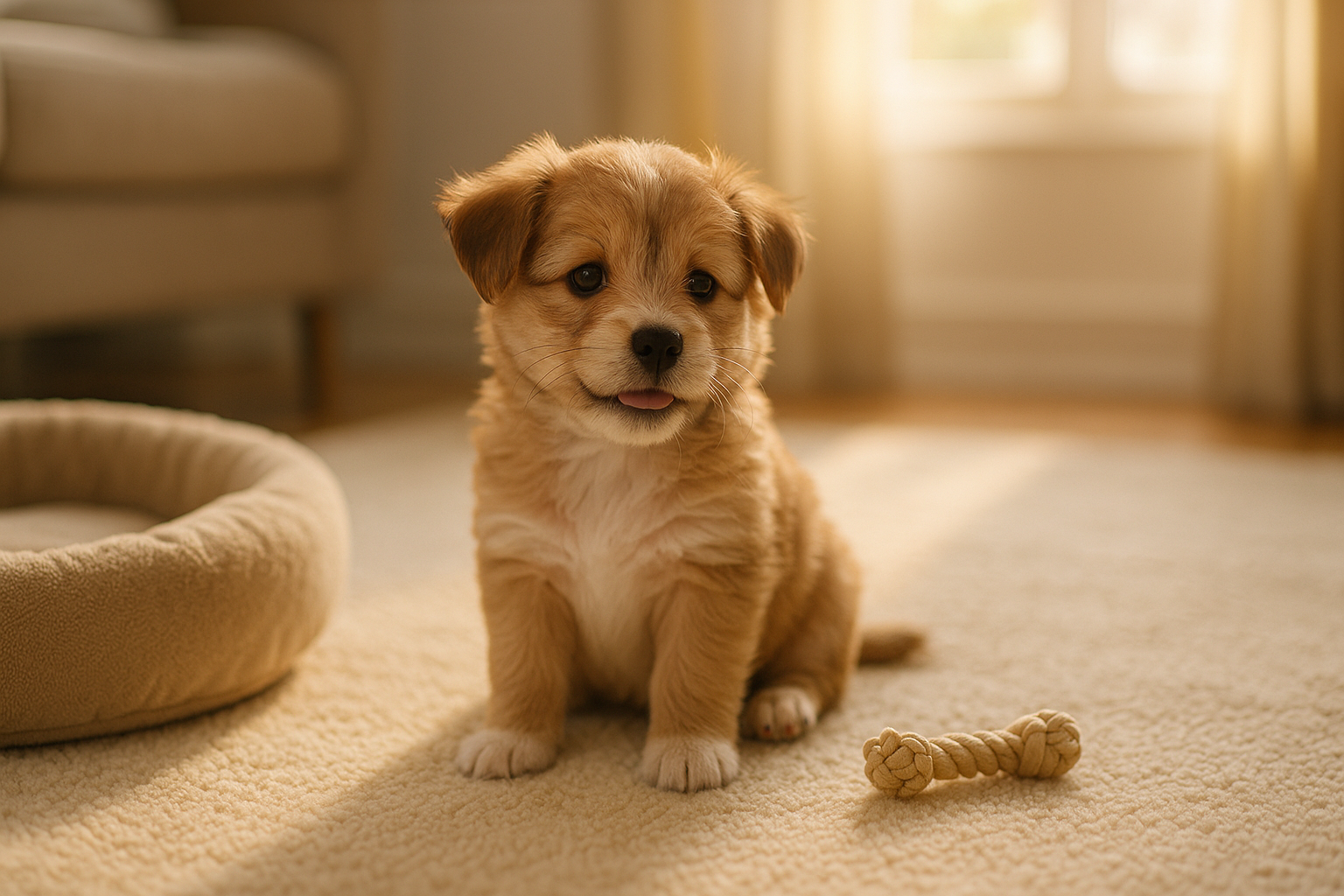
Congratulations, Bestie. There is a brand new set of paws in your home, and everything just got a little louder, a little messier, and a whole lot sweeter. The first week with a puppy is pure magic, and it can also feel a bit like joyful chaos. Take a breath. Your pup does not need a perfect human. They just need a patient one who shows up with love, structure, and a lot of treats.
Here is your gentle, practical roadmap for the first seven days, grounded in guidance from the American Kennel Club and veterinary experts. A dog is a bestie, and this is the week you two start becoming exactly that.
Before the First Night, Set the Stage
Puppies feel safest in small worlds. Instead of giving your new friend the run of the whole house, pick one puppy-proofed room to start, then let them explore the rest one room at a time. Tuck away cords, shoes, houseplants, and anything small enough to swallow.
Have the basics ready before they walk in the door: a crate, a soft bed, food and water bowls, the same food they were eating at the shelter or breeder, a collar and leash, and a couple of safe chew toys. Keeping their diet the same for the first days helps avoid an upset tummy while everything else in their life is changing.
Introduce family members one at a time, calmly. Skip the welcome party. A crowd of new faces on day one is overwhelming, and a stressed puppy learns to be nervous instead of trusting.
Surviving the First Night
The first night is the hard one, and that is completely normal. Your puppy just left their mother and littermates, and the quiet can feel scary.
Place the crate in your bedroom so your pup can hear and smell you. That closeness is not spoiling them, it is reassurance. A blanket or toy that carries a familiar scent helps too. If your puppy whimpers, a calm hand near the crate often settles them faster than words.
Wear them out a bit before bed with gentle play, then do one last potty trip. Very young puppies usually cannot hold their bladder all night, so expect to carry them outside once or twice. Keep those middle-of-the-night trips boring and quiet: outside, potty, praise, back to bed. No playtime at 3 a.m., or you will teach them that dark equals party time.
Feeding on a Schedule
Young puppies typically eat three meals a day on a consistent schedule. Regular meals do more than fuel growth. What goes in on a schedule comes out on a schedule, which makes potty training far more predictable.
Feed at the same times each day, offer fresh water throughout the day, and pick up the water bowl a couple of hours before bedtime to help with overnight dryness. If you plan to switch foods, do it gradually over a week by mixing a little more of the new food in each day.
Potty Training Starts Day One
Consistency is everything here. Choose one outdoor potty spot and use the same simple cue every time, like "go potty."
Take your puppy out often. A good rule of thumb is every 45 minutes or so while they are awake, plus right after they eat, drink, wake from a nap, or finish playing. The second they go in the right place, reward with a treat and happy praise so they connect the dot: outside equals good things.
Accidents will happen. Never punish them. Scolding just teaches your pup to hide when they need to go. Clean up calmly with an enzyme cleaner and keep the routine steady.
Crate Comfort and Rest
Puppies sleep a lot, often 16 to 18 hours a day, and all that sleep is when their little bodies and brains grow. The crate is not a cage, it is their cozy den, a safe place that is entirely theirs.
Make it inviting with a soft blanket and toss a treat inside so entering feels like a win, never a punishment. Keep it in a calm corner during the day. Let your pup nap when they need to, and resist the urge to wake a sleeping puppy just for cuddles. A rested puppy is a happier, easier puppy.
Gentle Socialization, Safely
The first weeks are a golden window for socialization, and it shapes the confident, friendly dog your puppy will become. But timing matters, because your pup is not fully protected until their vaccine series is complete.
Until your vet gives the all clear, keep your puppy away from unknown dogs and places where lots of dogs go, like dog parks and busy sidewalks. You can still socialize safely at home: new sounds, gentle handling of paws and ears, meeting calm and vaccinated family pets, and short car rides. Carrying your puppy through new environments lets them see the world without touching risky ground. Ask your veterinarian about puppy classes that require proof of vaccination, since many are designed to be safe during this stage.
The First Vet Visit
Book your puppy's first vet appointment early, ideally within the first few days of bringing them home. Many breeders and shelters actually require an exam within about three days.
Bring any medical records from the shelter or rescue and, if you can, a fresh stool sample, since most puppies carry intestinal worms like roundworms. Your vet will do a full nose-to-tail exam, check weight, listen to heart and lungs, and set up a vaccination and deworming plan. This first visit also builds the relationship with your vet, so they learn what is normal for your individual dog.
When to Call Your Vet
Puppies are small and things can change quickly, so trust your gut and call your veterinarian right away if you notice:
- Repeated vomiting or diarrhea, especially with blood
- Refusing to eat or drink for more than a day
- Lethargy, weakness, or a puppy who is hard to wake
- Pale gums, or gums that are not a healthy pink
- A distended or painful belly
- Persistent coughing, labored breathing, or nasal or eye discharge
- Any seizure, collapse, or signs of significant pain
When in doubt, make the call. A quick conversation is always worth the peace of mind.
You Have Got This, Bestie
Week one is a whirlwind, but every messy accident and every 3 a.m. potty run is building trust between you and your new best friend. Go slow, keep the routine, and soak up the puppy breath. This is the beginning of one of the great love stories of your life.
Ready to grow your pack, or looking for the pup who is waiting for you? Visit snouthub.com to meet adoptable dogs and find your next bestie. A dog is a bestie.
---
*This article is for general educational purposes and is not a substitute for professional veterinary care. Always consult your veterinarian about your puppy's specific health needs.*