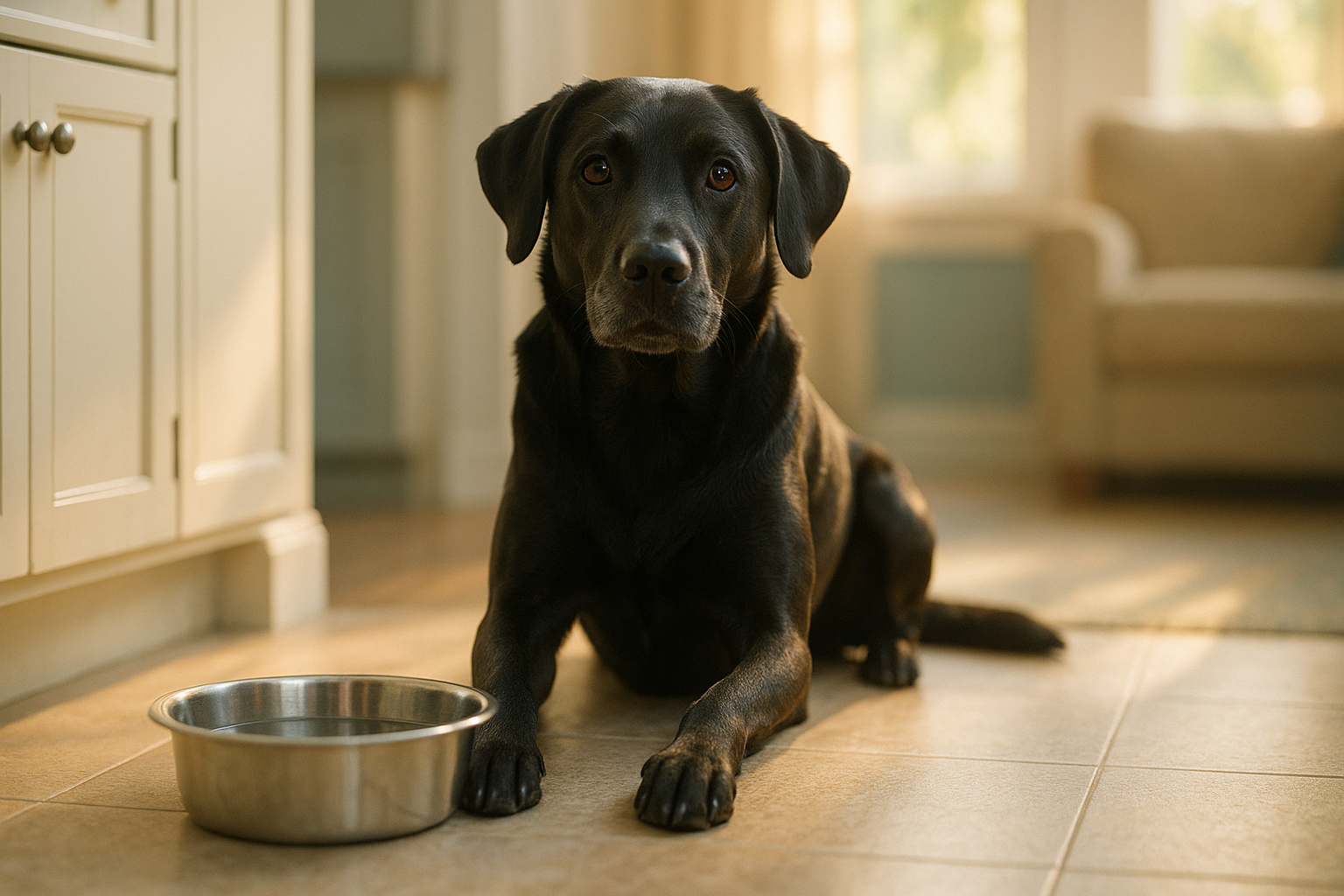
There are few things that make a dog parent's stomach drop quite like watching a full water bowl sit untouched all afternoon. You refill it, you set it down, you wait, and your best friend just walks right past it. If that is you right now, take a breath. You are already doing the most important thing by paying attention, and that instinct is exactly what your dog needs.
Water is not optional for our besties. It keeps their organs working, their joints cushioned, and their temperature steady on hot days. So when a dog goes off water, it is worth understanding why and knowing when a skipped sip is no big deal versus when it is a real red flag. Let us walk through it together.
How Much Water Should Your Dog Actually Drink?
Before you panic, it helps to know what normal looks like. As a general rule, dogs need at least one ounce of water per pound of body weight each day, according to the American Kennel Club. So a 50-pound Lab-mix needs roughly 50 ounces, a little over six cups, on an average day.
That number is not set in stone. Dogs eating wet or canned food take in a lot of moisture through their meals, so they may drink less from the bowl and still be perfectly hydrated. Weather, activity, and age all move the needle too. A little day-to-day variation is completely normal. A sudden, dramatic drop is what deserves your attention.
The Everyday Reasons Dogs Skip the Bowl
Most of the time, a dog turning away from water has a simple, fixable explanation. Here are the usual suspects.
A dirty or smelly bowl. Dogs have far more sensitive noses than we do. A slimy film of bacteria, leftover food particles, or even the plastic smell of a cheap bowl can be enough to turn your pup off. What looks clean to you may reek to them.
The water itself. Stale water that has sat out all day, water that is too warm, or a switch in tap water (say, after a move or a trip) can all make a dog hesitate.
A new environment or routine. Travel, a move, houseguests, or even rearranging where the bowl sits can throw a sensitive dog off their normal drinking rhythm. Stress and anxiety genuinely suppress thirst.
Diet changes. If you recently switched from dry kibble to wet food, your dog is simply getting more water from their meals and naturally drinking less. That is a good thing, not a problem.
Age and weather. Senior dogs sometimes drink less as their thirst drive softens, and cooler weather means less panting and less demand for water.
The Medical Reasons That Need a Closer Look
Sometimes a dog avoiding water is trying to tell you something bigger. According to PetMD, these causes are worth taking seriously.
Dental pain. A cracked tooth, sore gums, or an abscess can make the act of drinking genuinely hurt. If your dog approaches the bowl and backs away, or drops food, look at their mouth.
Nausea or an upset stomach. Gastroenteritis and other digestive troubles can kill a dog's desire to drink, and they often show up alongside vomiting or diarrhea, notes VCA Animal Hospitals.
Joint pain. For an older or arthritic dog, walking to the bowl or bending down to lap can be uncomfortable enough to skip. Sometimes the fix is as simple as raising the bowl or adding a second one closer by.
Underlying illness. Kidney issues, bladder infections, and other conditions can change how much a dog drinks, in either direction. This is why a big shift in drinking habits is always worth a vet conversation.
Simple Tricks to Get Your Bestie Drinking Again
If your dog is otherwise bright, playful, and eating, try these gentle nudges before anything else.
- Scrub the bowl daily. Wash it with soap and hot water every day and run it through the dishwasher weekly. Try a stainless steel or ceramic bowl instead of plastic.
- Freshen the water often. Cool, clean water refilled a couple of times a day is far more appealing. Toss in an ice cube or two on hot days.
- Add a little flavor. A tablespoon of unsalted, onion-free chicken broth stirred into the water can work like magic.
- Try a pet fountain. Many dogs are drawn to moving water and will drink more from a fountain than a still bowl.
- Offer water-rich foods. Mixing a little water into kibble, or adding some wet food, sneaks hydration into mealtime.
- Add bowls around the house. More access points, especially near where your dog rests, make drinking easy for seniors and homebodies.
How to Check if Your Dog Is Dehydrated
You can do a quick at-home check. The AKC recommends the skin elasticity test: gently lift the skin between your dog's shoulder blades and let go. In a well-hydrated dog, it springs right back. If it is slow to settle, that points to dehydration.
You can also check the gums. Press a finger gently against them and lift. The spot should turn from white back to pink quickly. Dry, sticky, or tacky gums are another warning sign, along with sunken eyes, a dry nose, low energy, and thick saliva.
When to Call Your Vet
Please do not wait it out if you see any of the following. Call your veterinarian right away if your dog:
- Has not had any water for 24 hours, or is drinking dramatically less than usual
- Shows dehydration signs like dry or sticky gums, sunken eyes, or skin that does not spring back
- Is also vomiting, having diarrhea, or refusing food
- Seems lethargic, weak, or wobbly
- Has known kidney, dental, or other health conditions
A dog going three to four days without water is a genuine emergency, per PetMD, but you never want to get anywhere close to that. When in doubt, make the call. Vets would always rather hear from you early.
You know your dog better than anyone. That gut feeling that something is off is worth trusting every single time.
---
*A dog is a bestie, and every bestie deserves a parent who pays attention like you do. This article is for general education and is not a substitute for professional veterinary advice. Always consult your veterinarian about your dog's specific health.*
Want more warm, practical dog-care guides and adoptable dogs looking for their forever bestie? Come hang out with us at snouthub.com and meet a dog who is waiting to drink from your water bowl someday.