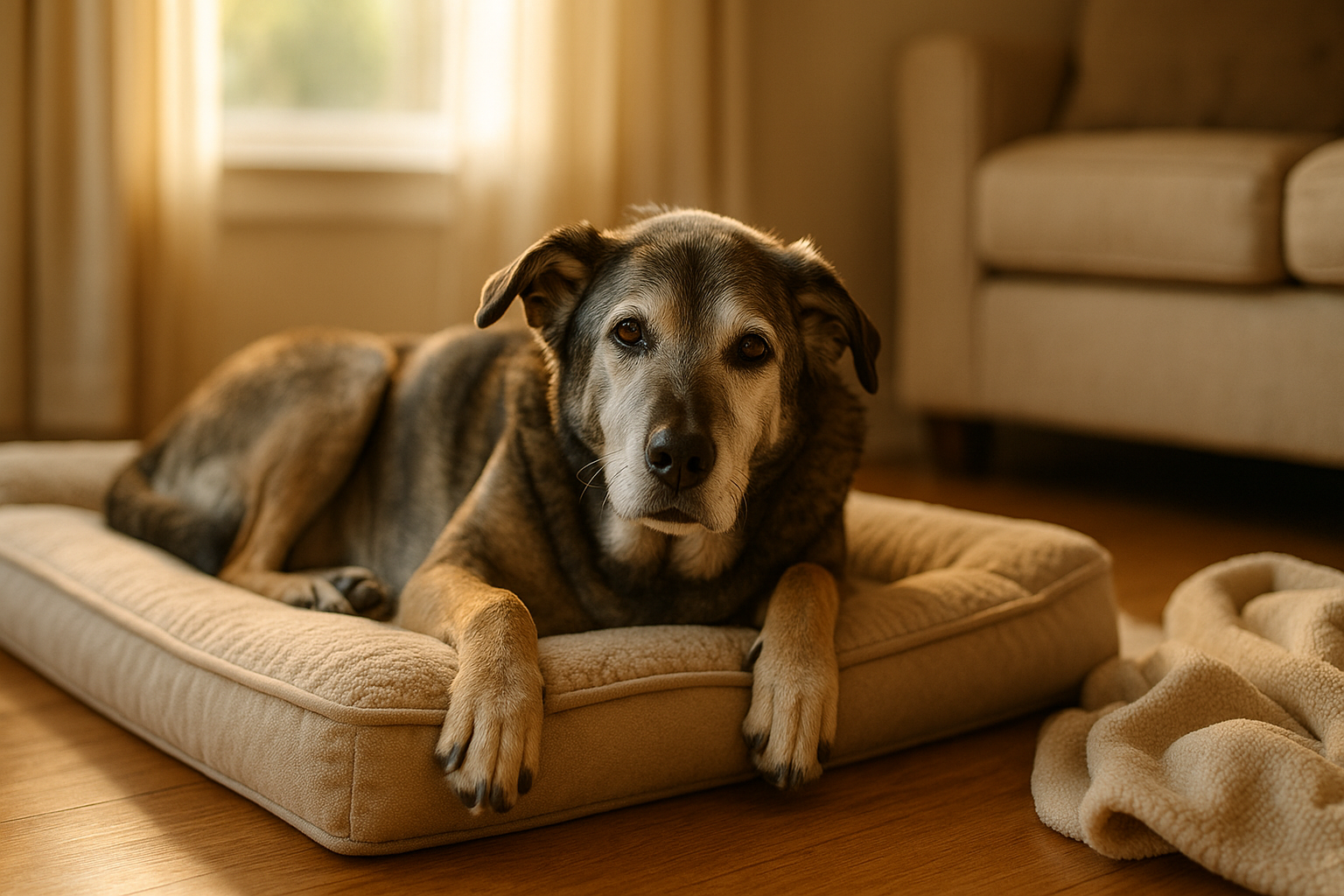
There is a special kind of love that grows once your dog goes gray around the muzzle. The zoomies get shorter, the naps get longer, and that soft old face somehow becomes the best part of your whole day. Our senior Besties gave us their whole hearts, and now it is our turn to make their golden years soft, easy, and full of comfort. The good news is that small, thoughtful changes at home can make a huge difference. Let us walk through it together.
What Changes as Your Dog Gets Older
Aging is not a disease, but it does bring real shifts in the body. The most common one is joint wear, also called osteoarthritis. It is far more common than most people realize. Veterinary sources note that osteoarthritis affects at least 20 percent of dogs over one year old and around 80 percent of dogs over eight years old. That means most senior dogs are dealing with some level of joint discomfort, often quietly, because dogs are champions at hiding pain.
Beyond joints, older dogs may sleep more, lose a little muscle over the hips and spine, feel the cold more sharply, and move a bit slower on the stairs. None of this means your dog is done enjoying life. It just means the daily routine deserves a gentle tune-up.
Reading the Signs of Joint Pain
Because dogs rarely cry out, comfort starts with paying attention. Watch for these common signs of arthritis and joint pain:
- Stiffness or limping, especially first thing in the morning or after a nap
- Difficulty getting up, lying down, or settling into a comfortable position
- Slowing down on walks, or lagging behind when they used to lead
- Hesitation or refusal to jump on the couch, climb stairs, or hop in the car
- Muscle loss over the back legs, or a hunched posture
- Licking at a joint, or flinching when touched in a certain spot
- New grumpiness, since pain can make even the sweetest dog short-tempered
If you notice a few of these, it is worth a conversation with your vet. Catching joint issues early gives you far more tools to keep your Bestie comfortable.
Protecting the Joints
You cannot stop aging, but you can absolutely slow the wear and ease the ache. Here is where your effort pays off most.
Keep the weight healthy. This is the single biggest thing you control. Every extra pound puts more load on already tender joints and speeds up cartilage breakdown. A lean senior dog moves easier, hurts less, and often lives longer. If you are not sure about your dog's ideal weight, ask your vet to show you a body condition score.
Keep moving, gently. Rest is not the answer. Regular, low-impact movement keeps muscles strong and joints lubricated. Think shorter, more frequent walks, gentle sniff-strolls, and soft-surface play instead of hard sprints or big jumps. Match the intensity to the dog in front of you today, not the puppy they used to be.
Talk to your vet about supplements and medication. Joint supplements containing glucosamine, chondroitin, green-lipped mussel, and omega-3 fatty acids are widely used to support cartilage and calm inflammation. For dogs in real pain, vets often prescribe anti-inflammatory medications such as carprofen or meloxicam, sometimes paired with gabapentin for chronic aches. These need veterinary guidance and monitoring, so never reach for human painkillers, which can be dangerous for dogs.
Explore extra therapies. Many senior dogs get real relief from physical rehab, underwater treadmill work, massage, acupuncture, and therapeutic laser. Ask your vet what is available near you.
The Right Bed Changes Everything
If your senior dog is sleeping more, the surface they sleep on matters more than ever. A thin, flat bed lets an aging body press into the hard floor, which aggravates sore joints and pressure points.
An orthopedic bed with real supportive foam helps distribute weight evenly, cushions the hips, elbows, and shoulders, and makes getting up far less of a struggle. Look for a bed that is big enough for your dog to stretch out fully, with a cover you can wash easily, since older dogs sometimes have accidents. Bolstered edges give a comforting place to rest the head, and a low or open side makes climbing in painless.
Warmth helps too. Older joints stiffen in the cold, so a cozy blanket layer and a draft-free spot can make sleep deeper and mornings easier. Place the bed somewhere quiet but still part of the family, because your Bestie wants to be near their people.
Small Daily-Care Changes That Add Up
Comfort is built from a dozen little things. These home adjustments make everyday life gentler:
- Lay down traction. Slippery hardwood and tile are scary and painful for wobbly legs. Add non-slip runners or washable rugs along your dog's main pathways.
- Add ramps or steps. A ramp to the car or gentle steps to the couch and bed save your dog from hard, jarring jumps.
- Raise the bowls. Elevated food and water dishes ease the strain on the neck, shoulders, and elbows at mealtime.
- Keep nails short. Long nails change how the paw hits the ground and throw off already-achy joints. Regular trims help a lot.
- Warm up before walks. A minute or two of easy movement before a real walk loosens stiff joints, just like it does for us.
- Stick to a routine. Predictable meals, potty breaks, and gentle activity comfort senior dogs, especially if their eyesight, hearing, or memory is fading.
- Keep up dental and grooming care. Sore mouths and matted coats add hidden discomfort that is easy to miss.
When to Call Your Vet
Reach out to your veterinarian if your senior dog shows any of the following:
- Sudden limping, an inability to bear weight, or signs of severe pain
- A noticeable drop in mobility, or trouble standing and walking
- Loss of appetite, unexplained weight change, increased thirst, or changes in bathroom habits
- New confusion, restlessness, pacing at night, or getting lost in familiar places
- Any joint that is hot, swollen, or clearly painful to touch
- A dog already on joint medication whose comfort suddenly worsens
Senior dogs benefit from wellness checkups at least twice a year, since problems caught early are so much easier to manage. You know your dog best. If something feels off, trust that instinct and make the call.
Loving Them Through the Gray Years
Caring for a senior dog is not about fighting the clock. It is about making each day soft, safe, and full of love. A good bed, easy footing, healthy weight, gentle movement, and a vet in your corner can give your old friend more comfortable, tail-wagging years. Because a dog is a bestie, and the ones who have loved us the longest deserve our very best.
Want to help even more gray-muzzled sweethearts find comfort and a home? Visit snouthub.com to meet adoptable dogs and discover more ways to care for your Bestie at every age.
---
*This article is for general information and is not a substitute for professional veterinary advice. Always consult your veterinarian about your individual dog's health, medications, and care.*