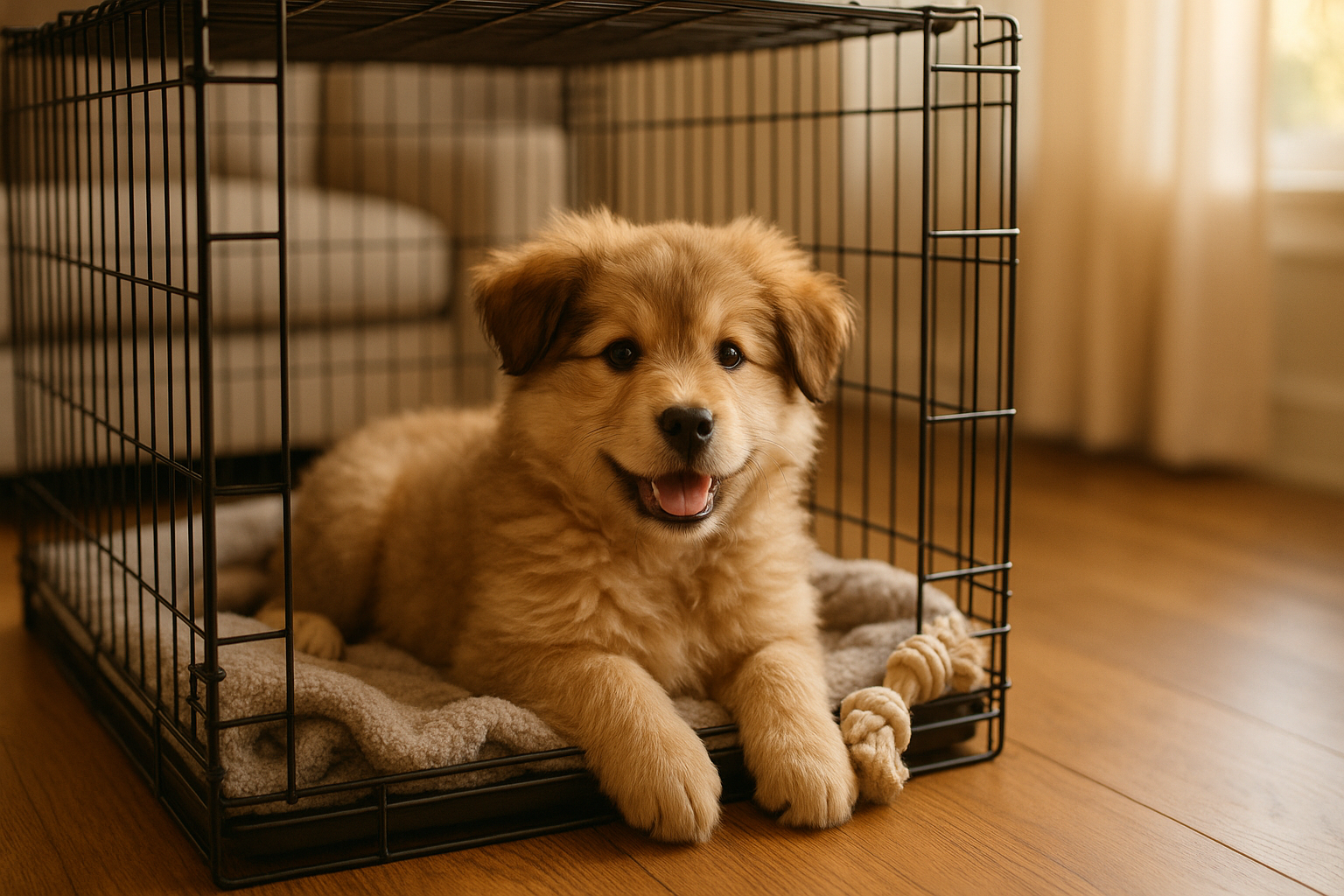
Bringing home a new puppy is pure joy, and it is also a lot of tiny paws getting into everything. Here is the thing most new Besties do not realize at first: a crate is not a cage, and it is not a time-out box. Done right, it becomes your pup's own cozy little den, a safe place they choose to nap in, the spot that makes house training click, and the tool that keeps them out of trouble while you sleep. Dogs are den animals by nature, and a well-introduced crate speaks to that instinct.
The whole game is to go slow and keep it positive. Never force it, never rush it, and never use the crate as punishment. Let's walk through it together, step by step.
Why a Crate Helps (When It Is Done Kindly)
A crate gives your puppy a predictable, safe space and gives you a huge head start on house training. Puppies naturally avoid soiling where they sleep, so a properly sized crate helps them learn to hold it and signal when they need to go out. It also protects your pup from chewing cords, swallowing socks, or getting hurt while unsupervised. And when you travel or visit the vet, a dog who loves their crate handles the whole world more calmly.
The key word is kindly. The crate should always be associated with good things. Meals, chews, naps, and quiet praise all belong in and around the crate. Yelling, corrections, or slamming your pup in there after an accident all break the trust you are building.
Pick the Right Crate and Size
Your crate should be just big enough for your puppy to stand up, turn around, and stretch out to lie down, and no bigger. If it is too roomy, your pup may use one end as a bathroom and the other as a bed, which defeats the house-training benefit.
Puppies grow fast, so you have two good options. Buy a crate sized for their adult body and use a divider panel to shrink the usable space while they are small, expanding it as they grow. Or start with a smaller crate and size up later. Wire crates with a divider are popular because they are airy and adjustable, while plastic travel crates feel more den-like and cozy. Either works. Add a comfy, chew-appropriate bed or blanket so it feels like home.
The Step-by-Step Method
Take these stages at your puppy's pace. Some pups breeze through in days, others need a couple of weeks. Both are normal.
Step 1: Introduce the crate. Put the crate in a room where the family hangs out, prop the door open, and let your puppy explore on their own. Toss a few treats near it, then just inside, then further in. Let them come and go freely. No pressure, no closing the door yet.
Step 2: Feed meals inside. Start placing your puppy's food bowl inside the crate. If they are hesitant, put the bowl near the opening and move it deeper each meal. Eating in the crate builds a warm, happy association fast.
Step 3: Close the door for seconds, then minutes. Once your pup is calmly eating or chewing inside, gently close the door for a few seconds while they are occupied, then open it. Slowly stretch the time. Sit nearby at first so they are not alone.
Step 4: Build duration and add distance. Start stepping a few feet away, then out of the room, for short stretches. Come back before your puppy gets anxious. The goal is for them to learn that you always return and that the crate is a fine place to relax.
Step 5: Teach a cue. Toss a treat in and add a friendly word like "crate" or "kennel up." Soon your pup will trot in on their own when you ask. Reward every time.
Step 6: Use it for naps and overnight. After play, potty, and a little exercise, a tired puppy settles into the crate happily. Overnight, keep the crate in or near your bedroom for the first while so your pup does not feel abandoned and so you can hear when they need a middle-of-the-night potty break.
How Long Is Too Long
This part matters, Besties. Puppies simply cannot hold their bladder very long, and crating a puppy past their limit is unfair and sets house training back. A good guide from veterinary sources: at about 2 months a pup can hold it roughly 3 hours, at 3 months about 4 hours, and at 4 months about 5 hours, always measured from the last time they emptied out. Many puppies can make it through the night by around 3 months, but daytime bladders fill much faster than sleeping ones.
The crate is for sleeping and short stretches, not for storing your puppy all day while you work. If your days are long, arrange a midday walk, a dog walker, a trusted neighbor, or a safe puppy-proofed pen so your pup gets out to potty, move, and connect. A crate should never be an all-day holding cell.
Troubleshooting Whining and Fussing
A little fussing at first is normal. The tricky part is timing your response. If you open the door the instant your puppy cries, you teach them that crying is the magic key. Instead, wait for a brief pause in the noise, then calmly let them out so you are rewarding quiet, not complaining.
But do read the situation. There is a difference between "I would rather be with you" protest whining and genuine distress, and there is also a real chance they simply need to potty. If it has been a while, take them out on leash for a quick, boring bathroom trip, then back to the crate. Never respond to crate fussing with punishment. That only teaches your pup that the crate predicts bad things.
When to Call Your Vet
Most crate resistance is a training and patience issue, not a medical one. But loop in your veterinarian or a certified behavior professional if you see:
- Panic-level distress: frantic escape attempts, drooling, broken teeth or nails, or injuring themselves trying to get out
- Ongoing destruction, nonstop vocalizing, or house soiling that continues even when they are not confined, which can point to separation anxiety rather than simple crate dislike
- Sudden accidents in a previously reliable puppy, straining to urinate, blood in the urine, or signs of pain, which can signal a urinary tract infection or other medical issue
- Any refusal to eat, lethargy, or other signs your pup is unwell
Your vet can rule out medical causes and help you build a humane plan. Some dogs do better with a pen or a puppy-proofed room, and that is perfectly okay too.
The Warm Little Takeaway
Crate training is really just patience wrapped in love. Go slow, keep it positive, respect your puppy's limits, and one day you will find them curled up in there by choice, totally content. That is the whole goal: a safe spot your pup adores.
Ready to meet a pup of your own? Adoptable dogs are waiting for their forever den and their forever person. Come visit snouthub.com to meet dogs near you and find your new bestie. A dog is a bestie.
---
*This article is for general educational purposes and is not a substitute for professional veterinary advice. Always consult your veterinarian about your individual dog's health and behavior.*