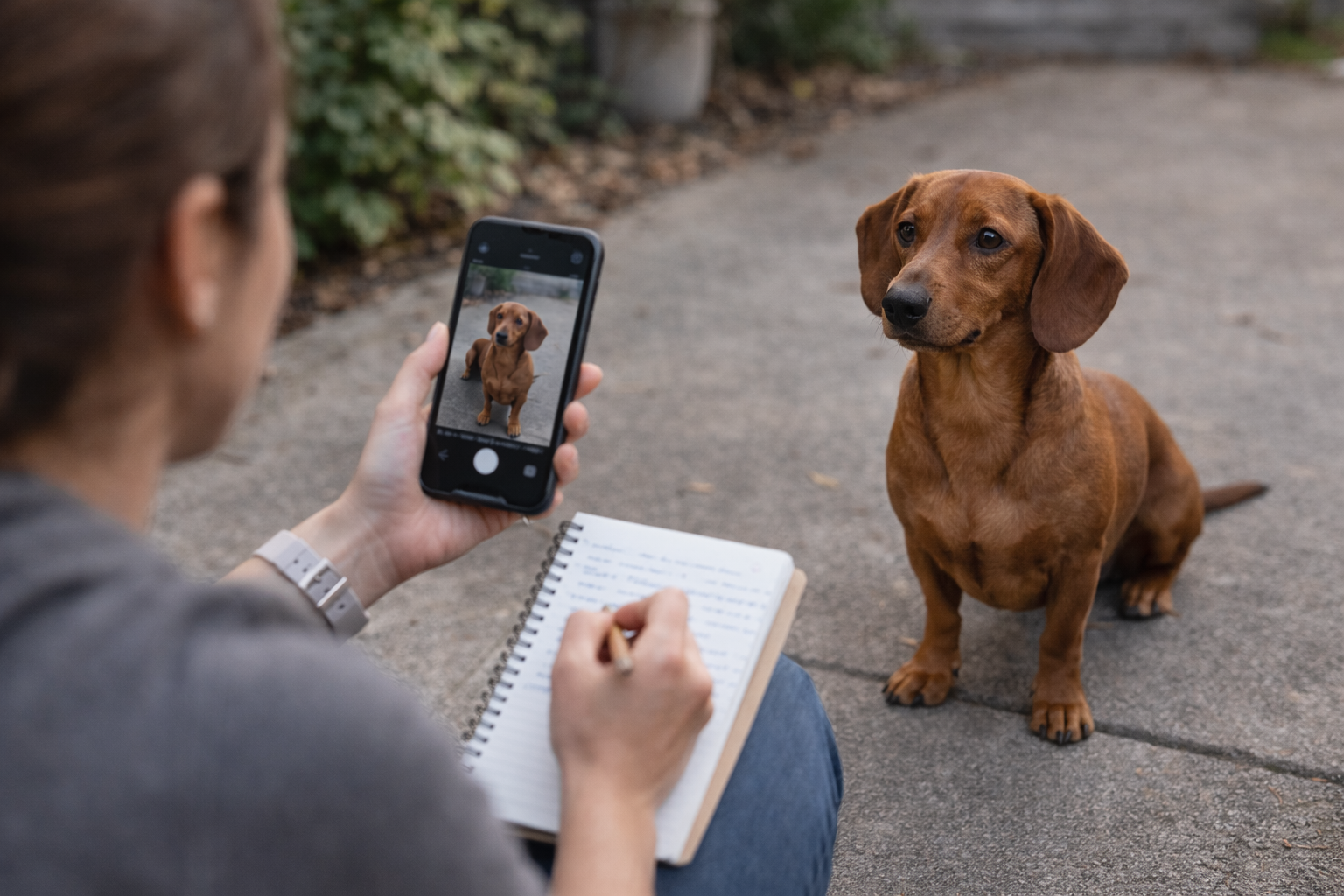
You’ve found a dog, and you’re doing all the right things: you’ve approached calmly, secured them safely, gotten them scanned for a microchip. But there’s one critical step that many people skip or rush: thorough documentation. Every detail you capture right now, the dog’s appearance, the location where you found them, the date and time, could be the key to reuniting them with their family or getting them the right care.
Why Documentation Matters
A detailed description of a found dog serves multiple purposes:
- It helps identify the dog if the owner posts a “lost dog” photo online
- It gives shelters and rescues crucial info for their records
- It helps vets understand the dog’s health and background
- It allows you to post on social media with specifics that might spark recognition
- It proves you found the dog and cared for them (important if ownership disputes arise)
What to Document: Physical Description
Size and Build: Is the dog small (under 20 lbs), medium (20-60 lbs), or large (over 60 lbs)? Are they thin, average, or overweight? Muscular or lean?
Breed or Mix: If you can identify a breed, great. If not, describe what you see: “Lab mix,” “pit bull type,” “small terrier mix,” “mixed breed, unknown parentage.” Be honest if you’re not sure.
Coat Type: Short, medium, long, curly, wiry? Matted or well-groomed?
Color and Markings: Be specific. Instead of “brown,” say “chocolate brown with white blaze on chest and white paws.” Include spots, patches, stripes, or unique patterns. Does the dog have brindle, merle, or other distinctive coloring?
Eyes: What color are they? Any unusual markings around the eyes?
Distinctive Features: Scars? Missing patches of fur? Lumps or bumps? One ear folded, one upright? Missing teeth visible? A crooked tail? Anything unusual that makes this dog unique?
Collar or ID: Did the dog have a collar? What color? Any tags? If there were tags, did you get the information? (Phone number, name, address?)
Overall Condition: Is the dog thin (ribs visible)? Healthy weight? Overweight? Does the coat look healthy or neglected? Are there signs of injury, parasites, or illness?
Estimated Age: Puppy (under 1 year), young adult (1-3 years), adult (3-7 years), senior (7+ years)? How old would you guess based on teeth, movement, and appearance?
What to Document: The Situation
Date Found: Specific date and time (if possible). “Saturday, February 9, 2026, around 3:30 PM”
Location: Where exactly did you find the dog? “Loose on the corner of Maple and 5th Street.” “In my backyard in the Westwood neighborhood.” “On the walking path near Central Park.” Be as specific as possible. Include the city and county.
Behavior When Found: Was the dog friendly, scared, aggressive? Did they approach you or avoid you? Were they panicked or calm? Did they seem injured or limping?
What the Dog Did: Did they let you get close? Did they take treats? Did they come willingly or did you have to contain them? Was there a struggle?
Signs of Neglect or Abuse: Were there signs the dog was being intentionally abused? Visible injuries, extreme malnutrition, signs of being confined?
Take Photos and Video
A picture is worth a thousand words. If you can safely do so, take clear photos of:
- The dog’s face (front and side angles)
- The full body (side profile, showing the dog’s shape and coloring)
- Any distinctive markings or scars
- Anything unique (ear shape, tail, spot patterns)
- If the dog has a collar or tags, close-up photos of those
A video of the dog’s behavior and temperament is also valuable, it shows potential owners whether their dog might match.
Write It Down Immediately
Don’t rely on memory. Write down every detail while it’s fresh. Use a notes app on your phone, a piece of paper, or a document on your computer. Include:
- Date and time you found the dog
- Exact location
- Full physical description
- Behavior and temperament
- Any injuries or health concerns you observed
- Microchip information (if scanned)
- Current location of the dog (your home, shelter, vet clinic, etc.)
- Your contact information
Share the Documentation
Once you’ve documented everything, share it:
- Post on local lost dog Facebook groups with the photos and description
- Post on Nextdoor in your neighborhood
- Contact local animal control and shelters with the full description
- Email or call local vets and ask them to mention the dog to clients
- Create a lost dog poster if the dog is still missing after 24 hours
Keep Your Documentation Safe
Once the dog is reunited with their owner or in the care of a shelter/rescue, keep your documentation. If questions arise later about where the dog came from or what condition they were in, you’ll have a record.
Key Takeaways
- Document every physical detail, colors, markings, size, distinctive features
- Record date, time, and exact location where you found the dog
- Take clear photos from multiple angles
- Describe the dog’s behavior and temperament
- Note any signs of injury, neglect, or illness
- Share the documentation on social media and with local authorities
- Keep a copy of everything for your records
At SnoutHub, we believe every detail about a found dog matters. Documentation is how we bring them home. A dog is a bestie.