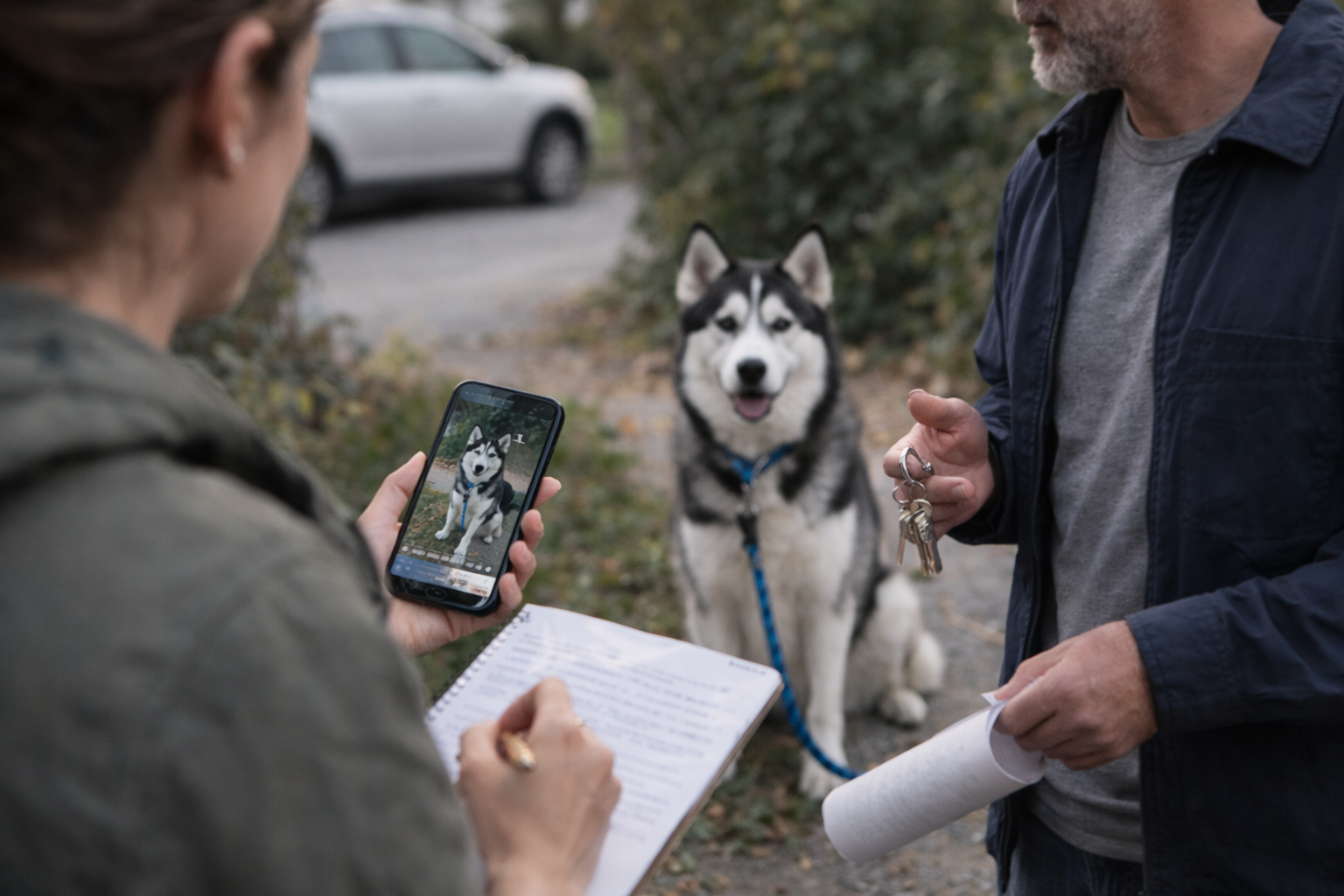
Someone has reached out claiming the dog you found is theirs. Your instinct is to reunite them immediately, you just want to help! But wait. Not everyone who claims a dog is telling the truth. Before you hand over the dog, you need to verify that this person is actually the owner.
Why Verification Matters
Scammers and bad actors will lie about owning a dog to:
- Steal a valuable dog for resale
- Get a dog to use for breeding, fighting, or other harmful purposes
- Scam the real owner (if they later claim the dog was stolen)
Verifying ownership protects the dog and protects you from legal liability.
What to Ask For: The Verification Checklist
1. Dog’s Name
Ask them: “What’s the dog’s name?” A real owner will know their dog’s name immediately. Someone lying will often hesitate or guess. Ask how they call the dog, what nicknames they use. Ask them to call the dog to see if the dog responds.
2. Physical Descriptions and Distinguishing Marks
Ask about specific details only the owner would know:
- “What color is the dog?” (Be specific: not just “brown,” but “chocolate with a white blaze on the chest”)
- “Does the dog have any scars or distinctive marks? Where?”
- “What’s the dog’s approximate weight?”
- “Does the dog have any unusual features?” (missing tooth, crooked ear, etc.)
Don’t offer these details yourself, let them tell you. If they describe things that match what you documented, that’s a good sign. If they’re vague or describe things that don’t match, be cautious.
3. Medical History or Distinguishing Medical Features
Ask:
- “Is the dog spayed/neutered?”
- “Does the dog have any health conditions or take any medications?”
- “Has the dog had any surgeries?”
- “Is there a scar from a spay/neuter?”
A real owner will know their dog’s medical history. A scammer won’t.
4. Microchip Number
This is gold. Ask: “If the dog was scanned, what’s the microchip number?” Or if you already have it, ask them to provide it. They should know if they registered it. If they don’t know the number, ask them to call their vet or check their records.
A registered microchip is nearly impossible to fake, so this is your best verification tool.
5. Vet Records or Proof of Ownership
Ask them to provide:
- Vet records with the dog’s name and their name
- Photos of them with the dog (from before they found your post)
- Adoption papers, purchase contract, or rescue paperwork
- Registration documents (AKC, breed club, etc.)
These are harder to fake than a story.
6. How Long They’ve Had the Dog
Ask: “When did you get the dog? From where?” Their story should be consistent. If they say they got the dog three years ago but you found the dog yesterday after it was missing for a week, the timeline doesn’t match.
7. When and Where the Dog Went Missing
Ask: “When did the dog go missing? Where were they when they escaped/got away?” A real owner will have details about this. They should match your account of where you found the dog.
Red Flags
Be suspicious if:
- They can’t describe the dog in detail
- Their story doesn’t match yours (e.g., they say the dog was missing for three weeks, but you found the dog yesterday in their immediate neighborhood)
- They don’t know basic information (name, color, size, spay/neuter status)
- They’re vague about how they got the dog
- They become aggressive or pushy if you ask for verification
- They don’t have vet records or any proof of ownership
- Their description of the dog doesn’t match your documentation
Green Flags
- They provide detailed, specific descriptions that match your notes
- They have vet records or other proof of ownership
- They can provide a microchip number that matches
- They have photos of themselves with the dog
- Their story about the dog’s disappearance is consistent with your account
- They can tell you about the dog’s personality, quirks, and habits
- They’re calm and understanding if you ask for verification
What to Do If You’re Confident It’s the Real Owner
Once you’ve verified ownership, arrange a safe, public meeting. Have the person present ID and proof of ownership. If you feel comfortable, reunite them. Document the transfer (get their contact info, take a photo of the reunion).
What to Do If You’re Not Sure
Ask for more information. Have them get vet records. Ask them to provide a microchip number. It’s better to take extra time to verify than to hand the dog over to the wrong person.
What to Do If You’re Pretty Sure It’s NOT the Real Owner
Politely tell them the dog isn’t theirs. Don’t give details about where the dog is or what happens next. Continue searching for the real owner through other channels.
Key Takeaways
- Never hand over the dog without verification
- Ask for the dog’s name, physical details, medical history, and microchip number
- Request vet records or proof of ownership
- Verify their story about when/where the dog went missing
- Red flags include vagueness, inconsistent stories, no proof of ownership
- Green flags include detailed descriptions, vet records, photos with the dog
- When in doubt, keep looking or hand off to a shelter/rescue
At SnoutHub, we believe found dogs deserve to go to the right family. A dog is a bestie.