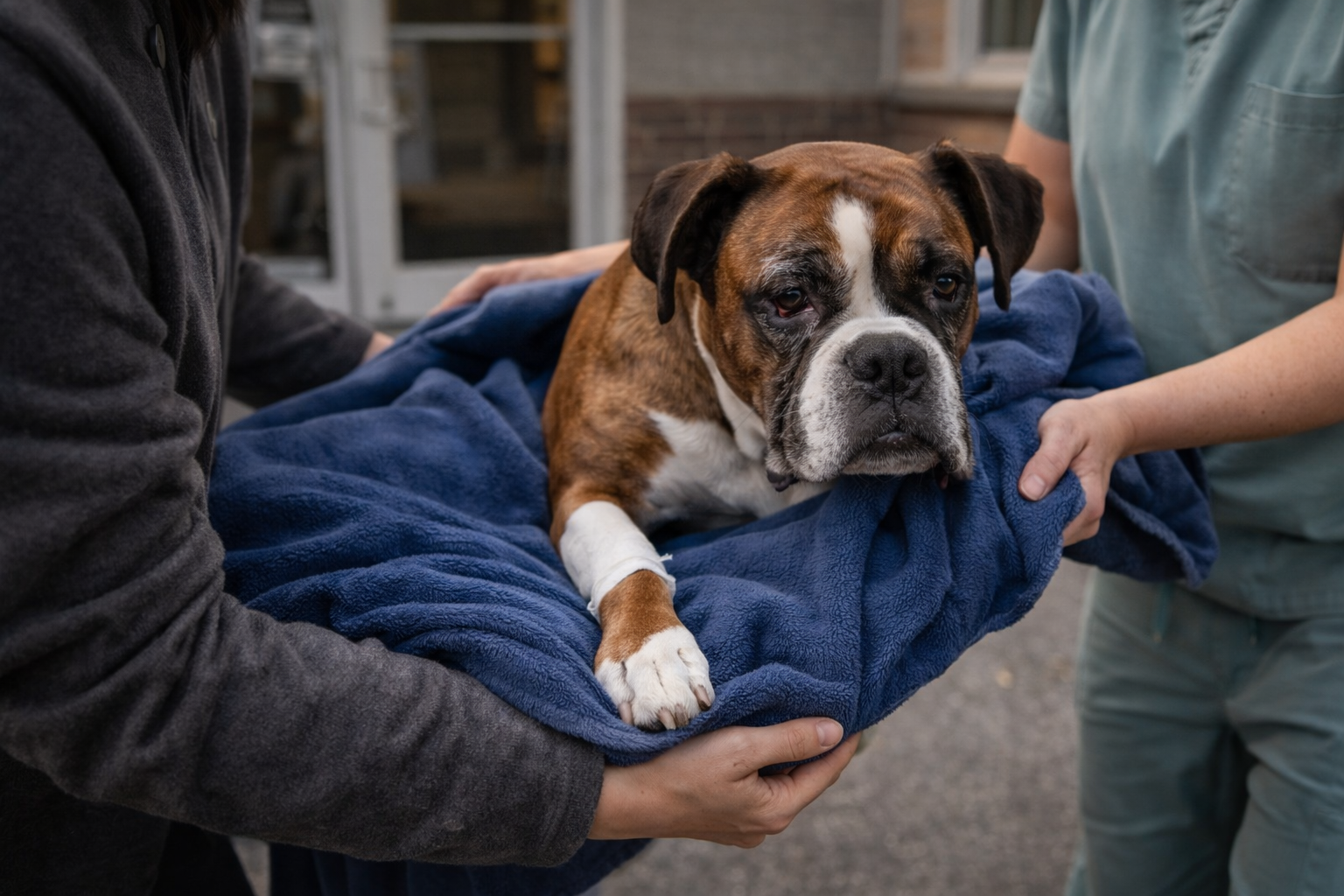
You spot a dog limping badly. One paw is bleeding. They’re clearly hurt and scared. Your impulse is to help immediately, but an injured found dog requires a careful, methodical approach. You need to safely contain them, get them immediate care, and navigate the complexity of vet bills and ownership.
This is an emergency, but like all emergencies, the first priority is safety, yours and the dog’s.
Step 1: Assess the Injury (From a Safe Distance)
Before you approach, look at the dog from a distance. How severe is the injury? Is the dog:
- Limping but otherwise functional? (Minor to moderate injury)
- Unable to walk? (Severe injury)
- Bleeding heavily? (Medical emergency)
- In extreme distress or acting aggressively? (Handle with caution)
The severity determines your next move.
Step 2: Approach Carefully
An injured dog is scared and in pain, so they might snap or try to bite even if they’re normally friendly. Move slowly, stay low, and approach from the side, not directly toward their face. Talk in a calm, quiet voice.
If the dog is aggressive or severely injured, don’t attempt capture yourself. Call 911 or animal control immediately and let professionals handle it.
Step 3: Secure Them Safely
Once you’re close enough, try to gently secure the dog with a collar, leash, or makeshift restraint. Move slowly and speak softly. Avoid touching the injured area if possible.
Get them to a safe location away from traffic.
Step 4: Call Animal Control First (Not the Vet)
This is important. Before you take an injured found dog to a vet, call your local animal control. Tell them:
- You’ve found an injured dog
- The dog’s location and description
- The nature of the injury
Why? Because animal control agencies often have:
- Emergency funding for found dog vet care
- Partnerships with local vets for reduced-cost emergency care
- Protocols for injured dogs that protect both you and the dog
- The ability to scan for a microchip and notify the owner
Many jurisdictions will send an animal control officer to help transport the dog or will authorize emergency vet care at their expense.
Step 5: Get to Emergency Vet Care
If animal control isn’t immediately available and the dog’s injury is serious, go to the nearest emergency vet clinic. Call ahead if you can.
When you arrive, be upfront:
- “This is a found dog.”
- “I don’t know the owner.”
- “I don’t have financial resources to cover the full bill.”
- “I’ve contacted animal control.”
Many vets will stabilize an injured found dog and contact animal control or the owner. Some have emergency funds or will work out a payment plan.
Step 6: Microchip Scan
As soon as the dog arrives at a vet or animal control, they should be scanned for a microchip. If the dog is registered, the owner can be found and might be responsible for the vet bill.
Step 7: Documentation and Followup
Document everything:
- Where and when you found the dog
- The nature of the injury
- Vet clinic name and contact info
- Microchip number (if found)
Post on local lost dog groups that you found an injured dog (without giving away specific location details). The owner might be searching.
Step 8: Handoff to Professionals
Once the dog is at a vet or with animal control, your responsibility mostly ends. The vet and shelter will work on finding the owner and arranging long-term care or recovery.
Financial Responsibility
You are generally not responsible for vet bills for a found dog if you’ve contacted animal control. The owner (if found) is responsible, or the county/city covers emergency care.
However, if you take the dog to a private vet without notifying animal control, you might be liable for costs. That’s why contacting animal control first is important.
Key Takeaways
- Assess the injury from a distance first
- Call animal control BEFORE taking the dog to a vet
- Get the dog to emergency vet care immediately for serious injuries
- Be upfront about the dog being found and your financial limitations
- Get a microchip scan to identify the owner
- Document everything and post on lost dog groups
- Hand off to professionals, you’ve done your part
At SnoutHub, we believe injured found dogs deserve swift, compassionate care. A dog is a bestie.