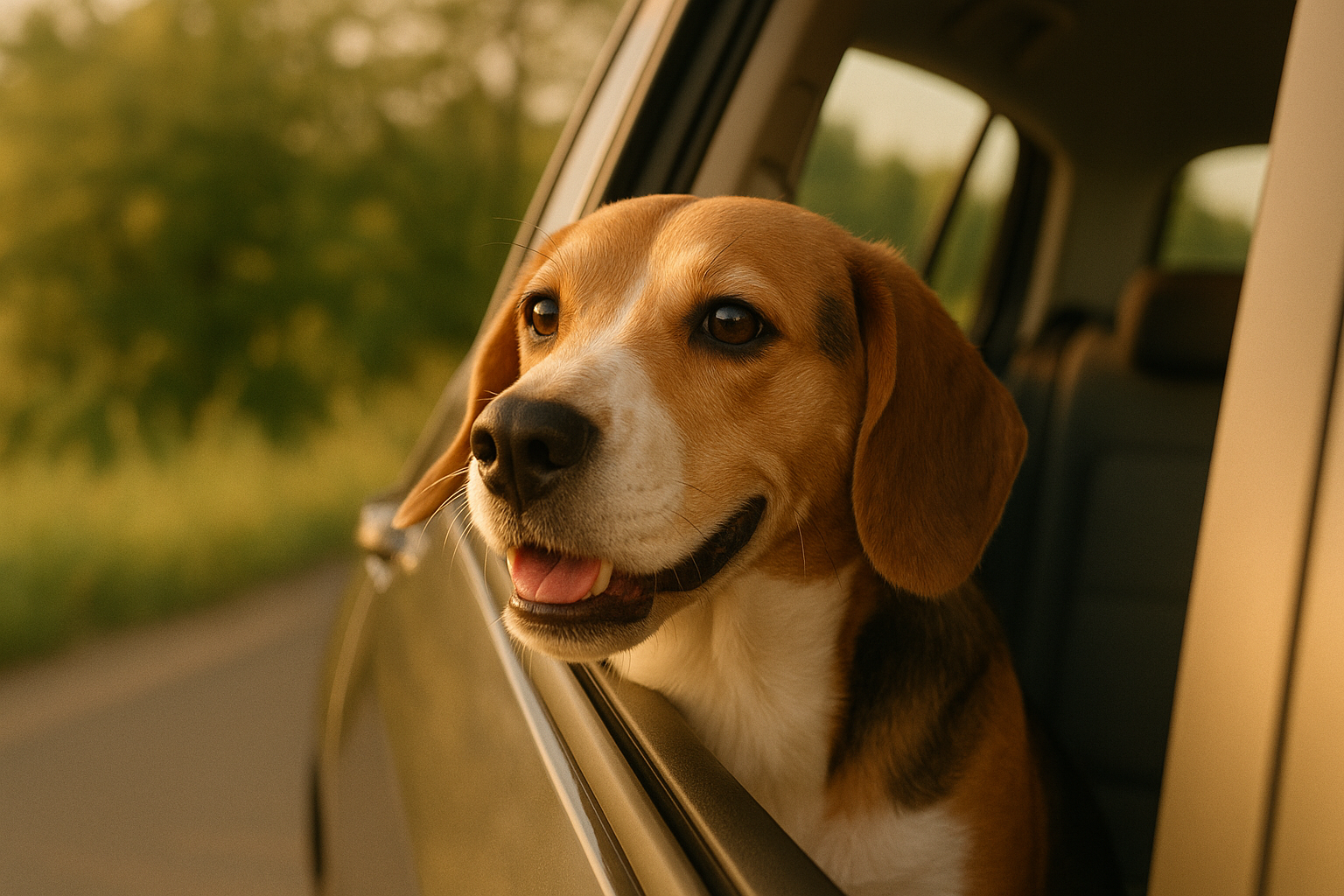
There is nothing quite like the moment your dog realizes the leash and the car keys mean adventure. Ears up, tail going, that whole-body wiggle of joy. And then, for some of our besties, the drooling starts. The whining. The green-around-the-gills look in the rearview mirror that makes your heart sink. If your dog gets car sick, you are not alone, and it does not mean road trips are off the table forever. With a little patience and the right setup, most dogs can learn to ride happy.
Let's talk about why it happens, how to help, and how to keep your bestie safe every single mile.
Why Dogs Get Car Sick
Car sickness in dogs usually comes down to two things: the body and the brain.
The physical side is true motion sickness, and it is tied to the balance structures in the inner ear. This is why it shows up most often in puppies, the same way young kids are more prone to it. Those inner ear structures are not fully developed yet, and many pups simply grow out of it as they mature.
The other side is emotional. If your dog's only car rides end at the vet, or if an early trip meant leaving littermates behind, the car itself can become a source of anxiety. That stress can trigger nausea all on its own. Sometimes a dog is dealing with a mix of both, which is why the fix often needs to work on the tummy and the feelings at the same time.
Signs Your Dog Is Struggling
Dogs cannot tell us they feel queasy, so they show us. Watch for:
- Excessive drooling or lip licking
- Whining, restlessness, or panting
- Yawning or repeated swallowing
- Trembling or freezing in place
- Vomiting
Catching the early signs, like the drooling and lip licking, gives you a chance to pull over and reset before it becomes a full mess in the back seat.
Set the Stage Before You Drive
A few simple adjustments can make a big difference before you even turn the key.
Go easy on the food. Skip the big meal right before you leave. A light meal three to four hours ahead, or withholding food for a bit longer for sensitive dogs, gives the stomach time to settle. Keep water available so your bestie stays hydrated.
Give them a better view, or less of one. Facing forward and low can help a dog's inner ear match what the eyes see. A secured crate or a spot in the back seat where the world is not whipping past sideways often calms the queasiness.
Crack the windows. Lowering the windows an inch or two helps balance the air pressure inside the car and brings in fresh air, which many dogs find soothing.
Make the car a happy place. Bring a favorite blanket that smells like home, or a special toy that only comes out for rides. You are teaching your dog that the car means good things, not just needle pokes.
The Slow Build That Actually Works
If your dog dreads the car, do not start with a two-hour highway haul. Rebuild the relationship one small step at a time, and only move forward when your bestie is relaxed and happy at each stage.
- Sit together in the parked car, engine off, sharing treats and calm praise.
- Start the engine, sit a minute, then turn it off. No driving yet.
- Take a short trip to the end of the driveway and back.
- Drive around the block, then a few blocks.
- Work up to longer rides that end somewhere wonderful, like a park or a trail.
The magic ingredient is that the destination is fun. When the car reliably leads to sniffs, splashes, and freedom, the anxiety fades and the nausea often follows it out the door.
Safety First, Always
Comfort matters, but safety comes first. An unrestrained dog can be hurt in a sudden stop, can distract the driver, and can bolt out an open door at exactly the wrong moment.
The safest options are a well-ventilated crate or carrier secured so it cannot shift, or a crash-tested harness attached to the seat belt system in the back seat. The crate should be big enough for your dog to stand, sit, lie down, and turn around. As tempting as that happy head-out-the-window photo is, letting your dog hang their head fully outside is risky, so keep them secured and let the breeze come to them through a cracked window instead.
Two more non-negotiables. Make sure your dog is microchipped and wearing a collar with a current ID tag before any trip, because travel is exactly when dogs get lost. And never, ever leave your dog alone in a parked car. Temperatures inside climb to dangerous levels shockingly fast, even on mild days with the windows cracked.
When to Call Your Vet
Most car sickness is manageable at home, but loop in your veterinarian when:
- Your dog is an adult who still gets sick, or the sickness is severe or getting worse
- Vomiting continues even on an empty stomach, or comes with diarrhea, lethargy, or refusing food
- The anxiety is intense, like panic, destructive behavior, or uncontrollable trembling
- Nothing you try at home seems to help
Your vet has real tools that can change everything. There are safe, effective anti-nausea medications made specifically for dogs, such as maropitant, and anti-anxiety options for the dogs whose fear runs deep. Please do not reach for human motion sickness medicine on your own, since dosing and safety are very different for dogs. A quick conversation with your vet can turn a miserable rider into a happy co-pilot.
Every dog deserves to ride shotgun on the good days. With a little planning, a secure setup, and some patience, your bestie can trade the drool for that pure road-trip joy.
*This article is for general educational purposes and is not a substitute for professional veterinary care. Always consult your veterinarian about your puppy's specific health needs.*
Ready to make more memories with a bestie of your own? Visit snouthub.com to meet adoptable dogs in your city and find everything you need to travel safe and happy together. Because a dog is a bestie, on every road you take.