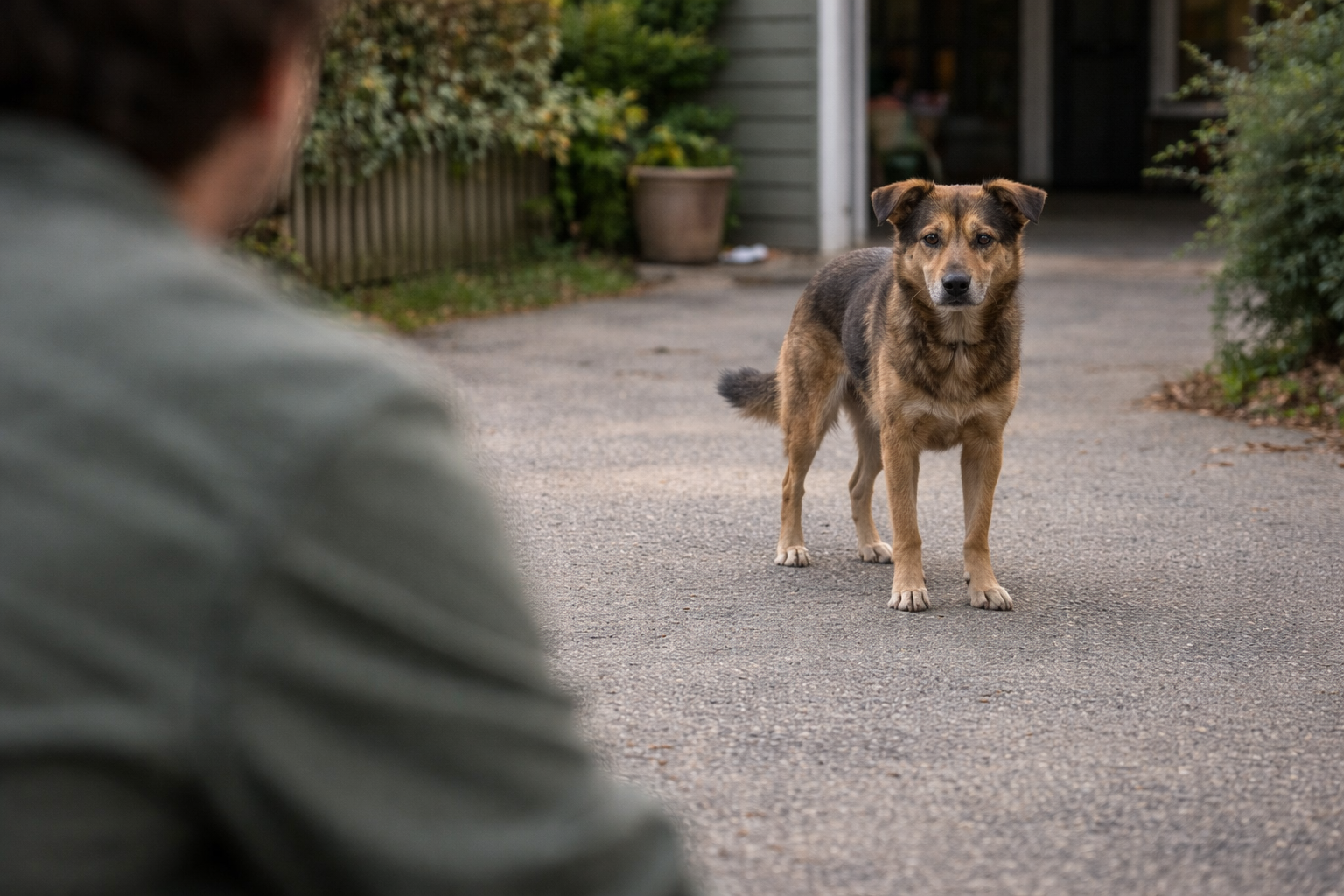
You’re out for a walk and spot a dog roaming the street with no collar, no tags, no identifying markers. Your heart drops. This dog has no way for anyone to identify them. No way to call their worried owner. No way to know where home is. But you can still help, and there are concrete steps to take right now.
First: Assess and Secure
Before you do anything else, assess the situation. Is the dog calm or panicked? Injured? Is traffic nearby? Use the same initial approach you’d use with any loose dog: stay calm, don’t chase, approach slowly from the side or at an angle. Let the dog come to you if possible.
If the dog seems friendly and willing to approach, try to gently secure them with a collar, leash, belt, or rope. Get them to a safe location away from traffic. If they won’t let you near them, use the approach of creating distance, leaving treats, and calling for backup.
Second: Document Everything
Take a clear photo or video of the dog, their size, breed or mix, color, markings, any distinguishing features. Note anything that might help identify them: scars, missing patches of fur, unique spots, age estimate. This information will be crucial for finding their owner and for working with shelters and rescues.
Third: Get to a Vet Immediately
Even though there’s no collar, the dog might have a microchip. This is your best shot at finding the owner quickly. Most vets can scan for a microchip in minutes. Many animal shelters and rescue organizations also have scanners. If the dog has a microchip, the vet can look up the registration and contact the owner directly. This has reunited countless lost dogs with their families within hours.
Make it a priority. Don’t wait. Some people delay this step thinking, “Maybe I’ll try to find the owner another way first.” Nope. Get to a vet as soon as you can.
If the Microchip Comes Back Registered
The vet will contact the owner, or you’ll be given the owner’s information. Reunite them as soon as possible. If the owner can’t be reached right away, the vet clinic or rescue can hold the dog temporarily or you can agree to foster them until the owner is located.
If There’s No Microchip (Or It’s Not Registered)
Now it’s time to launch a broader search. Post the dog’s photo immediately on local lost dog Facebook groups, Nextdoor, and any community networks you can find. Include:
- The exact location where you found the dog
- Date and time you found them
- A clear description: breed, color, markings, size, any distinctive features
- Your contact information
- A note that the dog has no collar and no microchip (or unregistered microchip)
Also contact:
- Your local animal control
- Local shelters and rescue organizations
- Neighboring shelters and rescues (dogs travel)
- Local vets (ask them to post the dog’s photo on their bulletin board or mention the dog to other clients)
- Dog parks and pet stores in the area
Why No Collar Is Actually More Common Than You Think
A dog without a collar might have been lost for a while. Their collar might have slipped off or broken. They might have been dumped intentionally. They might have escaped from a home where they were never walked on a leash, so they never had a collar at home. Regardless, they still belong to someone, or they need help finding a new home.
Caring for a Collarless Dog Temporarily
If you’re going to foster the dog while you search for the owner, here’s what they need:
- Food and water: Offer both, but start small to avoid stomach upset
- A safe space: A quiet room or secure yard where they can’t escape
- A makeshift collar or ID: Once they’ve calmed down, consider getting them a temporary collar with your phone number
- Vet care: Get them checked for injuries, parasites, and health issues
- Basic observation: Note their behavior, any health concerns, and their personality, this helps when describing them to potential owners
When to Let Go and Trust Rescues
If after 1-2 weeks you haven’t found the owner, and you can’t keep fostering the dog, it’s time to bring them to a shelter or rescue organization. These groups have networks, experience, and resources to help the dog find a permanent home. Passing them to professionals is not failure, it’s ensuring the dog gets the best possible outcome.
Key Takeaways
- Secure the dog safely first
- Get them scanned for a microchip immediately, this is your best shot at finding the owner
- Document their appearance with clear photos
- Post on social media and contact local shelters and rescues
- Contact local vets and animal control
- Foster temporarily if you can, but know when to hand over to professionals
At SnoutHub, we believe every dog deserves to find their way home, or to find a new one. A dog is a bestie.