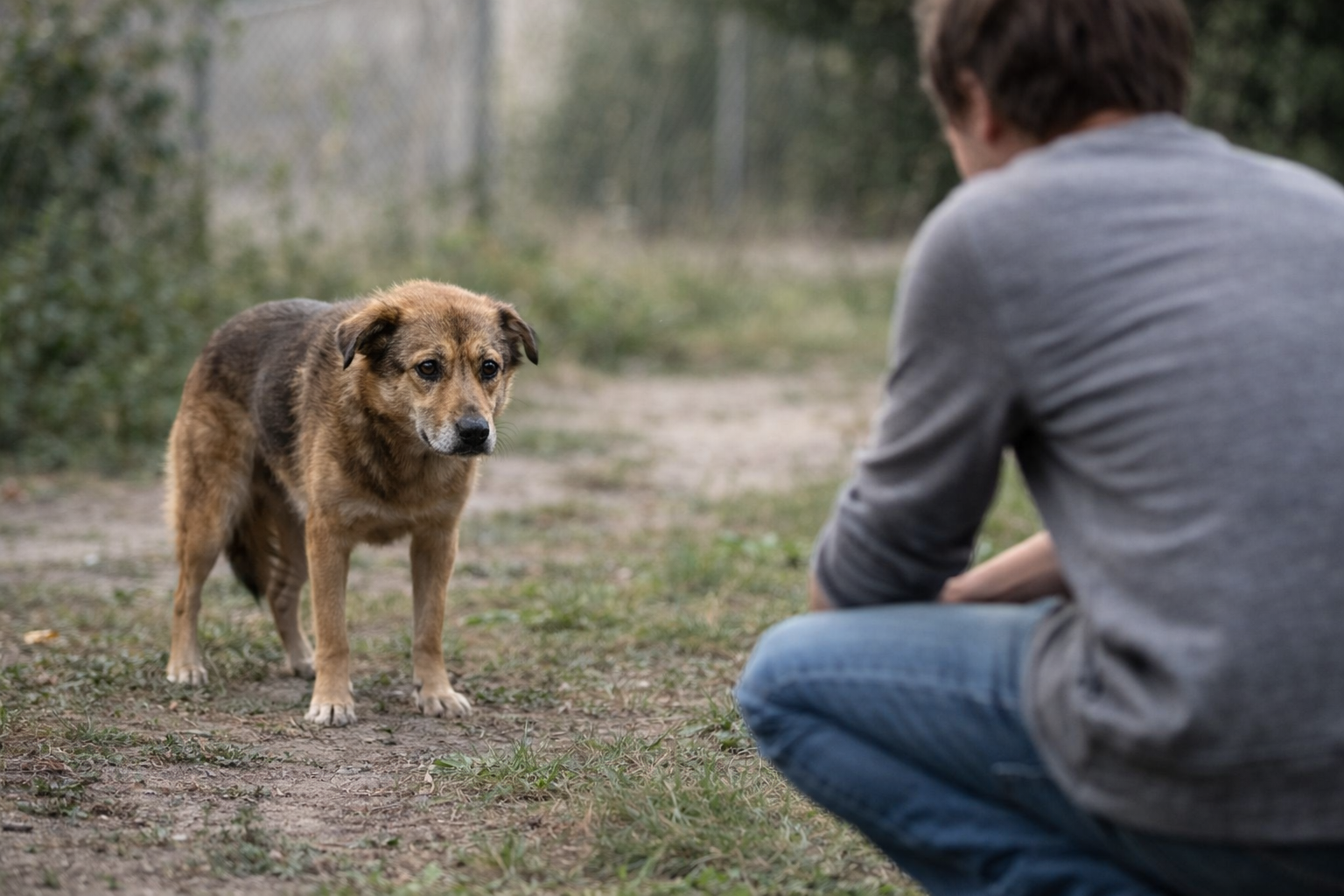
You spot a dog hiding under a porch, visibly trembling. You want to help, but every time you approach, the dog crawls further back. You’re trying to do the right thing, coax them with treats, talk softly, maybe try to reach in and grab them. But the dog just won’t budge, and frankly, they look more terrified than ever. What now?
A scared dog who won’t come is in a state of profound fear and disorientation. Maybe they’ve been lost for days. Maybe they were dumped. Maybe they escaped a traumatic situation. Whatever happened, their survival instinct is to hide, not to trust the friendly human calling to them. This is where patience, strategy, and a shift in approach become absolutely critical.
Understand What You’re Dealing With: A Panicked Dog
When a dog is deeply scared, their brain isn’t working the same way as a calm dog’s. They’re not thinking, “Oh, this nice person has treats for me.” They’re thinking, “Stay hidden. Don’t move. Maybe this threat will go away.” It’s called a freeze response, and it’s as valid as fight or flight. Trying to force a panicked dog out of their hiding spot almost always backfires, it confirms their fear that humans are a threat.
Step 1: Stop Approaching and Give Them Distance
This is counterintuitive, but it’s essential. Step back. Create distance between yourself and the dog. Sit down. Sit far away. Let the dog see that you’re not a threat, not a predator closing in. You might feel like you’re doing nothing, but you’re actually communicating safety. You’re saying, “I’m not going to hurt you.”
Step 2: Entice Slowly With High-Value Treats
Once you’ve created distance, put some of the most delicious treats the dog has ever seen on the ground between you and them. Boiled chicken, steak, high-value training treats, things that smell amazing. Place them a few feet away from the dog’s hiding spot. Then retreat even further.
The idea is that curiosity and hunger will eventually overcome fear. The dog will inch closer to the treats when they feel safe enough. This might take minutes, it might take hours. You’re not in a rush; the dog’s emotional state is more important than speed.
Step 3: Let Them Come to You (or Nearly)
As the dog gets more comfortable, they’ll edge closer to the treats. When they do, you might put out more treats in a trail leading toward you. The goal is to let them approach you, not the other way around. Every time they move toward you, it’s their choice. That builds trust faster than any amount of force ever could.
Step 4: Secure Them, But Gently
Once the dog is eating treats from near you, if possible, have a collar or leash ready. But move slowly and avoid sudden movements. Some dogs will let you slip a collar on once they’re calm enough. Others still won’t. If the dog runs, don’t chase. Let them settle and try again in a few minutes.
If you absolutely can’t get a collar on safely, move to the next step: containment and backup.
Step 5: Call in Backup Immediately
You don’t need to catch this dog yourself. Contact local animal control, a nearby rescue, or a lost dog group on social media. Give them the exact location. Post photos of the dog online, scared, hiding under a porch, whatever you can capture. Lost dog networks move fast, and the dog’s owner, neighbors, or rescue professionals might already be looking for them.
Professional animal control officers and rescue workers are trained in these situations. They have nets, humane traps, and experience. Let them help.
Step 6: Create a Safe Zone
If the dog is in a dangerous spot, like under a parked car on a busy street, you might need to make the area safer without moving the dog. Can you close off part of a yard? Can you put out food and water? Can you set up a humane trap with food inside so the dog can seek shelter? The goal is to prevent them from bolting into traffic while professionals come to help.
Important: When to Get Professional Help Immediately
- The dog is injured, bleeding, or clearly in medical distress
- The dog is in an extremely dangerous location (busy road, construction site)
- The dog is showing signs of illness (excessive drooling, stumbling, seizures)
- You’ve been trying for hours and the dog is still completely panicked
- The dog has snapped or shown teeth when you’ve approached
What About Using a Humane Trap?
If the dog has been hiding for a while and won’t come out or take treats from your hand, a humane cage trap can work. Bait it with strong-smelling food (tuna, chicken), place it near the dog’s hiding spot, and leave it. The dog may enter the trap when they feel safe and hungry enough. This works best when you can leave the area, sometimes dogs are more willing to explore when humans aren’t around.
What NOT to Do
Don’t chase. Don’t yell. Don’t try to “corner” the dog thinking you’ll grab them. Don’t use force or punishment. All of this will terrify the dog more and make them harder to help. If the dog runs, let them go. Note the direction, call for help, and post on social media.
After You’ve Secured the Dog
Once the scared dog is safely contained, whether you did it or a rescue worker did, get them scanned for a microchip immediately. Take them to a vet or shelter. Document their appearance. Post on lost dog groups that you’ve found them (without giving away your location if you’re concerned about safety). Work with local animal control and rescues to reunite them with their family or find them a permanent home.
Key Takeaways
- Scared dogs are in freeze mode, distance builds trust more than pressure
- Give the dog space, then entice with high-value treats from far away
- Let the dog approach you, not the other way around
- If it’s taking too long or the situation is dangerous, call professionals immediately
- Humane traps and backup from rescues are always options
- Never chase, it escalates fear
At SnoutHub, we believe scared dogs deserve patient, compassionate care. A dog is a bestie.