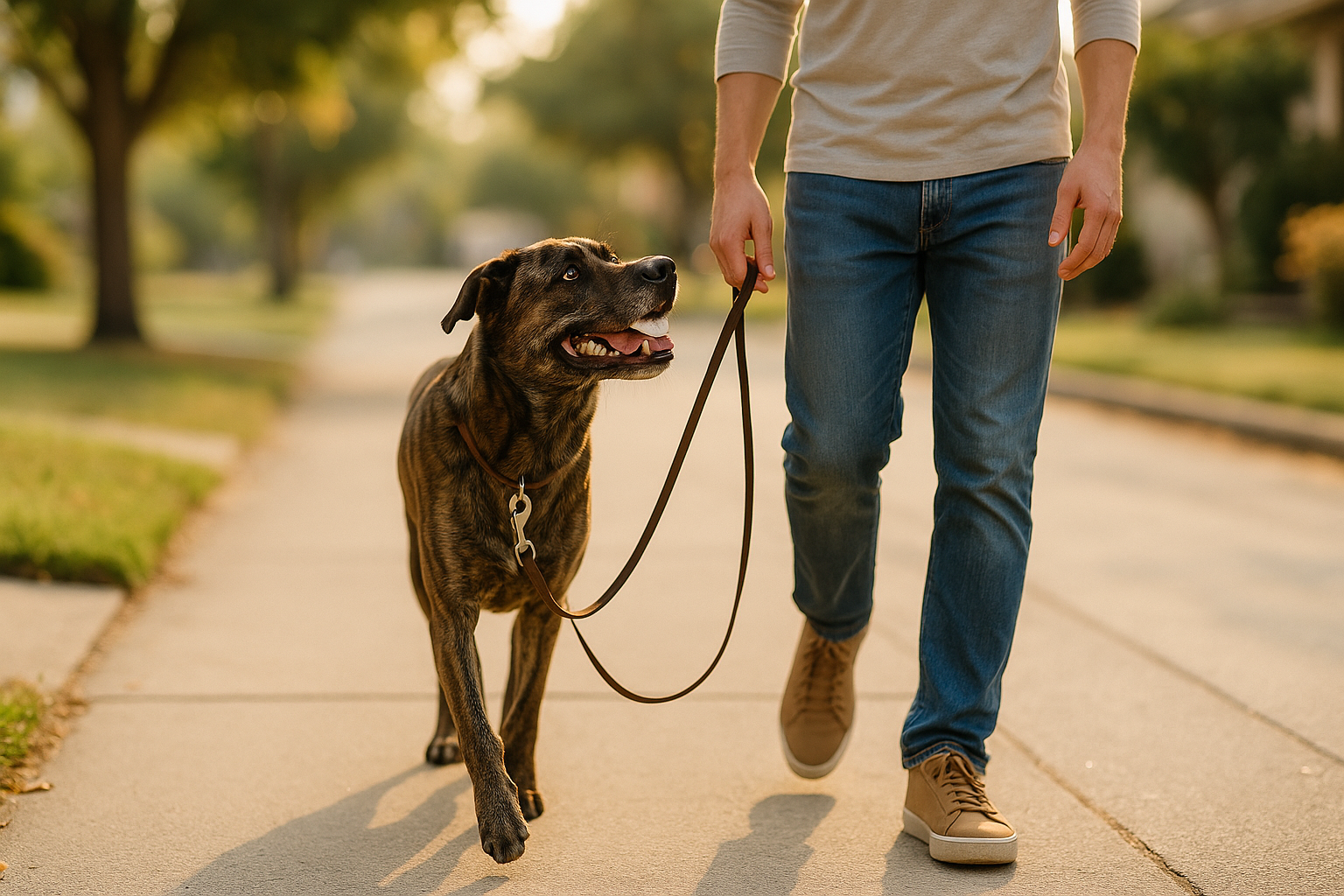
If your shoulder gets yanked every time your dog spots a squirrel, you are not alone, Besties. Leash pulling is one of the most common things dog parents ask about, and the good news is that it is very fixable. Your dog is not being stubborn or bossy. Pulling simply works for them. When they lean forward and you follow, they learn that pulling gets them where they want to go, faster. Our whole job is to flip that lesson around, gently and with a lot of love. A dog is a bestie, and a calm, happy walk is one of the best gifts you can give each other.
Here is your friendly, practical roadmap to loose leash walking.
Why Dogs Pull in the First Place
Dogs move faster than we do, and the world is a buffet of smells, sights, and squirrels. When your dog pulls and the walk keeps moving forward, the pulling is instantly rewarded. Over time it becomes a deeply practiced habit. There is nothing wrong with your dog, and there is nothing wrong with you. You just have not yet taught the one rule that changes everything: a loose leash makes the walk continue, and a tight leash makes it pause.
Keep that single idea in your heart through all the tips below. Everything else is just a way of teaching it.
Set Up for Success With the Right Gear
Good equipment will not train your dog for you, but it makes the lessons kinder and safer while you both learn.
- Front-clip or well-fitted harness. Veterinary experts recommend a comfortable H-style or Y-style harness that lets the shoulders move freely, ideally one you can clip at both the front and the back. A front clip gently turns your dog back toward you when they surge ahead, without any pain.
- Head halter for strong pullers. For big, powerful dogs, a head halter can give you more control. Introduce it slowly with treats so it feels good, and always pair it with a backup leash clipped to a harness.
- A standard leash, not a retractable one. A fixed leash of about four to six feet gives you steady, predictable feedback. Retractable leashes teach constant tension and can cause friction burns if the cord runs through your hand.
- Skip the pain-based tools. Choke, prong, and shock collars rely on discomfort and can injure your dog and damage your bond. We never use them at SnoutHub, and reputable vets advise against them too.
Stock your walking kit at our collars, leashes, and harnesses collection so your bestie starts off comfortable.
The Core Method: Stop and Reward
This is the heart of loose leash training, straight from the trainers and vets we trust.
- Load up on tiny treats. Use something your dog loves, broken into pea-sized pieces so you can reward often without overfeeding.
- Reward the sweet spot. Any time the leash hangs loose in a relaxed J-shape and your dog is near your side, say a happy marker word like "Yes!" and hand over a treat. You are showing them exactly where the good stuff happens.
- Stop when the leash goes tight. The moment your dog pulls, plant your feet and become a boring statue. Do not tug back or scold. Simply wait.
- Move again when the leash loosens. As soon as your dog eases the tension or glances back at you, mark it, reward, and walk on. Forward motion is the reward for a loose leash.
Your dog will figure out the pattern surprisingly fast: pulling stops the fun, and staying close keeps it going.
Add These Games to Speed Things Up
- Change direction. When your dog forges ahead, calmly turn and walk the other way. This teaches them to keep an eye on you instead of dragging you along.
- Use a "let's go" cue. A cheerful phrase tells your dog that movement and rewards are about to happen, which keeps them checking in with you.
- Be the most interesting thing out there. Vary your pace, talk to your dog, and reward eye contact. If you are fun to walk with, distractions lose some of their pull.
- Trade treats for life rewards over time. Once your dog gets the hang of it, let sniffing a good bush or greeting a friend become the reward for a loose leash. Real life takes over from the treat pouch.
Handling Distractions Without Drama
Squirrels, other dogs, and delivery trucks will always be tempting. The trick is to get ahead of them. When you spot a distraction coming, ask for a "watch me" or a quick "sit" before your dog locks on. Reward generously for choosing you. Practice first in your living room, then the backyard, then a quiet street, and only later in busy areas. Building the skill in easy places first sets your dog up to win when things get exciting.
Be Patient and Keep It Joyful
Loose leash walking is a skill that often takes weeks or even a few months of short, upbeat sessions to truly stick. That is completely normal. Keep training sessions brief, end on a happy note, and celebrate small wins. A rescue dog especially may need extra time and gentleness as they learn to trust the world and you. Every calm step forward is a little act of love.
When to Call Your Vet
Most pulling is a training matter, but sometimes there is more going on. Reach out to your veterinarian if:
- Your dog suddenly starts pulling, lunging, or resisting the leash after being calm before, which can signal pain or a health change.
- You notice coughing, gagging, wheezing, or neck sensitivity, especially if your dog has been walked on a collar.
- Pulling comes with fearful, panicked, or aggressive reactions to other dogs or people. Your vet can rule out pain and refer you to a certified positive-reinforcement trainer or veterinary behaviorist.
- Your dog seems to have trouble seeing, hearing, or moving comfortably on walks.
A vet or qualified trainer can be a wonderful teammate on this journey.
---
*This article is for general educational purposes and is not a substitute for professional veterinary advice. Always consult your veterinarian about your dog's specific health and behavior.*
Ready for happier walks with your bestie? Visit snouthub.com for more training tips, and while you are there, meet the adoptable dogs in your city who are dreaming of their first loose leash stroll. A dog is a bestie, and somewhere out there, a bestie is waiting for you.