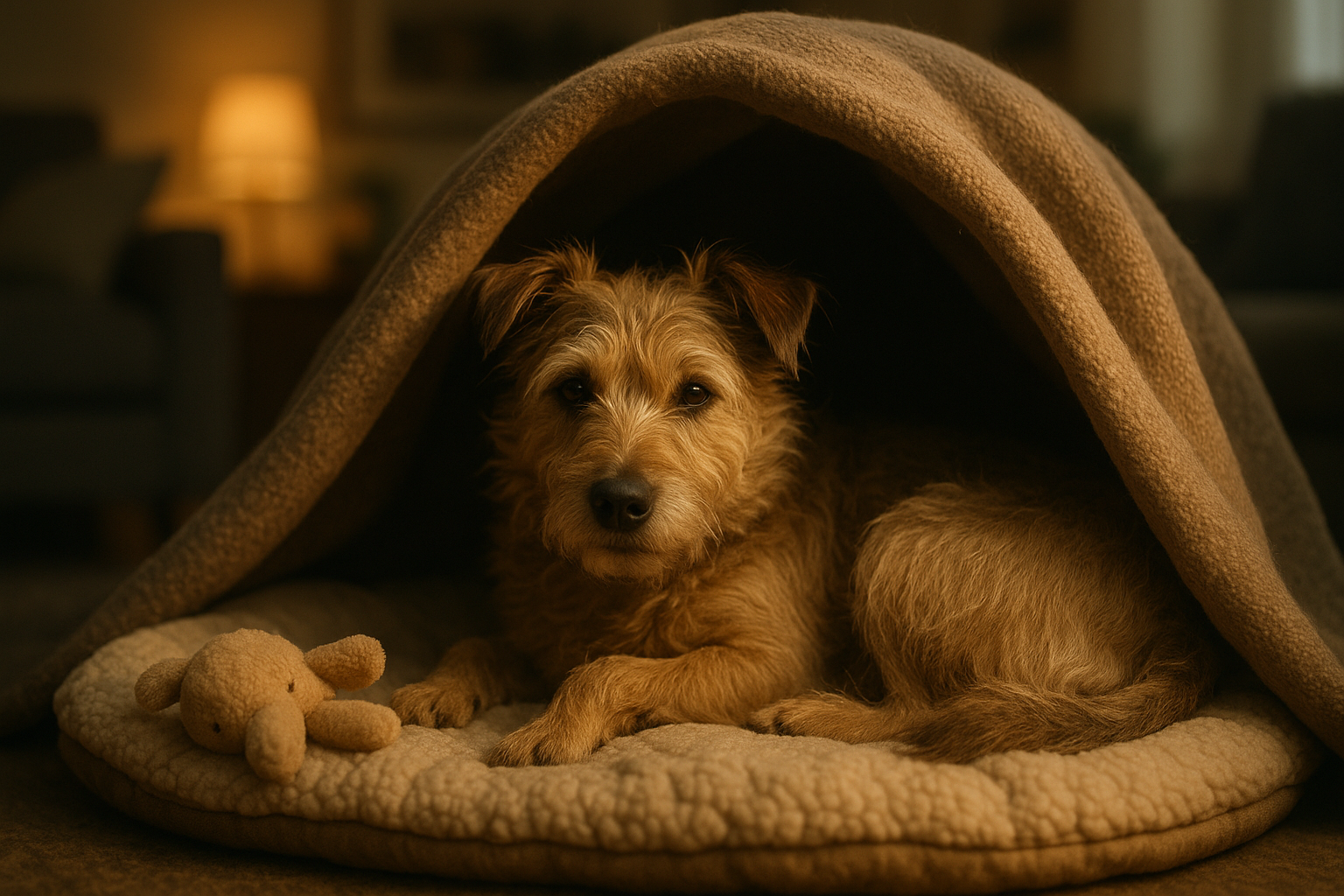
If you have ever watched your dog tremble under the bed while fireworks crack overhead, you already know the helpless feeling that comes with it. You just want your best friend to feel safe. The good news, Besties, is that there is a lot you can do. Noise fear is one of the most common issues dogs face, and with a little planning and a lot of love, most dogs can get through the loud nights far more comfortably. A dog is a bestie, and our besties count on us most when the world gets scary.
Here is a practical, calm-first game plan for fireworks season and storm season alike.
Why Loud Noises Scare Dogs So Much
Dogs hear far more than we do, and a fireworks blast or thunderclap can be genuinely overwhelming. On top of the volume, storms bring flashes of light, changes in barometric pressure, wind, and even static electricity in the coat. Fireworks add sudden, unpredictable booms with no warning and no pattern your dog can learn to expect. That unpredictability is a big part of why the fear runs so deep.
Fear of loud noise is extremely common and can develop at any age, and it often gets worse over time if it is not addressed. Recognizing the signs early is the first step. Common signals include pacing, panting, trembling, drooling, hiding, clinging to you, whining or barking, refusing food, and in severe cases trying to escape through doors, windows, or fences.
Build a Safe Den Before the Booms Start
The single most helpful thing you can do is give your dog a cozy retreat and set it up well in advance. Dogs naturally seek small, enclosed spaces when they feel threatened, so lean into that instinct.
- Pick an interior room with no windows if possible, or use a closet, bathroom, or a covered crate with the door left open.
- Add familiar bedding, a worn t-shirt that smells like you, and a favorite toy.
- Let your dog choose. If she wants the bathtub or the space behind the couch, let her have it. Never trap or force a scared dog into a spot.
- Introduce the den on calm, quiet days first so it already feels safe by the time the noise starts.
Muffle the Noise and the Flashes
You cannot stop the fireworks, but you can soften how they land.
- Close windows, doors, and curtains to dampen sound and block the flashes of light.
- Turn on a fan, a white noise machine, calming music, or the TV to cover the sudden booms with steady, predictable sound.
- Move the safe den to the quietest, most central part of the home, away from exterior walls.
Keep Your Dog Busy and Rewarded
A distracted, happily chewing dog is a calmer dog. Long-lasting chews, a stuffed and frozen food toy, or a snuffle mat can redirect nervous energy into something rewarding. This also taps into a powerful training idea called counterconditioning, where you pair the scary sound with something wonderful so your dog slowly builds a new, positive association.
And yes, you can absolutely comfort your dog. The old myth that soothing a frightened dog "rewards" fear is not true. Fear is an emotion, not a behavior, so you cannot reinforce it by being present. If your dog wants closeness, stay near, speak in a calm voice, and let your steadiness be the anchor.
Prepare in Advance for the Big Nights
A little prep work saves a lot of panic.
- Exercise your dog earlier in the day so she is naturally more relaxed by evening.
- Feed dinner before the noise begins, since a scared dog often will not eat.
- Take the last potty break before dark, before neighborhood fireworks tend to start.
- Make sure your dog is wearing ID tags and that the microchip info is current. More pets go missing around fireworks holidays than almost any other time, and a terrified dog can bolt through a door or over a fence in seconds.
- Never bring your dog to a fireworks show, and never leave a noise-fearful dog outside alone during storms or celebrations.
Try Calming Tools and Long-Term Training
For many dogs, a few extra supports make a real difference. Snug body wraps or anxiety vests apply gentle, steady pressure that some dogs find reassuring. Pheromone diffusers, sprays, and calming supplements can take the edge off for milder cases. Explore our Calming and Enrichment collection for wraps, chews, puzzle feeders, and pheromone products.
The most powerful long-term fix is desensitization and counterconditioning done outside of storm season. This means playing recorded storm or firework sounds at a very low volume while your dog stays calm and gets treats, then gradually raising the volume over weeks. It takes patience, but it can genuinely rewire the fear. A certified trainer or veterinary behaviorist can build a plan tailored to your dog.
When to Call Your Vet
Please reach out to your veterinarian if:
- Your dog's fear is severe, including panic, self-injury, destructive escape attempts, or hurting herself trying to flee.
- The anxiety is getting worse over time or generalizing to everyday sounds.
- Your dog will not eat, drink, or settle for long stretches during and after events.
- You want to explore anti-anxiety medication. For dogs with true noise phobia, vets can prescribe safe, effective medications, some given daily and some given situationally before an event. Never give human medications or dose your dog without veterinary guidance.
Your vet can rule out other issues and, if needed, refer you to a veterinary behaviorist for the toughest cases. There is no shame in reaching for medical help. For some dogs it is the kindest, most effective step you can take.
---
*This article is for general educational purposes and is not a substitute for professional veterinary advice. Always consult your veterinarian about your individual dog's health and behavior.*
Every dog deserves to feel safe, storm or no storm. If you are ready to add a bestie to your family, or you simply want more warm, practical dog care in your corner, come visit us at snouthub.com to meet adoptable dogs and join the pack. Because a dog is a bestie, and our besties deserve the world.