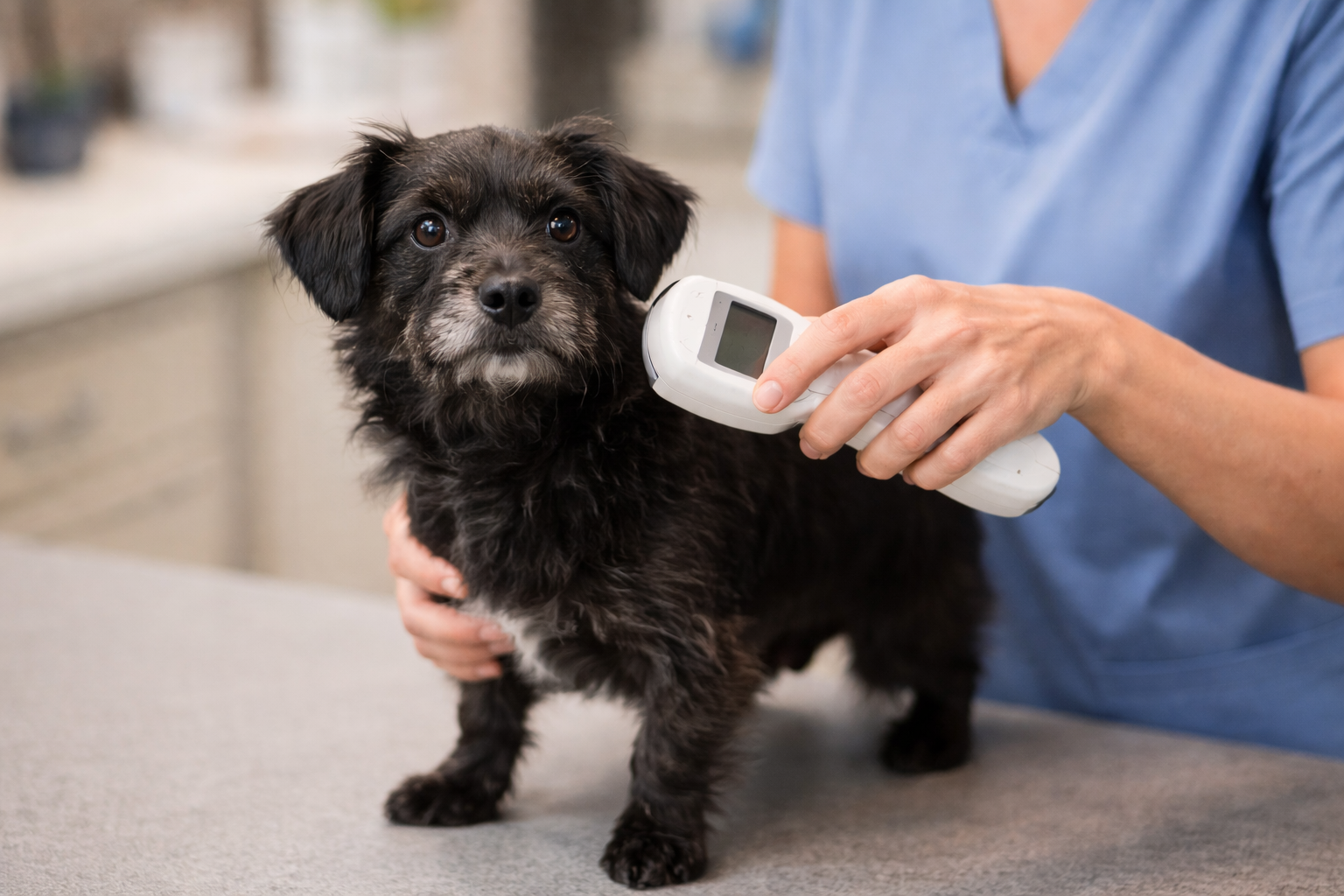
You’ve found a dog. They have no collar, no tags, no identifying markers. You have no idea who owns them or where they came from. But there’s one thing that could change everything: a microchip scan.
Microchipping is one of the most underrated tools in dog rescue and reunion. A simple scan at a vet clinic can literally be the difference between a lost dog and a happy reunion within hours. If you’ve found a dog, getting them scanned should be your absolute first priority, even before posting on social media.
What Is a Microchip?
A microchip is a tiny computer chip about the size of a grain of rice. It’s injected under the dog’s skin, usually between the shoulder blades. Each microchip has a unique identification number. When you scan the dog with a microchip reader, it displays that number. Using that number, you can look up the owner’s information in a national microchip database.
It’s not GPS. It doesn’t track your dog’s location. It’s a permanent form of identification that can’t be lost, broken, or forgotten, unlike collars and tags.
Why Microchipping Is a Game-Changer
Imagine this: A dog is lost. They could have been missing for days. Their owner is devastated. They’ve posted on social media, called shelters, and driven around the neighborhood. Meanwhile, you find the dog and immediately take them to a vet for a microchip scan. The scan reveals a registered microchip. The vet looks up the number, finds the owner’s information, calls them, and within an hour, the dog is home. Crisis averted. Family reunited. All because of a five-minute scan.
This scenario happens dozens of times every day across the country.
Why Some Microchipped Dogs Don’t Get Reunited (And How to Avoid It)
Here’s the catch: not all microchipped dogs are registered. Some owners get their dogs microchipped at a vet or shelter but never fill out the registration information. So the chip exists, but when you scan it and try to look up the owner, you get nothing. That’s why you might see appeals on social media: “Found a dog, microchipped, but not registered. Please help identify the owner!”
If you find a dog with an unregistered microchip, contact the veterinary clinic or shelter where the chip was implanted (if you can determine that) and ask if they have owner information on file. If not, post the chip number on local lost dog groups and ask if anyone recognizes it.
How to Get a Microchip Scan
Go to a vet: Any veterinary clinic can scan for a microchip. Call ahead if you can, but most emergency clinics and regular vet offices will scan even if you’re not an established patient. They usually charge $0-50 for the scan, though many do it free.
Go to a shelter or rescue: Most animal shelters and rescue organizations have microchip scanners. Many will scan for free if you bring in a found dog.
Go to a pet store with a vet clinic: Some chains like PetSmart or Banfield have in-house vets who can scan.
Don’t delay. Get the scan done within the first few hours of finding the dog if possible.
What Happens When the Scan Is Positive (Microchip Found)
Once the vet scans the microchip and gets a number, they’ll contact the appropriate microchip registry. The major registries in the US include AKC Reunite, HomeAgain, and Found Animals. The vet will look up the registration information associated with that microchip number.
If the microchip is registered, the vet will get the owner’s contact information and reach out to them directly. You’ll likely hand the dog over to the owner right there, or the vet will facilitate the reunion.
If the microchip is registered but the owner’s phone number is outdated, the vet might send a letter or contact through other means. Sometimes there’s a delay, but a registered chip almost always leads to a reunion.
What Happens When the Scan Is Negative (No Microchip)
If there’s no microchip, you move to the next steps: documenting the dog’s appearance, posting on social media and local lost dog groups, contacting animal control and shelters, and caring for the dog temporarily if possible.
The Bottom Line
A microchip scan is free or cheap, takes five minutes, and can reunite a lost dog with their family within hours. There’s literally no downside. If you find a dog, get them scanned immediately. It should be the first thing you do, before anything else.
Key Takeaways
- A microchip scan is your best first step for any found dog
- It’s fast, often free, and can lead to an immediate reunion
- Get a scan at a vet, shelter, or rescue clinic
- Registered microchips almost always result in the owner being contacted
- Unregistered microchips can still provide clues to the owner’s identity
- Don’t skip the scan to post on social media first, do it immediately
At SnoutHub, we believe a microchip is one of the best gifts you can give your dog. And for found dogs, it’s a lifeline home. A dog is a bestie.