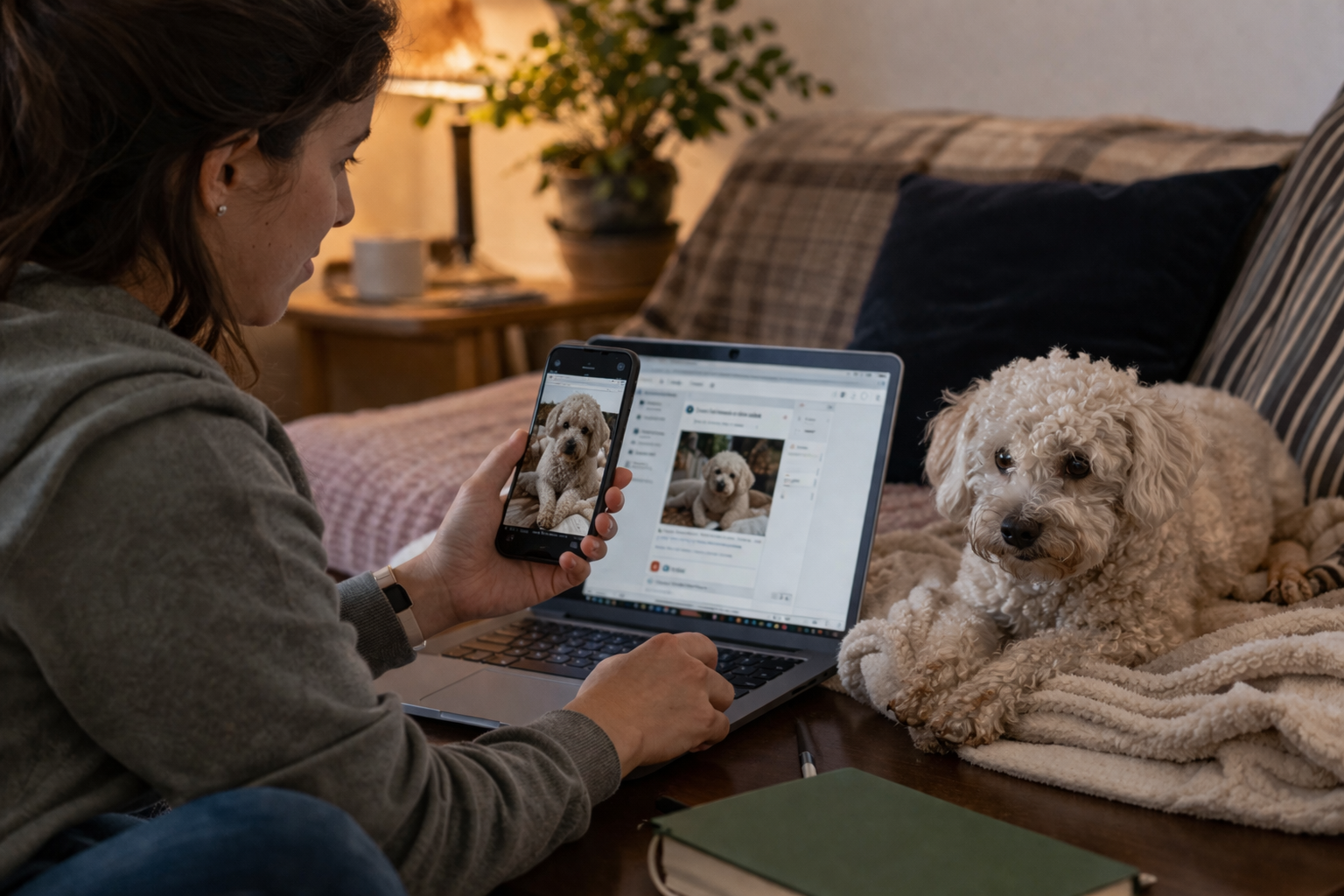
You’ve found a dog, and you want to post about them online to find their owner. It feels urgent, every minute counts. But before you start posting photos on every platform, stop. There are safer and smarter ways to post about found dogs that protect both the dog and you.
Why You Need to Be Careful When Posting a Found Dog
Scammers and fraudsters: Some people will see your post and claim the dog is theirs when it’s not. They might want to steal a valuable dog or use the situation to scam you.
Your privacy: Posting location details and photos can expose your home address if you’re not careful.
The dog’s safety: Posting widely might attract people with bad intentions, not just the owner.
Legal liability: If someone is injured by the dog or the dog is taken by someone who isn’t the real owner, you could be legally responsible.
Step 1: Use the Right Platforms
Local Lost Dog Facebook Groups: These are specifically designed for lost and found dogs. Your post will reach people in your area who are actively looking for lost dogs. Search for “[Your City] Lost Dogs” or “[Your City] Found Dogs” on Facebook and join the active groups.
Nextdoor: A neighborhood-specific app where you can post about the dog. Only people in your neighborhood see it, which is safer.
Local Animal Shelter Pages: Many shelters have Facebook pages where they post found dogs. Ask if you can send them information about the dog.
Avoids general platforms like Instagram or Twitter unless necessary: These are public and less targeted. Anyone, anywhere can see your post.
Step 2: Protect Your Location Information
Don’t post your home address. Instead, describe the general area:
- DO say: “Found near Maple and 5th Street in the Westwood neighborhood”
- DON’T say: “Found on my front lawn at 123 Main Street”
- DO say: “Found in Central Park, near the dog park entrance”
- DON’T say: “Found in my backyard in the Westwood Apartments, Building 3”
If the real owner wants to claim the dog, you can give them more specific location details after they provide proof of ownership.
Step 3: Ask for Proof of Ownership
This is crucial. When someone claims the dog is theirs, ask for:
- A photo of them with the dog (before they found your post)
- The dog’s name
- The dog’s microchip number (if there is one)
- Details about any collar, tags, or distinctive markings
- Veterinary records or proof of ownership
A real owner will have this information. Someone trying to steal the dog often won’t.
Step 4: Arrange a Safe Meeting
If someone appears to be the real owner, arrange to meet them at a neutral, public location. Don’t invite them to your home. Meet at:
- An animal shelter
- A vet clinic
- A busy park or public area
- A police station (if you’re concerned about safety)
Bring the dog and have the person present ID and proof of ownership. If you have any doubt, ask the vet or shelter to facilitate the transfer.
Step 5: Document the Transfer
When the real owner claims the dog, get their contact information (name, phone number, email). Take a photo of them with the dog. This protects you legally if questions arise later.
What to Include in Your Post
- Clear photos: Front, side, and back views of the dog
- General location: Neighborhood or cross-streets (not your exact address)
- Date found: “Found Tuesday, February 11 around 3 PM”
- Dog’s description: Size, breed, color, distinctive markings, approximate age
- Temperament: “Friendly but scared,” “Very calm and sweet,” etc.
- Status: “Currently safe and cared for,” “Being held by local shelter,” etc.
- Contact method: Phone or Facebook DM (don’t list your home address)
- Call to action: “If this is your dog, please provide proof of ownership”
What NOT to Include
- Your home address or specific location
- Your full name if you’re concerned about privacy
- Details that only the real owner would know (like a unique microchip number), ask this when someone claims the dog, don’t post it
After the Dog is Claimed
Once the real owner claims the dog, edit your post to say “CLAIMED” or delete it entirely. This prevents confusion and stops people from messaging you about the dog.
If No One Claims the Dog
Work with local animal control and rescue organizations to help the dog find a new home or get returned to their owner through official channels.
Key Takeaways
- Use targeted platforms like local Lost Dog Facebook groups and Nextdoor
- Protect your home address by describing the general area, not exact location
- Ask for proof of ownership before handing over the dog
- Meet the owner at a neutral, public location
- Document the transfer with contact info and photos
- Delete or edit your post once the dog is claimed
At SnoutHub, we believe found dogs deserve to be reunited safely. A dog is a bestie.