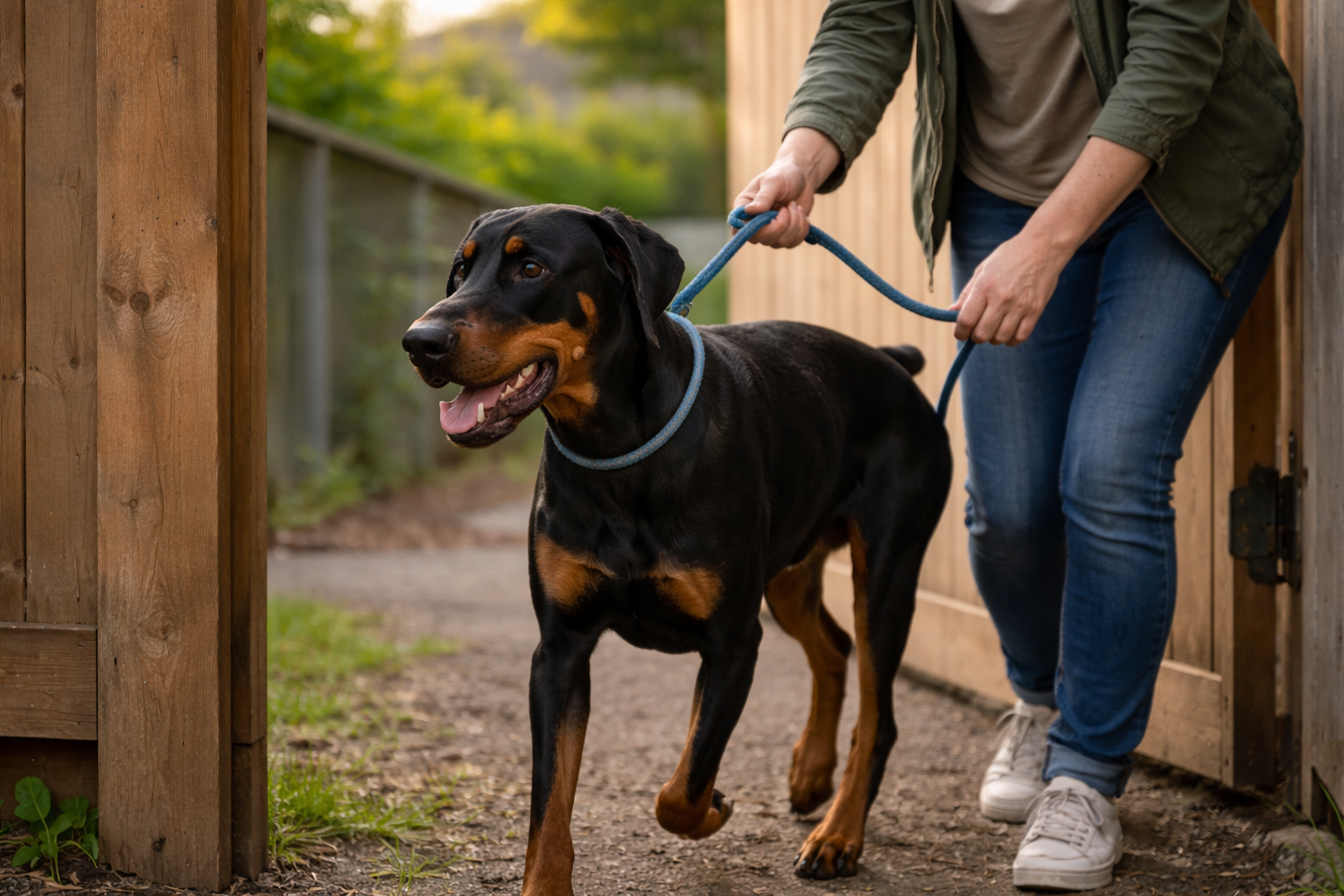
You’ve found a dog, and they’re not completely panicked, they’ll take treats from you, they’re calm enough that you could potentially contain them. But now what? You have a loose dog in your yard or garage, and you need to make sure they stay safe while you figure out next steps. How do you create a secure space without a crate? How do you keep them from escaping?
Safely containing a found dog is an art. You need to keep them secure without stressing them out further. Here’s how to do it right.
Step 1: Choose Your Space
A backyard with a secure fence: This is ideal. The dog can move around, get fresh air, and doesn’t feel completely confined. Make sure the fence has no gaps and the gate is secure. Test it yourself, if you can squeeze through, so can the dog.
A garage or shed: Not ideal for long-term, but works for a few hours. It’s indoor, protected from weather, but can feel isolating.
A large room in your home: An office, bedroom, or living room works. Close off other areas with baby gates or closed doors.
A dog crate: Only if the dog is small and already comfortable with crates. A crate is stressful for a scared dog, so avoid this unless necessary.
Step 2: Make the Space Safe
Once you’ve chosen a space, dog-proof it:
- Remove anything toxic (cleaning supplies, medications, chocolate, xylitol-containing foods)
- Remove anything that could be chewed and cause intestinal blockage (socks, small toys, cords)
- Secure any wires or cords they could tangle in
- Check for escape routes, seal gaps under doors, close windows
- Provide water in a spill-proof bowl
Step 3: Provide Comfort Items
A scared dog needs to feel secure. Set up:
- A blanket or bed in a corner (gives them a “den” feeling)
- Some soft items, blankets, old clothes (as long as they’re not choking hazards)
- Toys (in case they want to play, though many scared dogs won’t)
- Fresh water available at all times
Step 4: Offer Food (But Don’t Force It)
A found dog might not eat right away, they’re stressed. Offer a small amount of plain food (bland chicken, boiled rice, or a simple kibble) but don’t worry if they don’t eat. Stressed dogs often have no appetite. If they don’t eat within 24 hours, monitor their hydration and consider a vet visit.
Step 5: Minimize Stress While Contained
Keep interactions low-key. Don’t crowd the dog or try to play with them. Let them settle. Some dogs do well in a room where they can see and hear family members but don’t have direct pressure. Others need complete quiet and privacy. Watch the dog’s behavior and adjust.
Step 6: Monitor Bathroom Needs
A contained dog needs to go to the bathroom. If they’re in a yard, let them roam and watch for bathroom breaks. If they’re indoors, take them outside frequently (every 2-3 hours). Some dogs will have accidents indoors if they’re scared, that’s normal and not their fault.
Don’t Contain Them Longer Than Necessary
This is temporary while you find the owner or hand off to rescue. The goal is 24-48 hours maximum. If the dog is still with you after that, they should be in official animal control or rescue care, not in your home. Rescues and shelters are better equipped for medium-term care.
What if the Dog Is Severely Anxious While Contained?
Some dogs will pace, whine, or show signs of severe stress (panting, trembling, refusing to eat). If this happens:
- Try moving them to a different space, sometimes a different environment helps
- Create a “den” with blankets over a table or in a closet, some dogs feel safer in smaller, enclosed spaces
- Play calming music or white noise
- Consider asking a vet about temporary anti-anxiety medication if it’s a long-term situation
- Contact a rescue or shelter to take over care if the dog is too distressed
Key Takeaways
- A secure yard is the best containment option for a found dog
- Dog-proof the space, remove toxins, choking hazards, escape routes
- Provide comfort items, water, and a safe space to rest
- Offer food but don’t force it, stressed dogs often don’t eat
- Monitor bathroom breaks and behavior
- Keep containment temporary, hand off to professionals within 24-48 hours
- If the dog is severely anxious, contact a rescue or vet for support
At SnoutHub, we believe found dogs deserve a safe landing, even if it’s temporary. A dog is a bestie.