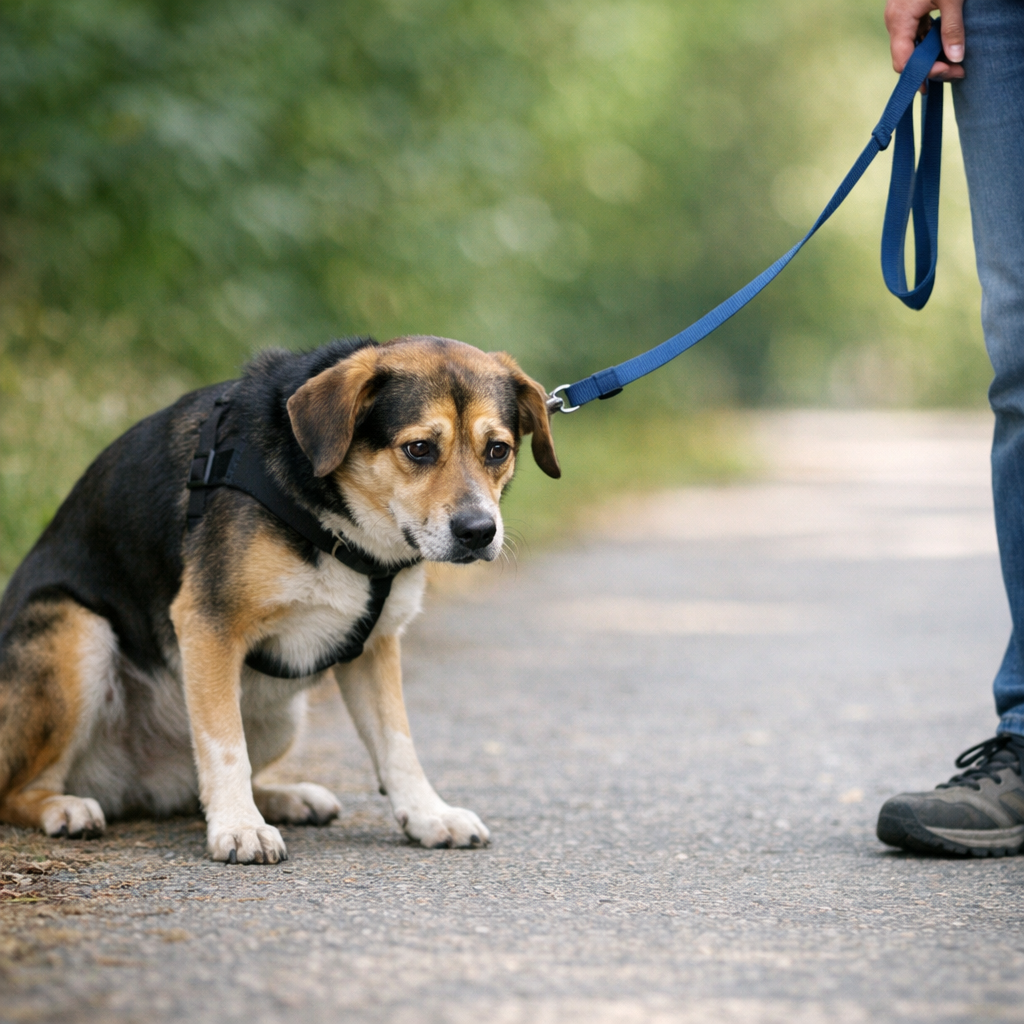
You’ve got the leash on, ready for your daily walk, but your dog sits down and won’t move. Or they walk a few steps and then freeze. Or they pull hard to go back home. Your first thought: “They’re being stubborn.” But that’s rarely the issue. A dog refusing to walk is almost always communicating something serious: fear, pain, or severe anxiety.
Why Dogs Refuse to Walk
Pain or discomfort: Your dog might be experiencing joint pain (arthritis), paw pain, GI pain, or general illness. Walking causes discomfort, so they refuse.
Fear: Something on the walk route scares them. A neighbor’s aggressive dog, a busy intersection, a loud construction site. They’re not being difficult, they’re scared.
Anxiety about the walk itself: Some dogs develop anxiety about walks, especially after a traumatic incident (hit by a bike, chased by another dog, scared by a loud noise on a walk).
Change in routine or environment: New walking route, new neighborhood, unfamiliar sounds or sights. The unfamiliarity triggers anxiety.
Overwhelming sensory input: Too many dogs, too many people, too much noise. The dog shuts down rather than moving forward.
Separation anxiety (refusing to go away from home): Some anxious dogs refuse to walk away from their safe space.
How to Identify the Cause
Is it pain? Does your dog refuse walks consistently? Are they limping? Do they seem uncomfortable at other times too? If you suspect pain, see a vet. Arthritis, hip dysplasia, and other conditions cause refusal to move.
Is it fear? Does your dog refuse to walk only on certain routes? Do they pull back when you approach a specific place (the neighbor’s house, a busy street, a dog park)? Fear is location-specific.
Is it anxiety? Does your dog seem anxious before walks (panting, whining, inability to settle)? Do they refuse to walk when you put the leash on, before you even get outside? This points to anxiety about the activity itself.
What NOT to Do
Don’t drag your dog. Don’t yell “let’s go!” Don’t use force. Don’t punish them for refusing. All of this escalates their fear or pain and makes them more resistant to walks in the future.
Dragging a scared or pained dog says to them, “Your discomfort doesn’t matter to me.” This damages trust.
What TO Do: Step by Step
Step 1: Identify the issue. Is it pain or fear? When does the refusal happen? Where?
Step 2: If it’s pain, see a vet. Get a full exam. Discuss joint pain, age-related issues, and neurological problems. Pain is medical, it needs professional help.
Step 3: If it’s fear, identify the trigger. What specifically scares them? The whole route, or a specific location? Certain sounds, sights, or other dogs?
Step 4: Avoid the trigger initially. If your dog is scared of the busy intersection, don’t take that route. Choose a quieter path. Your dog needs to rebuild confidence.
Step 5: Desensitize slowly. Over time, work on making the scary thing less scary. If your dog is afraid of other dogs, start by walking past a friend’s yard (from far away) while offering treats. Slowly move closer. The goal is changing your dog’s emotional response to the trigger.
Step 6: Make walks positive. Offer treats on walks. Play on walks. Make the walk itself rewarding, not just the destination. A dog who associates walks with good things is more willing to go.
Step 7: Shorten walks if needed. A walk around the block is better than no walk. Start short and build up as your dog’s confidence improves.
Special Case: Senior Dogs and Pain
Older dogs often develop arthritis or other joint issues. They might refuse walks because moving hurts. Help them with:
- Shorter walks (even 5-10 minutes is exercise)
- Softer surfaces (grass vs. concrete)
- Supportive supplements (glucosamine, omega-3s)
- Pain medication from a vet
- Orthopedic dog beds for rest at home
When Professional Help Is Needed
If your dog’s refusal persists despite your efforts, or if it gets worse, work with:
- A vet (rule out medical issues)
- A certified animal behaviorist (for anxiety or fear-based refusal)
- A trainer experienced with anxious dogs (for gradual desensitization)
Key Takeaways
- Dogs refuse walks because of pain, fear, or anxiety, never stubbornness
- Start with a vet visit to rule out medical issues
- Identify whether the refusal is location-specific (fear) or general (pain/anxiety)
- Never drag or force your dog, it damages trust
- Desensitize to feared triggers slowly, paired with treats and positivity
- Shorter walks are still beneficial
- Work with professionals if the issue persists
At SnoutHub, we believe a dog refusing a walk is communicating a real need. Listen carefully. A dog is a bestie.