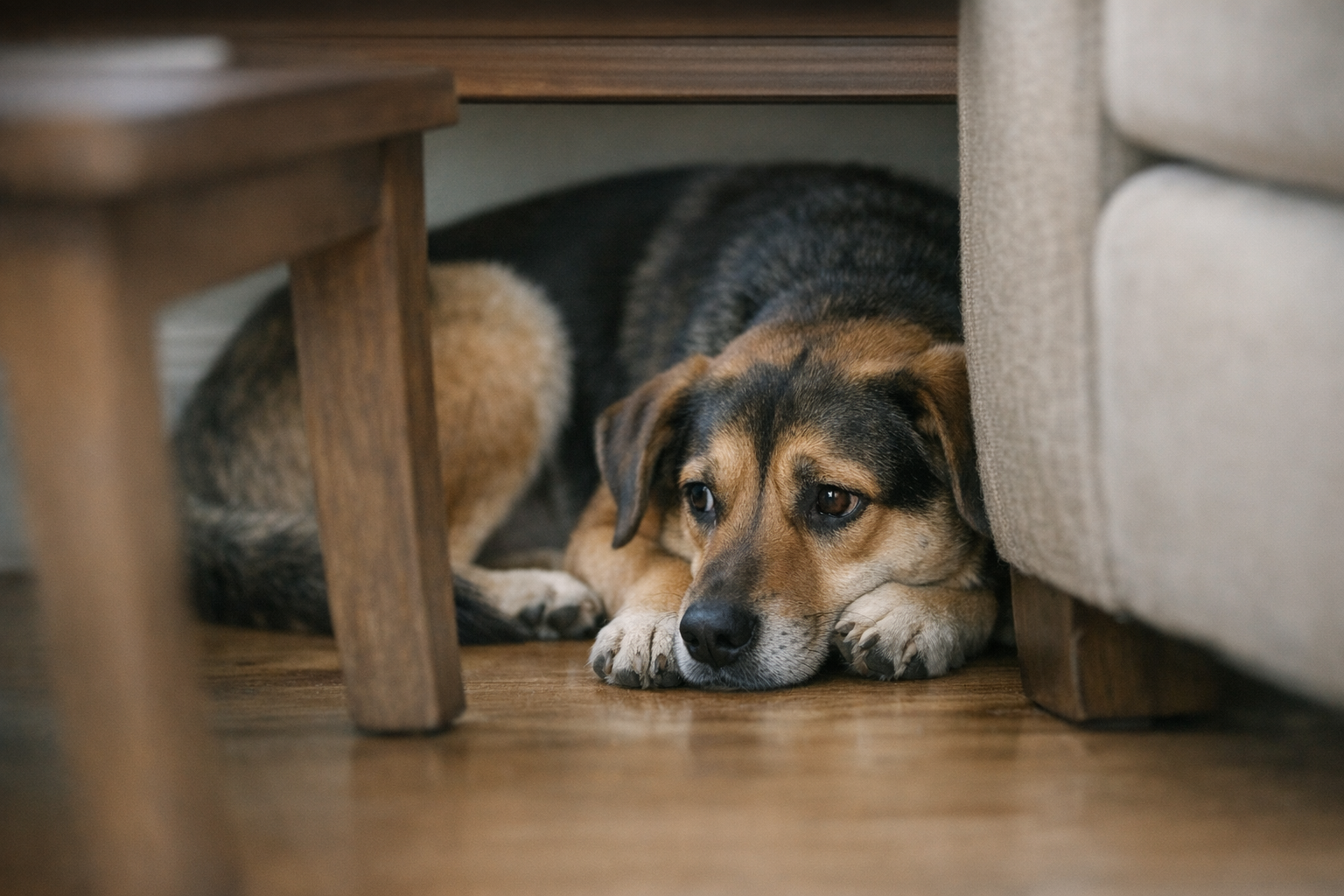
Your dog disappears into the bedroom during a thunderstorm and doesn’t come out for hours. Or maybe your dog was just at the vet, and now they’re hiding under the table, not eating, barely responding to their name. Are they just being dramatic, or is something serious happening?
Hiding and shutdown are two of the most severe stress responses dogs display. They’re different from other stress signals, they indicate that your dog’s nervous system is completely overwhelmed. Understanding these responses is crucial for supporting your dog through trauma and knowing when to seek professional help.
What Is Hiding in Dogs?
Hiding is when a dog seeks out a small, enclosed space, under a bed, in a closet, behind the couch, and stays there. It’s not playful; it’s a survival mechanism. Your dog is trying to make themselves smaller and less visible, usually because they feel unsafe in the wider environment.
Hiding can happen in response to:
- Thunderstorms or fireworks (the most common trigger)
- Loud noises they don’t understand
- Home chaos (people visiting, kids playing loudly, moving or renovations)
- A traumatic event or experience
- Pain or illness (sometimes a dog hides when they don’t feel well)
- Anxiety about a known upcoming event (vet visit, travel)
What Is Shutdown in Dogs?
Shutdown is different from hiding. It’s a complete shutdown of the nervous system. The dog is physically present but emotionally unavailable. They might:
- Not respond to their name or treats they normally love
- Have a vacant or “glazed” expression
- Move very slowly or not at all
- Not eat or drink even if you offer food
- Not interact with family members
- Stare into space or have their eyes slightly unfocused
A shutdown dog looks almost catatonic. It’s the behavioral equivalent of dissociation in humans, the nervous system has said, “This is too much. I’m shutting down.”
Shutdown vs. Depression
Shutdown is temporary and stress-induced. A dog in shutdown from a traumatic event or severe stress might recover within hours or days once the stressor passes. Depression in dogs is more chronic and doesn’t respond to removing the stressor.
If your dog has been shutdown for more than 24-48 hours, or if they’re shutdown even when the stressor is gone, it’s worth a vet visit to rule out medical issues and discuss behavioral support.
Why Hiding and Shutdown Happen
These responses are rooted in survival instinct. When a dog perceives a threat they cannot fight or flee from, freezing and withdrawing become the strategy. The nervous system essentially goes offline. It’s not defiance, not “being dramatic, ” not something to punish, it’s a legitimate survival response.
How to Support a Hiding Dog
Let them hide: Don’t force them out of their hiding spot. Don’t try to convince them it’s safe. Let them stay in their refuge.
Make the space safe: Ensure the area where they’re hiding is actually safe. Close doors so they can’t bolt into danger. Remove anything they could hurt themselves on.
Provide water and food nearby: Leave a bowl of water and some food near their hiding spot, but don’t force them to eat. Stressed dogs often don’t eat, and that’s okay for short periods.
Reduce the stressor if possible: Close windows and curtains during fireworks. Play calming music during thunderstorms. Keep the home as quiet and calm as possible.
Don’t punish or force: Never drag your dog out of hiding or punish them for hiding. This teaches them that you’re not safe, and it escalates their fear.
Stay calm yourself: Your dog is reading your energy. If you’re anxious or frustrated, it makes things worse.
How to Support a Shutdown Dog
Let them be: A shutdown dog doesn’t need interaction. They need quiet and safety. Let them exist without pressure.
Provide basic care: Make sure they have access to water. Offer food, but don’t be surprised if they don’t eat. Keep them in a quiet, low-traffic area.
Monitor for medical issues: If the shutdown lasts more than 24 hours or is accompanied by vomiting, diarrhea, or other signs of illness, see a vet.
Expect slow recovery: A dog in shutdown might take hours or even days to fully recover. This is normal. Don’t rush them.
Consider professional help: If your dog is shutting down regularly or in response to normal life events, work with a behaviorist or trainer to help them build resilience.
Prevention and Long-Term Support
If your dog hides or shuts down during storms or fireworks, you can work on building resilience over time:
- Desensitization: Gradually expose them to recordings of the scary sound at low volumes, paired with treats and positive experiences
- Calming supplements: Talk to your vet about L-theanine, tryptophan, or other supplements
- Anti-anxiety medication: For severe cases, your vet might prescribe a short-term medication for known stressful events
- Create a safe room: A designated “safe space” where your dog can retreat without judgment
Key Takeaways
- Hiding is a stress response, it’s not misbehavior
- Shutdown is a complete nervous system shutdown in response to overwhelming stress
- Both are survival mechanisms, not things to punish
- Support by providing safety, not by forcing interaction
- If shutdown lasts more than 24 hours, see a vet
- Work with professionals to help prevent or reduce future episodes
At SnoutHub, we believe dogs who hide or shut down deserve understanding, not judgment. A dog is a bestie.