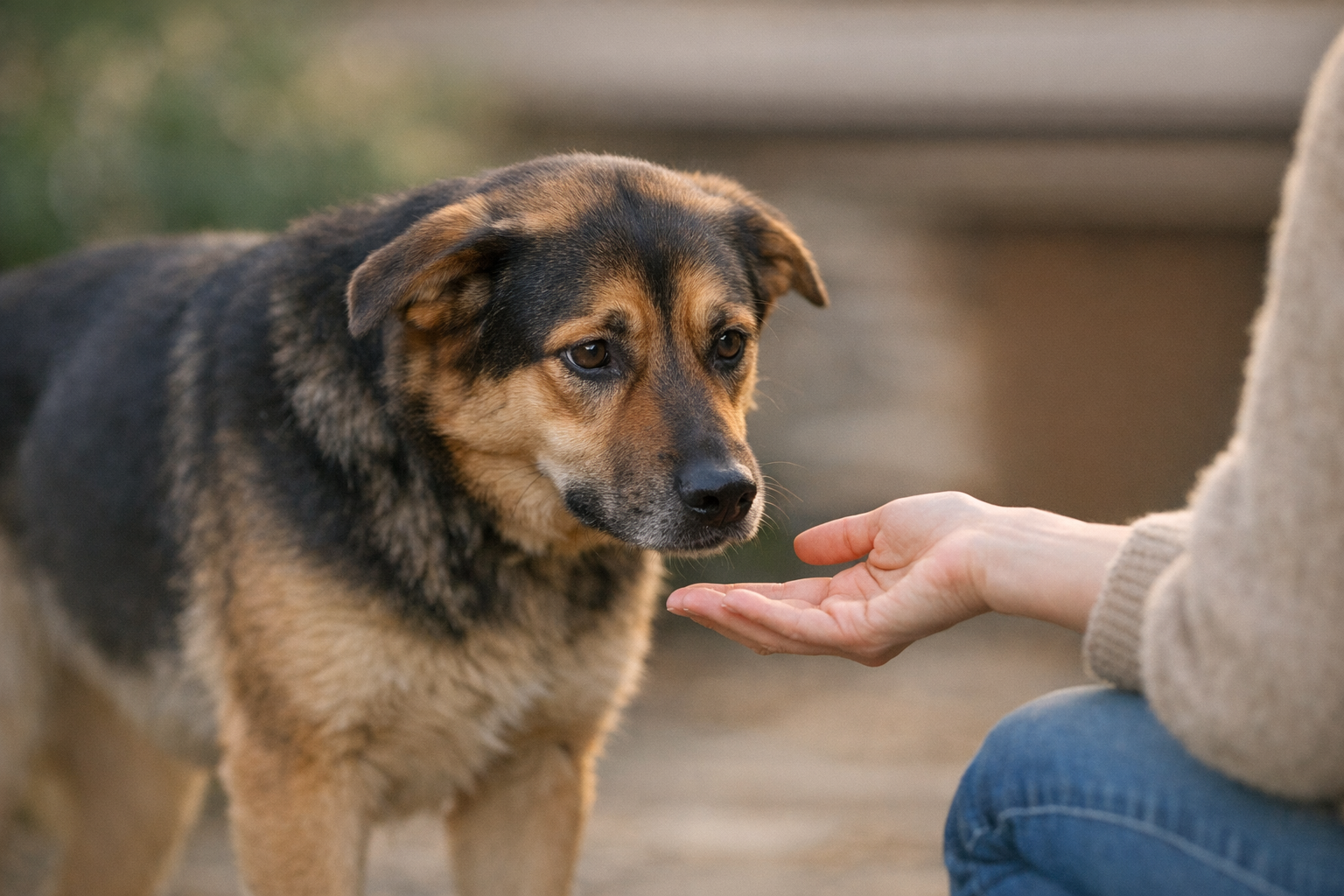
You’re about to give your dog a bath, and as you approach with the leash, you notice their ears pinning back against their head. Not aggressively laid back, just… back. Flattened. They’re telling you something with that ear position, but what exactly?
Ears back in dogs is one of the most misunderstood body language signals. It doesn’t always mean fear, and it doesn’t always mean aggression. It means your dog is communicating something important about their emotional state. Learning to read ear position, along with the rest of their body, is essential to understanding what your dog is trying to tell you.
The Different Types of Ears-Back
Softly Pinned Back (Relaxed Ears): When a dog’s ears are softly folded back but their whole body is loose and relaxed, it might just be a default position for that breed. Some dogs (like Labs or Spaniels) have ears that naturally sit back. This isn’t a stress signal.
Moderately Pinned Back (Uncertainty): The dog is uncertain or mildly anxious. They’re saying, “I’m not sure about this.” This happens during transitions (getting ready for a bath, approaching the vet’s office, meeting someone unfamiliar). Paired with other relaxed body language, it’s mild concern, not panic.
Fully Flattened/Plastered Back (Fear or Appeasement): When the ears are completely flattened against the head, your dog is communicating fear, anxiety, or appeasement (trying to appear non-threatening). Paired with a tucked tail, whale eye, or a crouched body, this is a clear sign of fear or stress.
One Ear Back, One Forward (Ambivalence): Your dog is conflicted. Interested in something, but also cautious. They’re gathering information while hedging their bets.
Why Dogs Pin Their Ears Back
Fear or Anxiety: Pinning ears back makes the dog look smaller and less threatening. It’s a submissive gesture that says, “I’m not a threat, please don’t hurt me.”
Appeasement: A dog might pin their ears back when being corrected or scolded. They’re saying, “I understand I did something wrong, and I’m sorry.”
Politeness: Some dogs (especially those socialized with other dogs) use ears-back as a polite gesture, almost like saying “after you” to another dog.
Focus or Concentration: A dog in intense focus on something might pin their ears back slightly. Think of a dog watching a squirrel or waiting for a treat.
Ears-Back in Context: What the Whole Body Says
This is crucial: don’t judge ears-back in isolation. Look at the entire dog.
Ears back + loose body + wagging tail + soft eyes = Uncertainty, but mostly okay. Your dog is cautious but not panicked.
Ears back + stiff body + tucked tail + whale eye = Fear or high anxiety. Your dog is very uncomfortable.
Ears back + play bow + soft, bouncy movements = Playfulness or social politeness. Your dog is engaged and having fun.
Ears back + rigid posture + stiff tail + hard stare = Dominance or restraint. This can be a warning sign.
Common Situations Where Dogs Pin Their Ears Back
- During nail trims or grooming: Most dogs are anxious or uncertain, so ears go back.
- When being scolded: Appeasement and fear of punishment.
- Meeting unfamiliar people: Uncertainty mixed with politeness.
- Around a more dominant dog: Showing deference.
- During vet exams: Stress and uncertainty.
- When you’re upset (your voice raised): Your dog is reacting to your emotional state.
How to Respond When Your Dog Pins Their Ears Back
First, assess the whole situation. If your dog’s ears are back but their body is otherwise relaxed, they’re probably fine, just uncertain. You can help by:
- Speaking in a calm, gentle voice
- Moving slowly
- Offering treats if appropriate
- Pausing the activity if they’re very uncomfortable
If your dog’s ears are fully pinned back and they’re showing other signs of fear (tucked tail, trembling, trying to escape), take it seriously. Pause. Create distance. Give your dog space and comfort. Don’t force them through the situation.
What NOT to Do
Don’t punish your dog for pinning their ears back. It’s not defiance, it’s communication. Punishing it teaches your dog that it’s not safe to show you their emotions. Don’t force your dog into situations where they’re so frightened their ears are plastered back. Your dog is begging you to stop.
Key Takeaways
- Softly pinned ears can be normal or indicate mild uncertainty
- Fully flattened ears indicate fear, appeasement, or severe anxiety
- Always look at the whole body, ears alone don’t tell the full story
- Respond to fearful ear-pinning by creating distance and safety
- Never punish ears-back, it’s your dog communicating, not being naughty
- Repetitive ear-pinning in specific situations suggests your dog needs help with anxiety
At SnoutHub, we believe your dog’s ears are part of their language. Listen with your whole heart. A dog is a bestie.