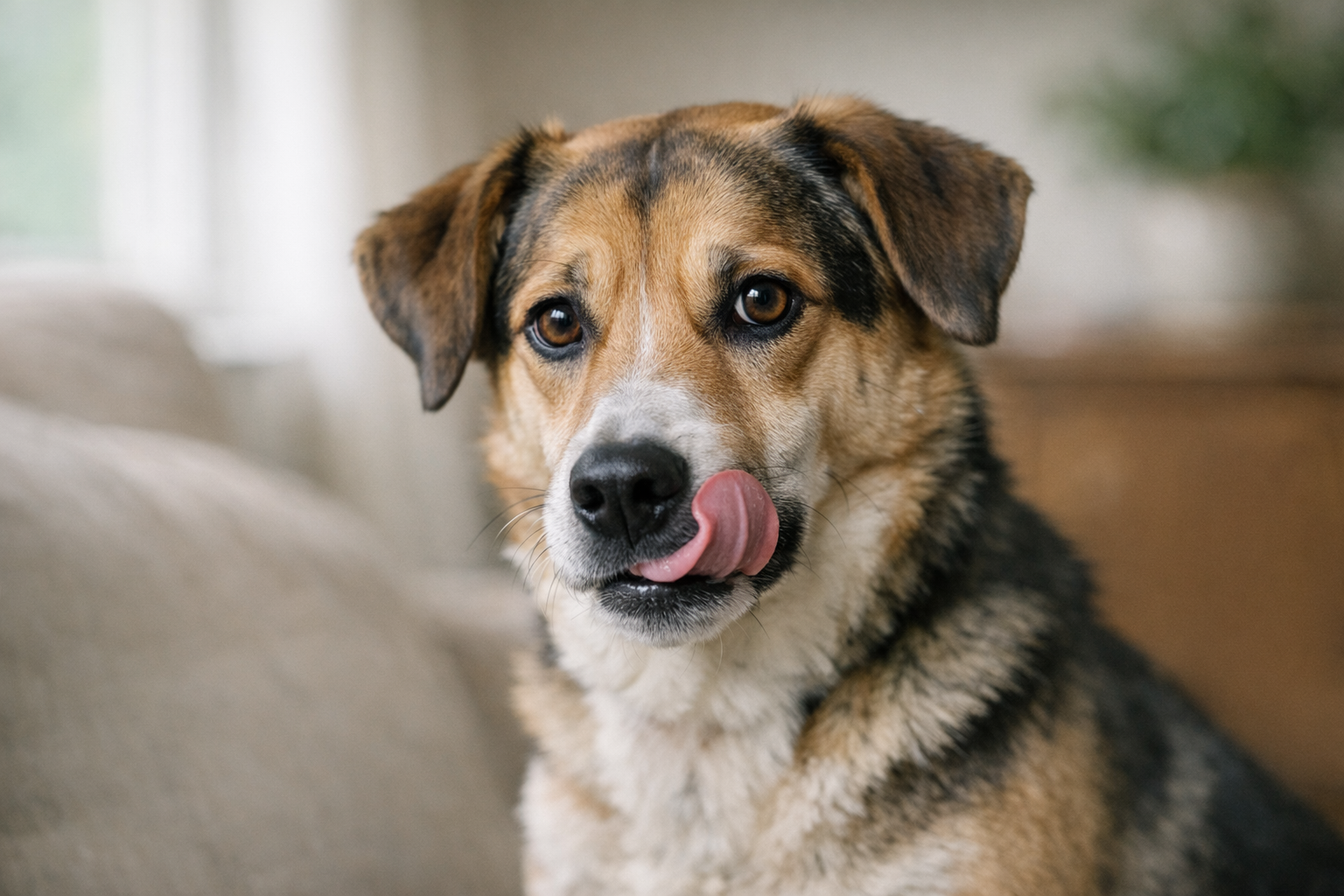
You’re sitting on the couch with your dog, everything seems calm, and suddenly you notice their tongue flicking out, just a quick lick across their nose and lips. It’s such a small gesture that most of us barely notice it. But if you’ve ever wondered whether your dog is just being cute or actually signaling something deeper, you’re onto something real. Lip licking in dogs is one of those subtle behaviors that can tell us so much about what’s going on inside your bestie’s mind and body.
What’s Actually Happening When a Dog Licks Their Lips
Lip licking is a calming signal, a self-soothing behavior that dogs use when they’re experiencing stress, anxiety, uncertainty, or discomfort. Think of it like a human taking a deep breath or biting their nails when nervous. It’s not a sign of happiness or contentment (though sometimes dogs do lick their lips after eating, and that’s totally normal). Instead, lip licking is your dog’s way of managing internal emotional or physical tension.
Dogs develop these calming behaviors early in life. Puppies lick their mothers’ faces as a greeting and to stimulate feeding. As they grow, they learn that the act of licking, particularly their own lips, can help regulate their nervous system. When a dog is anxious, overwhelmed, or experiencing pain, they’ll often resort to this behavior. Veterinarians and animal behaviorists recognize lip licking as one of the most common appeasement signals in a dog’s body language vocabulary.
It’s also worth knowing that lip licking can indicate physical discomfort. If your dog is nauseous, has dental pain, or is experiencing digestive upset, they may lick their lips repeatedly. Some dogs also lick their lips when they’re anticipating food or noticing interesting smells, but that’s different, it’s purposeful and happens in specific contexts. The lip licking we’re talking about here is more frequent, repetitive, and often appears disconnected from a clear trigger.
The Context Clue: When to Pay Attention
The key to understanding lip licking is context. Is your dog licking their lips during a veterinary appointment? That’s stress. Are they doing it when a visitor arrives at the door? Probably anxiety. Is it happening while they’re resting peacefully? That might just be normal grooming or post-meal behavior.
Pay attention to when and where lip licking happens. Does it occur during car rides, thunderstorms, or when you’re getting ready to leave the house? These are all high-stress situations for many dogs. Does it happen when your dog is interacting with an unfamiliar dog or person? That could signal social uncertainty. Does it cluster with other behaviors like panting, yawning, or tuckin the tail? Those are additional stress signals that confirm your dog is feeling anxious or overwhelmed.
Also notice the frequency and intensity. An occasional lip lick after a meal or during a calm moment is nothing to worry about. But if your dog is constantly licking their lips throughout the day, especially if paired with restlessness, panting, or behavior changes, that’s worth investigating further. Repetitive lip licking can also indicate medical issues like acid reflux, oral pain, or nausea, so context matters tremendously.
What You Should Do
If you notice your dog licking their lips frequently, your first step is to create a calmer environment. Remove or reduce the stressor if you can. If your dog is anxious during vet visits, ask your vet about calming supplements or anxiety medications. If they’re stressed during storms, consider a thunder shirt or a safe, quiet space. The goal is to help your dog feel more secure so they don’t need to self-soothe as much.
Don’t scold or punish lip licking, it’s not a behavior problem, it’s a signal. Punishing your dog for showing stress signals teaches them to hide their emotions, which can actually lead to more serious behavioral issues down the road. Instead, acknowledge what they’re telling you and respond with patience and understanding.
You can also help by learning your dog’s other calming signals and body language. The more you understand what your dog is communicating, the better you can support them. Sometimes just knowing why your dog is anxious is the first step toward helping them feel safer.
When to Talk to a Professional
If your dog is licking their lips excessively and it’s a new behavior, start with your veterinarian. They can rule out dental pain, nausea, gastrointestinal issues, or other medical conditions. If the behavior is stress or anxiety-related, your vet may recommend a certified applied animal behaviorist or a certified professional dog trainer who specializes in anxiety. They can help you identify triggers and develop a plan to help your dog feel more confident and calm.
Key Takeaways
- Lip licking is a calming signal, your dog is telling you they’re stressed, anxious, or buncomfortable
- One lick doesn’t mean much, but frequent or repetitive licking paired with other stress signals is worth investigating
- Context is everything, pay attention to when and where lip licking happens
- Medical issues like nausea, dental pain, or acid reflux can also cause lip licking, so check with your vet first
Frequently Asked Questions
Is lip licking always a sign of stress?
Not always. Dogs lick their lips after eating, and that’s normal. Some dogs also lick their lips when they’re anticipating food or rexploring interesting smells. The difference is context and frequency. If it’s occasional and tied to a specific moment (like after dinner), it’s probably fine. If it’s constant or happens during situations you know stress your dog, that’s when it becomes a signal worth paying attention to.
My dog licks their lips when I’m getting ready to leave for work. What does that mean?
That’s a classic sign of separation anxiety. Your dog is picking up on the ritual cues that mean you’re about to leave, and they’re becoming anxious about being alone. Combined with lip licking, you might also notice pacing, whining, or destructive behavior. This is a good time to talk to a trainer or veterinary behaviorist about desensitization exercises and potential anxiety management strategies.
Should I be concerned if my dog licks their lips while eating?
No, that’s completely normal and actually adorable. Dogs often lick their lips while eating or anticipating food, it’s their way of managing saliva and showing excitement. The lip licking we’re concerned about is the repetitive kind that happens outside of eating contexts, particularly during stressful moments.
At SnoutHub, we believe every dog deserves to be understood. A dog is a bestie.