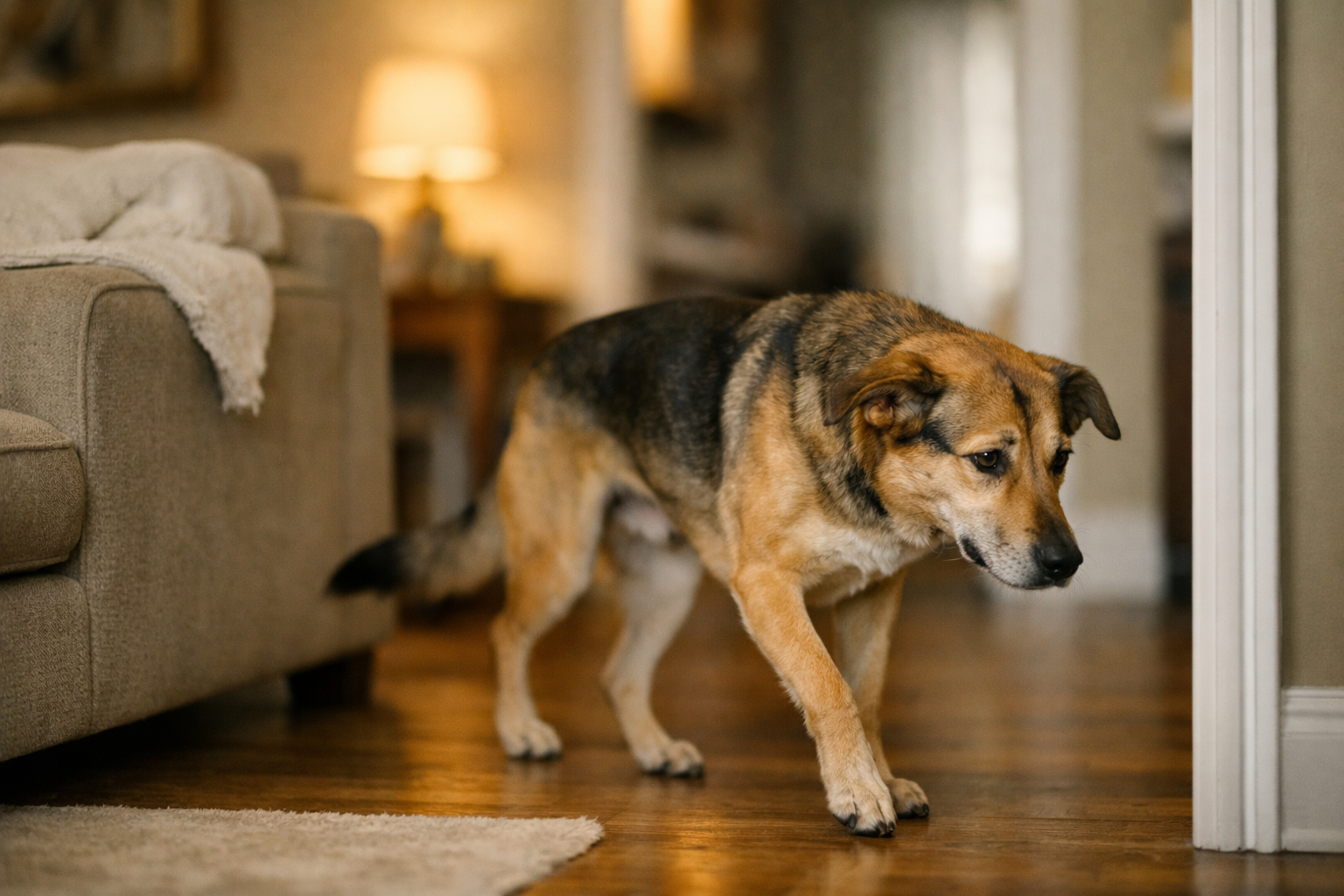
Your dog keeps walking back and forth across the living room. Not because they’re looking for something, just… walking. Pacing. Round and round. Sometimes they’ll do this for minutes at a time, and it seems like they can’t stop. What’s going on?
Pacing is one of those behaviors that looks weird, and that’s because it usually IS a sign that something is off. It’s not always an emergency, but it’s definitely a behavior worth understanding. Your dog is communicating something with their body, and once you learn to read it, you’ll know how to help.
What Is Pacing in Dogs?
Pacing is when a dog repeatedly walks back and forth, in circles, or follows a particular path over and over. It’s a rhythmic, often purposeless movement. Unlike normal walking, where your dog is going somewhere or investigating something, pacing seems almost compulsive. The dog looks like they’re caught in a loop they can’t break.
Pacing and Stress: The Primary Connection
Pacing is one of the most reliable stress signals you’ll see in dogs. When a dog’s nervous system is activated, when they’re anxious, worried, or in a state of nervous anticipation, pacing is a way to burn off that excess energy. It’s like humans pacing when they’re worried or waiting for something important.
Common pacing triggers:
- Thunderstorms or fireworks (even before they start, dogs can sense the pressure change)
- Separation anxiety (pacing while waiting for you to leave or return)
- Vet appointments or travel
- New people or animals in the home
- Changes in routine
- Anticipation (you’re putting on your shoes, and they know it means either a walk or you leaving)
- Boredom or pent-up energy (less common, but possible)
Other Causes of Pacing (Beyond Stress)
Pain: A dog with arthritis, a sore paw, or internal pain might pace because they can’t get comfortable. They’re searching for a position that doesn’t hurt.
Cognitive Dysfunction (Senior Dogs): Older dogs with canine cognitive dysfunction might pace, especially at night. It’s a form of disorientation.
Neurological Issues: Certain neurological conditions cause pacing or circling. This is less common but worth mentioning to your vet.
Medical Issues: Hyperthyroidism, cushing’s disease, and other health issues can cause pacing. If your dog’s pacing is new or unusual, a vet visit is worth the investment.
How to Tell If It’s Stress vs. Medical
Stress-related pacing usually happens in specific contexts: before a vet visit, during a storm, or when you’re putting on your shoes. It’s situational. The pacing stops once the stressor passes or your dog gets used to the situation. Medical pacing, especially in senior dogs, is often constant or increases over time, regardless of context.
If your dog’s pacing is new, excessive, or accompanied by other changes (loss of appetite, lethargy, loss of house training), see a vet. Better safe than sorry.
How to Help a Pacing Dog
Identify the stressor: When does your dog pace? Right before a vet appointment? During storms? When you leave for work? Once you identify the pattern, you can address the root cause.
Reduce the stressor if possible: If your dog paces when you put on your shoes, change your routine. Put your shoes on and then sit on the couch for 10 minutes. Your dog learns that shoes don’t automatically mean departure.
Create a safe space: A quiet, comfortable room can help an anxious, pacing dog. Some dogs do well with a crate or a bedroom where they can settle.
Exercise and mental stimulation: A well-exercised dog is a calmer dog. A tired dog is less likely to pace. Interactive toys, puzzle feeders, and training sessions can help burn energy and redirect anxious thoughts.
Calming supplements or medications: If your dog’s anxiety is severe, talk to your vet about supplements like L-theanine or tryptophan, or prescription medications like trazodone or fluoxetine. These can take the edge off so your dog can focus on learning new behaviors.
Work with a trainer or behaviorist: If pacing is a persistent anxiety issue, professional help can address the underlying fear or anxiety through desensitization and counterconditioning.
What NOT to Do
Don’t punish your dog for pacing. Your dog isn’t choosing to be anxious. Punishment will increase stress and make things worse. Don’t ignore it completely either, pacing is your dog’s way of asking for help.
Key Takeaways
- Pacing is usually a sign of stress, anxiety, or nervous energy
- It can also indicate pain, cognitive dysfunction, or medical issues
- Situational pacing (during storms, before vet visits) is typically stress-related
- Constant or escalating pacing warrants a vet visit
- Help by identifying triggers, providing exercise, and creating safe spaces
- Work with professionals for severe anxiety
At SnoutHub, we believe anxious dogs deserve support, not judgment. A dog is a bestie.