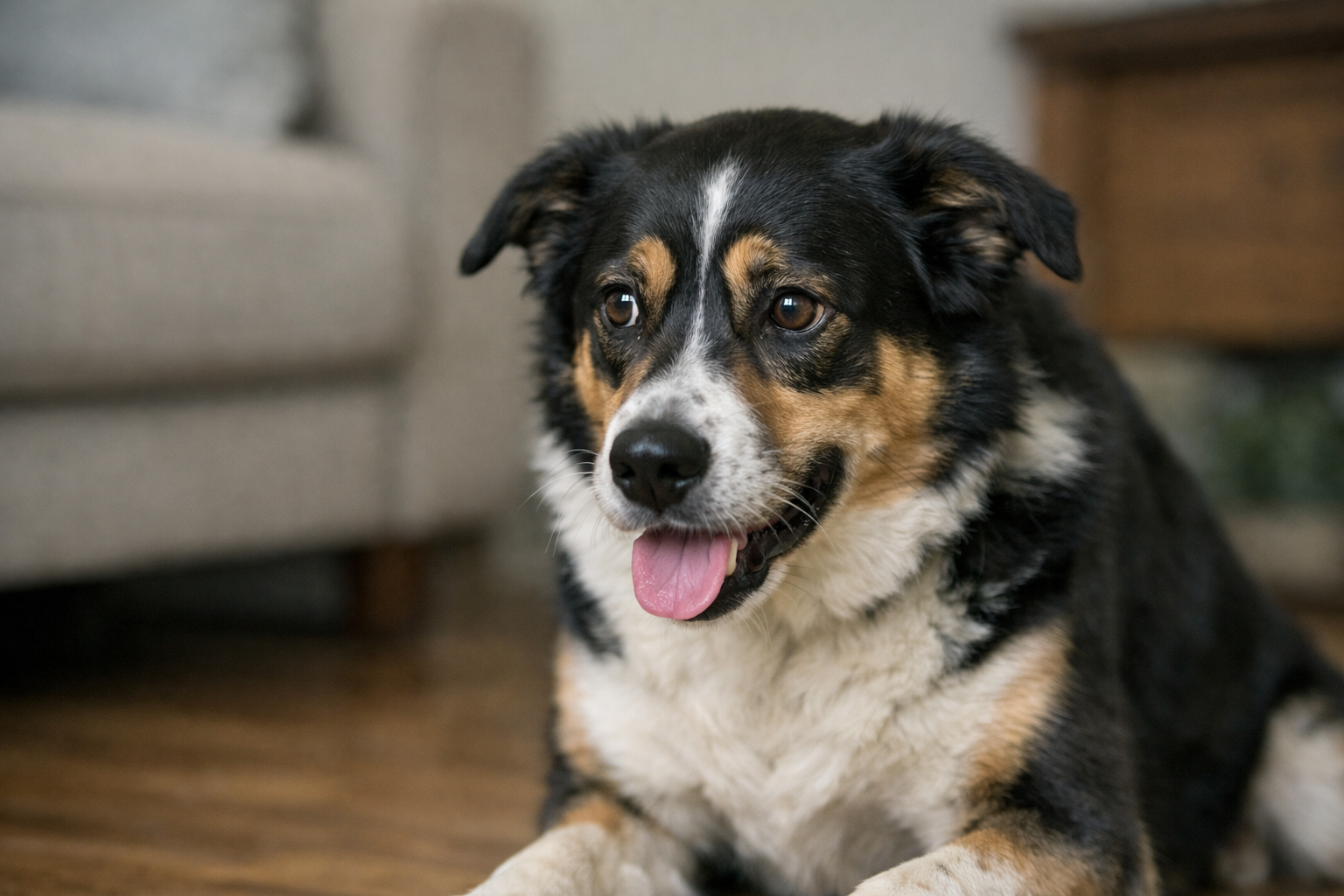
It’s a cool morning. Your dog isn’t playing, they’re not hot, but they’re panting like they just ran a marathon. Their tongue is hanging out, their breathing is fast and heavy, and they look stressed. What’s going on?
Most people know that dogs pant to cool down. But panting isn’t always about temperature or physical exertion. When a dog pants without a clear physical reason, it’s almost always a sign of stress, anxiety, or a medical issue. Learning to recognize stress panting could help you catch your dog’s anxiety before it escalates.
Normal Panting vs. Stress Panting
Normal Panting (Temperature Regulation): Your dog has been running, it’s hot outside, or they’re in a warm room. The panting is controlled and stops once they cool down. They seem relaxed otherwise.
Stress Panting: Your dog is panting without a clear physical reason. It might be shallow or rapid. The panting continues even though the dog should be cool. Often paired with other stress signals: whale eye, ears back, tight body, restlessness.
When Dogs Stress Pant
- Before thunderstorms or fireworks: Dogs can sense pressure changes and predict storms. The anxiety triggers panting before anything actually happens.
- Anxiety about leaving (separation anxiety): You’re putting on your shoes, and the dog knows you’re leaving. The panting starts.
- In the vet’s waiting room: The vet’s office smells like stress and fear. Many dogs pant just sitting in the waiting area.
- Meeting unfamiliar people or dogs: The uncertainty makes them pant.
- During car rides (if they’re anxious about driving): Some dogs associate cars with scary places, so they pant the whole ride.
- When you’re upset or your energy is tense: Dogs absorb your stress. Your raised voice or worried demeanor triggers their anxiety.
- After a startling event: Even after the scary thing passes, dogs sometimes continue stress panting for minutes or hours.
Why Does Anxiety Cause Panting?
When a dog’s nervous system activates due to stress, their body goes into a state of high arousal. Part of that response is faster, heavier breathing. It’s like a human having a panic attack, breathing becomes rapid and sometimes labored even though nothing physically demanding is happening.
When Stress Panting Is a Medical Concern
Sometimes panting without an obvious reason is medical, not behavioral. If your dog is:
- Panting constantly, day after day
- Panting with other symptoms (lethargy, loss of appetite, fever)
- An older dog experiencing new-onset panting
- A dog with a known medical condition (heart disease, Cushing’s disease)
See a vet. Medical causes of panting include heart disease, respiratory problems, pain, hormonal imbalances, and neurological issues.
How to Help a Stress-Panting Dog
Identify the trigger: When does your dog pant? Before storms? When you leave? At the vet? Once you identify the pattern, you can address it.
Stay calm: Your dog is reading your energy. If you’re anxious about their anxiety, it makes it worse. Breathe, relax your face, and project calmness.
Create distance from the stressor if possible: If your dog pants during thunderstorms, move to an interior room away from windows. If they pant during vet visits, work with the vet on a desensitization plan.
Offer water: Panting can be dehydrating. Have cool water available.
Use calming tools: ThunderShirts, anxiety wraps, or calming supplements (L-theanine, tryptophan) can help some dogs. Talk to your vet about options.
Desensitize slowly: If your dog panting during a specific activity, gradually expose them to it in small doses, paired with positive experiences. Work with a trainer if needed.
Consider medication: For severe anxiety, short-term anti-anxiety medication from a vet can help. Some dogs benefit from longer-term behavioral medication like Prozac or Trazodone.
What NOT to Do
Don’t punish your dog for panting. Don’t say “stop it, you’re fine.” Don’t force your dog into the situation that’s causing the anxiety. Your dog is communicating stress, and they need your support, not dismissal.
Key Takeaways
- Panting without heat or exercise is usually stress or anxiety
- Look for other stress signals: whale eye, ears back, restlessness
- Common stress-panting triggers: storms, separation, vet visits, unfamiliar people
- Constant panting can indicate a medical issue, see a vet
- Help by staying calm, creating distance from stressors, and working with a trainer
- Never punish panting, it’s your dog’s stress signal
At SnoutHub, we believe anxious dogs deserve understanding, not dismissal. A dog is a bestie.