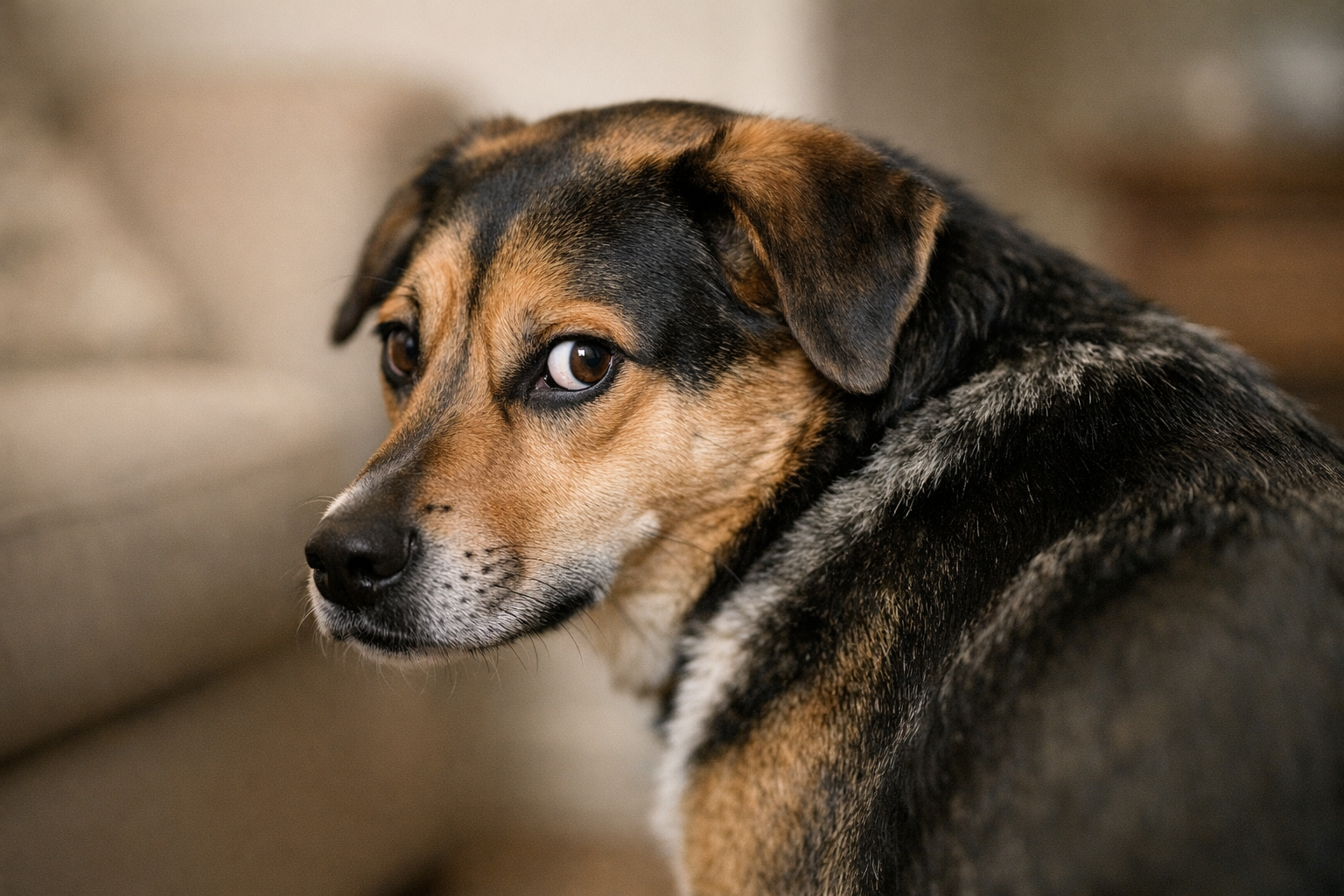
You’re sitting on the couch with your dog, and you notice something odd. When you reach for the treat jar, your pup’s eyes go wide. Really wide. You can see more white around the eyes than usual, it’s like your dog is saying “whoa!” without making a sound. That’s whale eye, and it’s one of the most common stress signals dogs send that humans completely miss.
What Is Whale Eye?
Whale eye is the term for when a dog’s eyes widen and you can see more of the white (sclera) around their iris and pupil than normal. It looks exactly like a whale’s eye, hence the name. It’s a subtle sign, but it’s your dog’s way of saying, “I’m uncomfortable right now.”
Unlike a full-on growl or a snap, whale eye is a quiet warning. It’s your dog’s attempt to tell you something makes them anxious or stressed before things escalate. When you learn to spot whale eye, you’re getting a glimpse into your dog’s emotional state in real time.
Why Dogs Show Whale Eye
Dogs use whale eye in a variety of stressful situations. Maybe someone is standing too close, maybe they’re protective of a toy or treat, or maybe they’re just startled. Sometimes it happens when a dog is being touched somewhere they don’t enjoy, a nail trim, ear cleaning, or even petting that feels too rough. It can also show up when your dog is confused, excited, or anticipating something big.
The key is that whale eye appears when dogs feel a loss of control or an invasion of their space. It’s like your pup is saying, “I see you, I’m watching you, and I’m not sure I like what’s happening.”
Why It Matters: Whale Eye Is a Calming Signal
Dogs use what animal behaviorist Turid Rugaas calls “calming signals”, subtle body language cues they use to communicate stress and to try to calm themselves down. Whale eye is one of many: yawning, looking away, turning their head sideways, and lip licking are others. When your dog shows whale eye, they’re not being “rude” or “bold”, they’re actually trying to defuse tension.
The problem? Most of us miss it. We don’t realize our dog is uncomfortable, so we keep doing whatever was stressing them out. The dog gets more stressed, the calming signals get stronger, and if those signals keep being ignored, the dog may escalate to growling, snapping, or biting. By the time we notice, we’ve already missed the earlier, politer warnings.
Common Situations When Whale Eye Appears
- During vet exams or grooming: Your dog is being touched in unfamiliar ways by a stranger.
- Around food or toys: Resource guarding or anxiety about someone approaching their stuff.
- When a child reaches for them: Kids move unpredictably, and dogs aren’t sure what’s coming next.
- During training or corrections: Your dog is unsure about what you want or bracing for punishment.
- In crowded or noisy environments: Overstimulation and sensory overload.
- When being picked up or restrained: Loss of control triggers stress.
How to Respond When You See Whale Eye
First, recognize it as the gift it is: your dog is giving you a heads-up before things get worse. Pause whatever you’re doing. Step back. Give your dog some space. Slow down your movements and soften your voice. If you’re reaching for something, don’t. If you’re in a grooming appointment, let the groomer know. If your child is petting the dog, redirect them.
The goal is to show your dog that you hear them. You saw the signal, you understand they’re uncomfortable, and you’re going to help them feel safe again. This builds trust and actually makes your dog more likely to reach out to you in the future, and less likely to escalate to a bite.
Training Tip: Desensitize and Counterconditioning
If your dog shows whale eye regularly in a specific situation, like during nail trims or when children approach, you can work to change their emotional response. This takes time, but it’s worth it.
The idea is to pair the stressful situation with something your dog loves. So if your dog shows whale eye during nail trims, start with just touching their paw while offering high-value treats. Don’t actually trim the nail yet. Your dog learns: “Oh, when my paw gets touched, treats appear. This isn’t so bad.” Over many repetitions, the stress decreases.
What NOT to Do
Don’t punish whale eye. Don’t tell your dog to “knock it off” or that they’re “being dramatic.” Whale eye isn’t defiance, it’s communication. When you punish it, you’re teaching your dog that it’s not safe to tell you they’re stressed. The next time they’re uncomfortable, they’ll skip the whale eye warning and go straight to a snap or bite.
Don’t force your dog into the situation either. If your dog shows whale eye when your friend picks them up, don’t say, “Oh, they’re fine, they’ll get over it.” Your dog has told you they’re not fine. Respect that.
Key Takeaways
- Whale eye = wide eyes with visible white, a stress signal from your dog
- It’s a calming signal, not aggression, your dog is trying to tell you something
- Respond by pausing, backing off, and giving your dog space
- Punishing whale eye teaches your dog it’s not safe to warn you, dangerous
- Over time, you can work to reduce whale eye through desensitization and treats
The Bigger Picture
Learning to read whale eye, and all of your dog’s other stress signals, is about building a communication bridge with your bestie. Your dog is constantly telling you what they need. The more you listen, the safer and happier you both become.
At SnoutHub, we believe every dog deserves to be heard. A dog is a bestie.