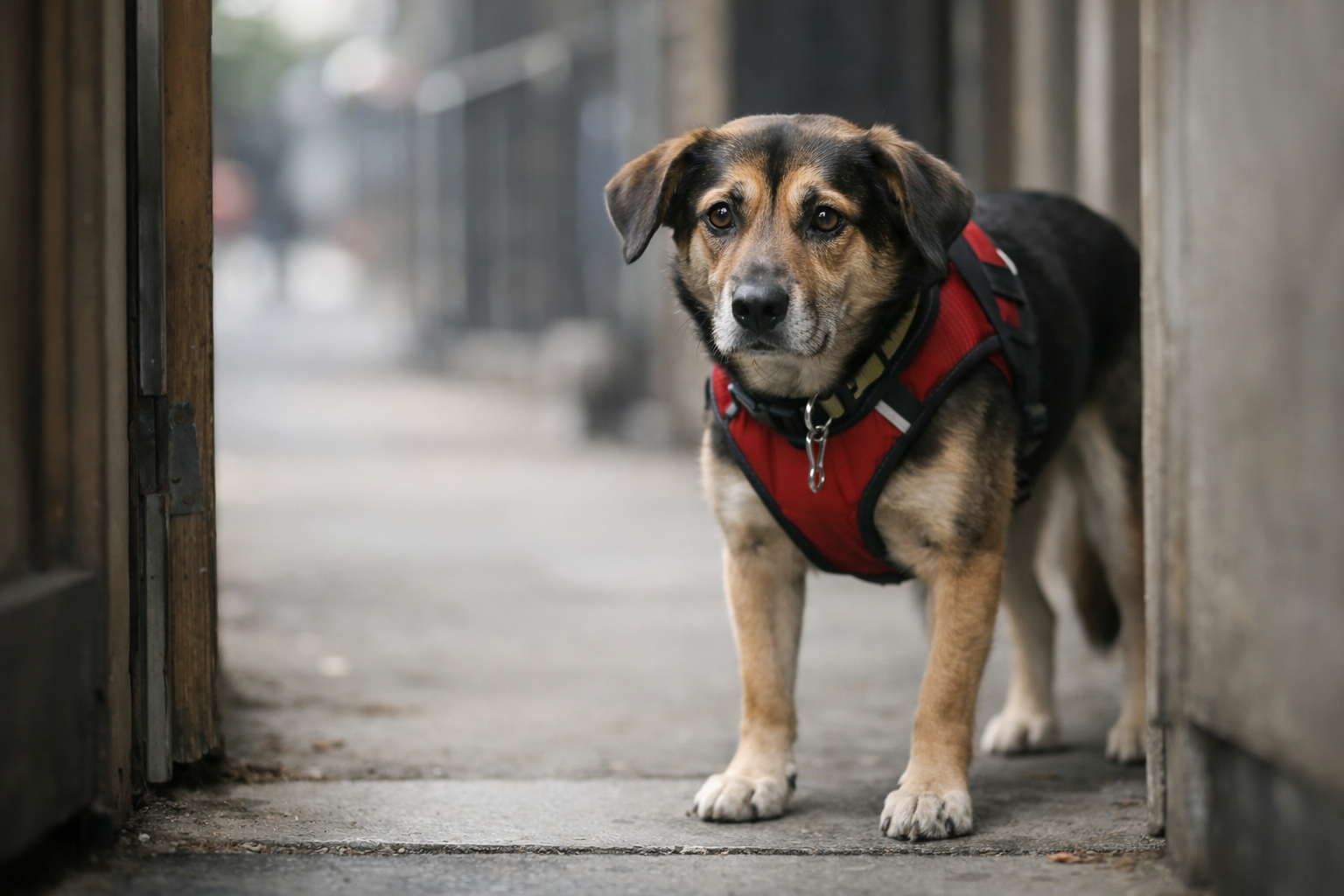
Your dog hears a loud noise and suddenly goes completely still. Not just quiet, motionless. Eyes locked, body rigid, breathing shallow. You call their name, and there’s no response. A few seconds or minutes later, your dog “unfreezes” and either bolts or trembles. What just happened? Your dog experienced a freeze response, one of the most misunderstood stress reactions in dogs.
The Freeze Response: Part of Fight, Flight, or Freeze
When dogs (and humans) encounter something threatening, their nervous system kicks into survival mode. Most people know about fight (aggression) and flight (running away), but freeze is equally important. Freezing is when the body goes completely still, almost as if the dog is playing possum. It’s an ancient survival mechanism: “If I don’t move, maybe the threat won’t see me.”
Freezing isn’t a sign of calmness or obedience. It’s the opposite, it’s a sign of extreme stress and fear. Your dog’s brain has decided that moving might be more dangerous than staying still.
What Triggers a Freeze Response?
- Loud or unexpected noises: Fireworks, thunderstorms, backfiring cars, dropped dishes
- Unfamiliar or threatening situations: A stranger approaching, a confrontation, being cornered
- Physical handling they don’t like: Nail trims, vet exams, rough grabbing
- Feeling trapped: No escape route, being picked up, being held too tight
- Overwhelming sensory input: Crowds, loud places, multiple stressors at once
- Past trauma: A dog who was abused may freeze when reminded of that experience
Freeze Is Different From a Calm Sit
Here’s the critical distinction: a trained “sit” is a relaxed, chosen behavior. Your dog understands the command and complies willingly. A freeze is involuntary and stress-driven. Your dog isn’t choosing to stay still, their nervous system is forcing them to. You might see physical signs of stress: trembling, panting, dilated pupils, or a tucked tail.
If your dog is sitting calmly during a vet exam but also showing whale eye, ears back, and body tension, they’re not “being good.” They’re frozen in fear.
What Happens After the Freeze?
Once the threat passes or the dog’s nervous system decides freezing isn’t working anymore, they’ll often shift into fight or flight. They might suddenly bolt, snap, or shake off and frantically look for an exit. They might also have a “shutdown” response, becoming withdrawn, non-responsive, and almost catatonic for a period of time.
This shutdown is your dog’s nervous system basically saying, “I’m overwhelmed. I’m turning inward.” A shutdown dog might not eat, might not respond to their name, might hide for hours. This is a sign of severe stress that needs attention.
The Long-Term Effects of Repeated Freezing
An occasional freeze, like during a thunderstorm, is normal. But if your dog is regularly freezing in response to routine situations, that’s a red flag. Repeated freezing can lead to:anxiety disorders, learned helplessness (the dog gives up trying to escape or communicate), aggression (as a delayed response to prolonged fear), and decreased quality of life.
A dog who has learned that freezing is their only option in stressful situations is a dog living in chronic low-level fear.
What NOT to Do When Your Dog Freezes
Don’t force them to move. Don’t punish them for being “unresponsive.” Don’t say “it’s fine” or try to convince them nothing bad is happening. Don’t pick them up or hold them still. All of this escalates the fear and teaches your dog that you can’t be trusted to keep them safe.
How to Help a Freezing Dog
Create distance from the stressor: If possible, remove the dog from the situation. Leave the vet’s office, turn off the fireworks video, move away from the approaching person.
Don’t force interaction: Let your dog come to you. Sit quietly nearby. Your presence alone is calming if you’re not adding pressure.
Keep your own energy calm: Dogs read our anxiety. If you’re worried or frustrated, they’ll feed off that. Breathe, relax your face, and show them that you’re not scared.
Work with a trainer or behaviorist: If your dog is freezing regularly, this is worth professional help. Desensitization, counterconditioning, and sometimes medication can help rewire your dog’s response.
Building Confidence Over Time
Dogs who freeze can learn to feel more confident and less reactive. It takes time, patience, and usually professional guidance. Slowly exposing your dog to the stressor at a low level, paired with treats and positive experiences, can gradually change how they respond. The goal is to help them move from freeze → flight → calm awareness.
Key Takeaways
- Freezing is a stress response, not obedience or calmness
- It’s an involuntary survival mechanism, your dog isn’t choosing it
- Look for other stress signals: whale eye, ears back, trembling, panting
- Don’t force a freezing dog to move or interact
- Repeated freezing indicates significant anxiety and needs professional attention
- Work with a trainer to build confidence and change your dog’s response
At SnoutHub, we believe understanding your dog’s fear is the first step to helping them feel safe. A dog is a bestie.