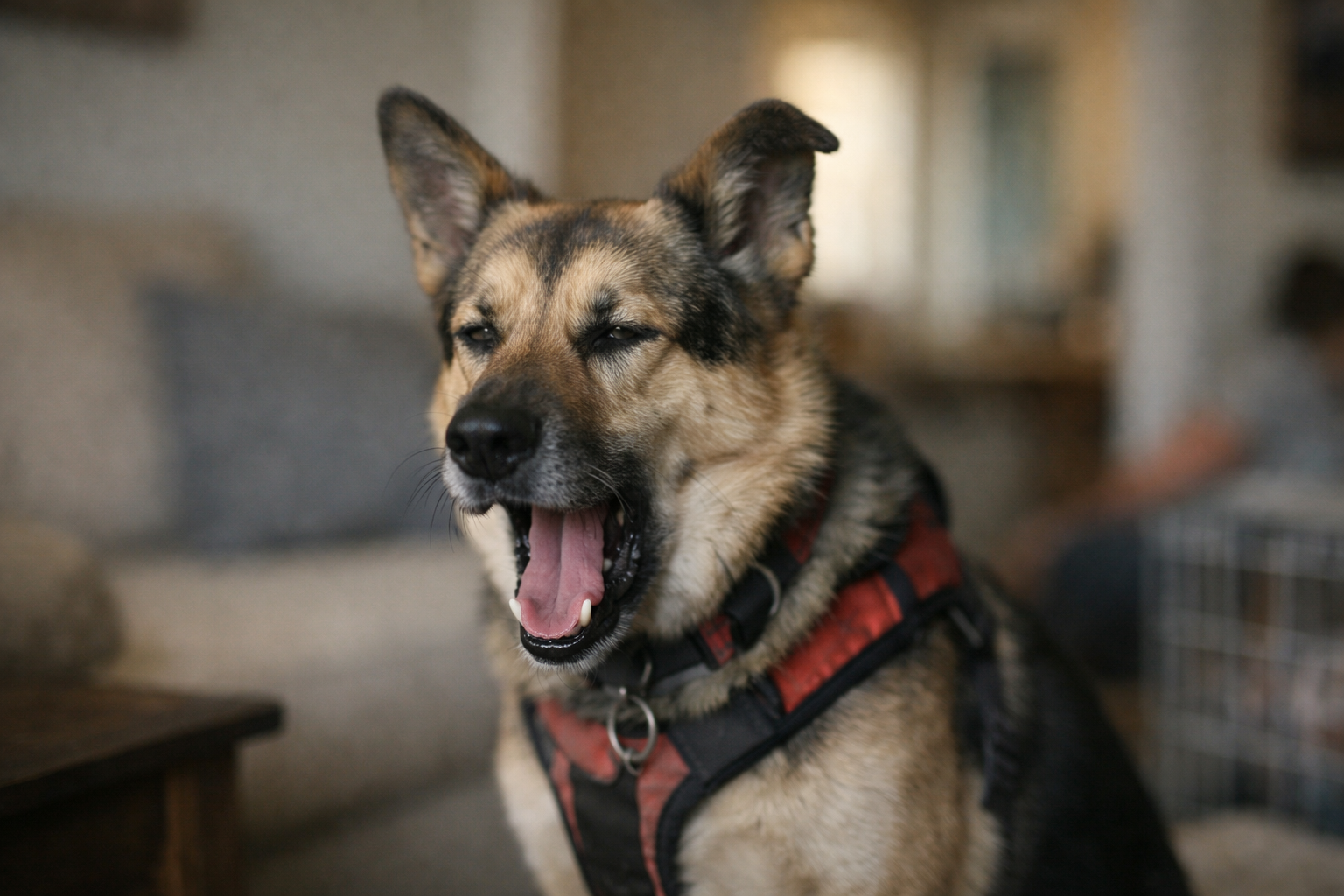
Your dog is sitting calmly on the couch, and suddenly they let out a big yawn. Their jaw stretches wide, their eyes crinkle, and they settle back down. You think: “Aww, my pup is tired.” And sometimes, that’s exactly right. But yawning in dogs isn’t always about sleepiness. Sometimes, it’s a sign your dog is stressed, anxious, or trying to communicate something important.
The Two Types of Yawning in Dogs
Physiological Yawning (Tired): This is the yawn you expect. Your dog has been resting, is getting ready for a nap, or just woke up. It’s a normal, relaxed behavior. Nothing to worry about.
Stress Yawning (Calming Signal): This is the yawn that behaviorists call a “calming signal.” It happens when your dog is anxious, uncomfortable, or trying to self-soothe. It’s not about being tired, it’s about managing stress.
How to Tell the Difference
Context is everything. Ask yourself:
- Is my dog relaxed and settling down? Probably tired.
- Is my dog tense, avoiding eye contact, or in a tense situation? Likely stress.
- Is my dog yawning repeatedly during training or a vet visit? Almost certainly stress.
- Is my dog yawning at a random moment during normal play? Could be either, but look at body language.
Pay attention to other body language signals. If your dog is yawning AND showing whale eye, ears back, a tucked tail, or a stiff body, it’s stress yawning. If they’re yawning and their whole body is loose and relaxed, it’s likely just tiredness.
Why Dogs Stress Yawn
When dogs are anxious or uncomfortable, they sometimes yawn to calm themselves down. It’s like a self-soothing mechanism. Animal behaviorist Turid Rugaas identified yawning as one of a dog’s “calming signals”, subtle ways dogs communicate stress and try to de-escalate tension.
Common situations where stress yawning happens:
- During vet exams or grooming appointments
- During training sessions (especially if corrections are involved)
- When meeting unfamiliar people or dogs
- During tense moments (your voice raised, raised energy in the home)
- When being corrected or scolded
- In new or overwhelming environments
What Stress Yawning Means
When your dog stress yawns, they’re saying: “I’m uncomfortable. I’m trying to cope. Please help me feel better.” It’s not laziness, and it’s not stubbornness. It’s your dog’s attempt to manage their own anxiety.
The key is recognizing it as a signal. If you see stress yawning, pause whatever you’re doing. Change the situation if you can. Give your dog space. Lower your voice. Show your dog that you hear them and you’re going to help them feel safe.
What NOT to Do When You See Stress Yawning
Don’t punish it. Don’t say “stop yawning, you’re fine.” Don’t push through the situation that’s causing it. Your dog is sending you a message. Ignoring it teaches your dog that it’s not safe to communicate with you about their stress. That’s when things can escalate to growling, snapping, or biting.
If Your Dog Stress Yawns Frequently
If yawning seems to be a consistent part of your dog’s anxiety response, like during every training session or every time you leave, it’s worth working with a trainer or behaviorist. You can desensitize your dog to the stressor and help them build confidence. Over time, the stress yawning should decrease as your dog’s anxiety decreases.
Key Takeaways
- Yawning can mean tired OR stressed, look at context and body language
- Stress yawning is a calming signal; your dog is managing anxiety
- If your dog stress yawns, pause and change the situation if possible
- Don’t punish yawning, it’s communication, not defiance
- Repeated stress yawning warrants work with a professional trainer
At SnoutHub, we believe understanding your dog’s signals, even the quiet ones like a yawn, is the foundation of trust. A dog is a bestie.